The short answer
You likely need a new chimney liner if your flue is cracked, deteriorating, missing, or wrong for your appliance, which is common after an oil-to-gas boiler conversion. ClearStack inspects the flue with a camera, recommends the right liner, and installs it with careful protection inside your home and on the roof.
A chimney liner is the channel inside your chimney that carries smoke and exhaust gases up and out of the house. In many older Brooklyn homes, the original clay tile liner has cracked, shifted, or crumbled, and some chimneys were built with no liner at all. A damaged or missing liner can let heat reach the wood framing around the chimney, let exhaust seep into living spaces, and let acidic moisture eat away at the brick and mortar. ClearStack Chimney Service installs new liners sized to the appliance they serve, whether that is a wood-burning fireplace, a gas or oil boiler, a water heater, or a wood stove insert. Our certified technicians start by finding out exactly what condition your flue is in, explain what they found in plain terms, and then install a liner that fits your chimney and the way you heat your home. If you are converting a boiler from oil to gas, adding a new appliance, or simply noticing that your chimney is not behaving the way it used to, this page explains what to look for and what to expect from the job.
Signs you need a new chimney liner
Liner problems are usually hidden inside the chimney, so most homeowners notice the side effects first. Any of the signs below is worth a professional look, especially if more than one shows up at the same time.
- A smoke or creosote smell in the house, particularly on damp days or when the fireplace or boiler is not running
- Poor draft: smoke rolling back into the room, fires that are hard to start, or a boiler that struggles to vent properly
- Pieces of clay tile, brick flakes, or crumbled mortar collecting in the firebox or at the base of the flue
- White, chalky staining on the brick, inside or outside, which can point to moisture moving through the masonry
- Water in the firebox or rust stains on the damper or appliance connector
- A recent or planned switch from oil to gas, or the installation of a new heating appliance
What's included in a liner installation
Every installation follows the same core steps, so you know what you are paying for before any work begins. If we find something beyond the liner itself, such as damaged crown masonry, we will show you and talk it through before doing any added work.
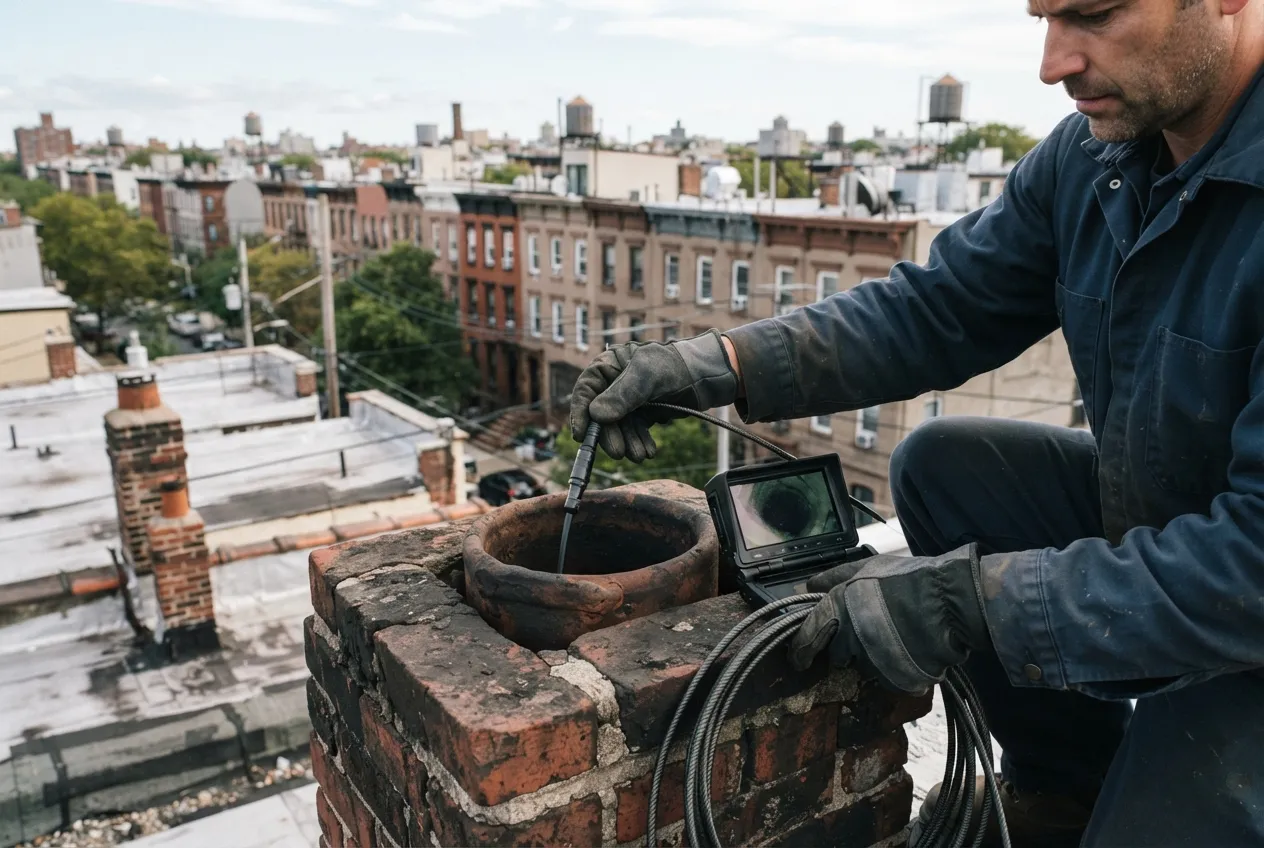
- A camera inspection of the full length of the flue to document its current condition
- Measurements of the flue and a review of the appliance it serves so the liner is properly sized
- A written recommendation for the liner type, such as a stainless steel liner, with the reasons explained
- Cleaning of the flue and removal of loose debris and broken tile where needed before installation
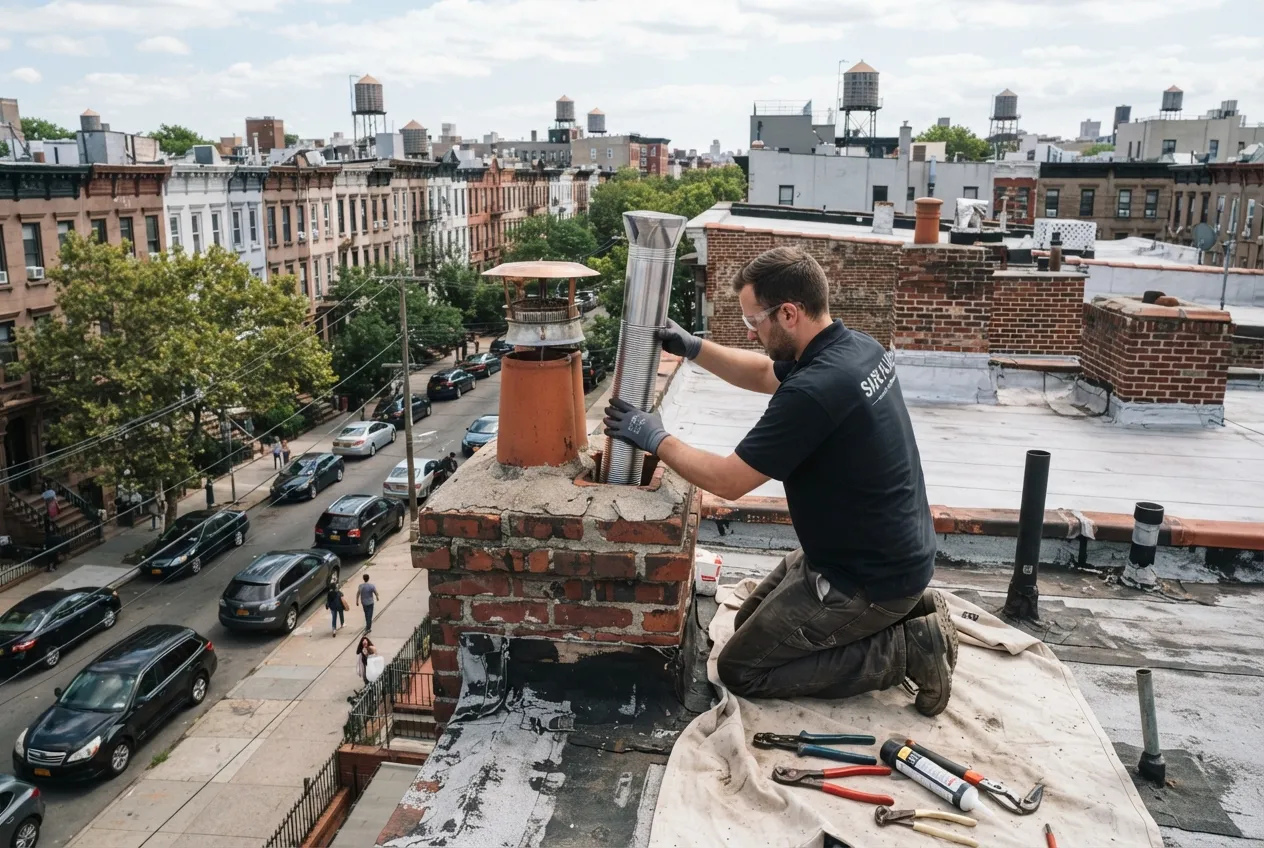
- Installation of the liner from the roof down, with the connections at the appliance end secured
- Insulation of the liner where the chimney and appliance call for it
- A new top plate and chimney cap to keep out rain and animals
- A final check of draft and venting, plus photos of the finished work
How our crew works inside your home and on the roof
Inside, the crew lays drop cloths from the entry to the fireplace or boiler area and covers nearby furniture and flooring. HEPA vacuums run while we open the flue, so soot and debris are captured instead of drifting through the room. Rotary brushes clean the flue walls before the new liner goes in, and the camera lets us confirm the flue is clear and see any problem spots that need attention.
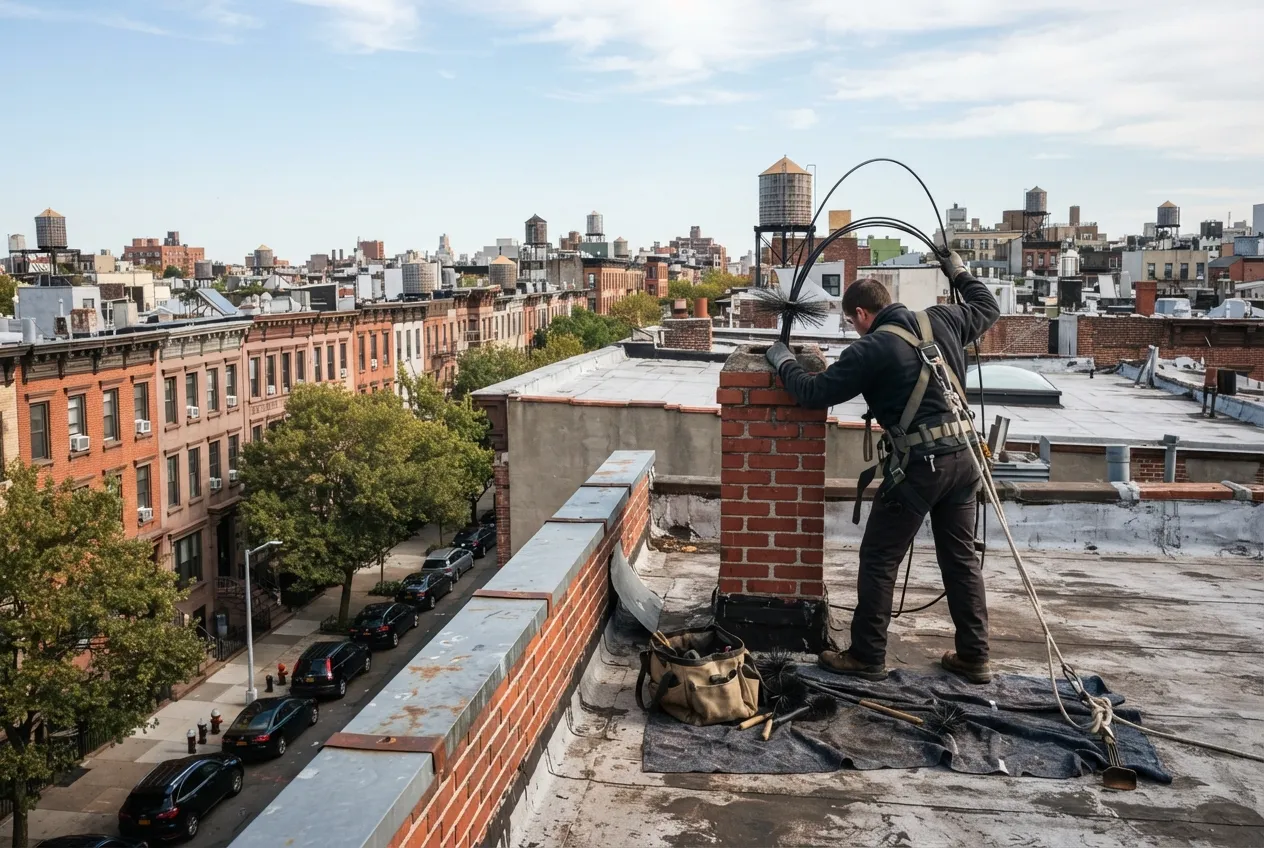
On the roof, technicians use proper ladders and safety equipment and work from the chimney top. They feed the liner down the flue, set the top plate, and seal and cap the chimney. If the existing crown is cracked, we photograph it so you can see it for yourself. When the job is done, we clean up the work areas inside and out and walk you through the finished installation.
Time for your annual chimney check?
The standard we follow
Our work follows NFPA 211, the national standard for chimneys, fireplaces, and vents. It calls for chimneys to be inspected once a year. Chimney professionals use three inspection levels. A Level 1 inspection is for chimneys where nothing has changed. A Level 2 inspection applies when the system changes, such as adding a new appliance or switching fuel, or when the home is sold. A Level 3 inspection applies when a hidden hazard can only be reached by opening part of the chimney or the building.
Because a liner installation usually happens alongside a change in the system, a Level 2 inspection with a camera is a normal part of the job. This matters most in New York City oil-to-gas boiler conversions. When a building converts its boiler from oil to gas, the chimney has to be evaluated as part of the work. A new liner is often needed because gas exhaust produces acidic condensate that can corrode a masonry flue over time.
What affects the price
Every chimney is different, so we quote after inspecting yours. The main factors are:
- Chimney height and how easy the roof is to reach, including roof pitch and building height
- The type of fuel and appliance the liner will serve: wood, gas, or oil
- Flue size, shape, and condition, including whether old tile needs to be broken out first
- How much soot, creosote, or debris has built up in the flue
- Whether insulation, a new cap, or a camera inspection is needed
- Any repairs to the crown, mortar joints, or flashing that we find along the way
How a visit works
You contact us and describe what you are noticing or what work is planned, such as a boiler conversion. We schedule an inspection visit, run the camera through the flue, and show you the footage. You then get a clear recommendation and quote. Once you approve it, we schedule the installation, which in most homes is completed in one visit.
If you rely on your chimney for heat, it helps to plan ahead of New York City's heat season, which runs from October 1 through May 31. Booking the inspection early gives everyone time to order the right liner and finish the work before you need steady heat.
Chimney Liner Installation by city
- Chimney Liner Installation in Dyker Heights
- Chimney Liner Installation in Bensonhurst
- Chimney Liner Installation in Bath Beach
- Chimney Liner Installation in Bay Ridge
- Chimney Liner Installation in Borough Park
- Chimney Liner Installation in Mapleton
- Chimney Liner Installation in Sunset Park
- Chimney Liner Installation in Kensington
- Chimney Liner Installation in Midwood
- Chimney Liner Installation in Gravesend
- Chimney Liner Installation in Ditmas Park
- Chimney Liner Installation in Parkville