The short answer
Fireplace and damper repair covers fixing damaged firebox brick and mortar, smoke chamber surfaces, and dampers that stick, leak air, or no longer seal. ClearStack inspects the system first, explains the findings in plain terms, and then makes the repairs with drop cloths and HEPA vacuums protecting your home.
A fireplace that smokes into the room, a damper that won't close, or a firebox with crumbling brick is more than an annoyance. These problems can let heat, smoke, and moisture go where they shouldn't. ClearStack Chimney Service repairs fireplaces and dampers for homeowners in Brooklyn and nearby cities. That includes older masonry fireplaces in brownstones and row houses and newer units in renovated homes. Our certified technicians start by finding out what is actually wrong. Then we explain what we see and fix what needs fixing, keeping your living room clean along the way.
Signs you need it
Most fireplace and damper problems show up gradually. If you notice any of the following, have the fireplace looked at before your next fire.
None of these signs is an emergency on its own. Together, though, they usually point to a damper or masonry problem that gets worse with use.
- A smoke or creosote smell in the room, especially on humid days or when the fireplace isn't in use
- Poor draft: smoke rolls out of the opening instead of rising up the flue
- Debris, mortar sand, or brick flakes collecting on the firebox floor
- White staining on the brick inside or around the fireplace, a sign that water is moving through the masonry
- Water or damp ash in the firebox after rain
- Scratching, chirping, or fluttering sounds above the damper
- A damper that sticks, won't fully open or close, or has a loose or broken handle
- Cold air drafts coming from the fireplace even with the damper shut
What's included
Every repair visit starts with an inspection of the fireplace, damper, and the visible parts of the flue. That way we fix the cause and not just the symptom. Depending on what we find, the work can include any of the items below. We tell you what we recommend and why before any repair begins.
- Inspection of the firebox, damper, smoke chamber, and accessible flue
- Damper repair: freeing a stuck plate, replacing handles, pivots, or chains, and adjusting it to seal properly
- Damper replacement, including top-sealing dampers mounted at the top of the chimney when the original throat damper can't be saved
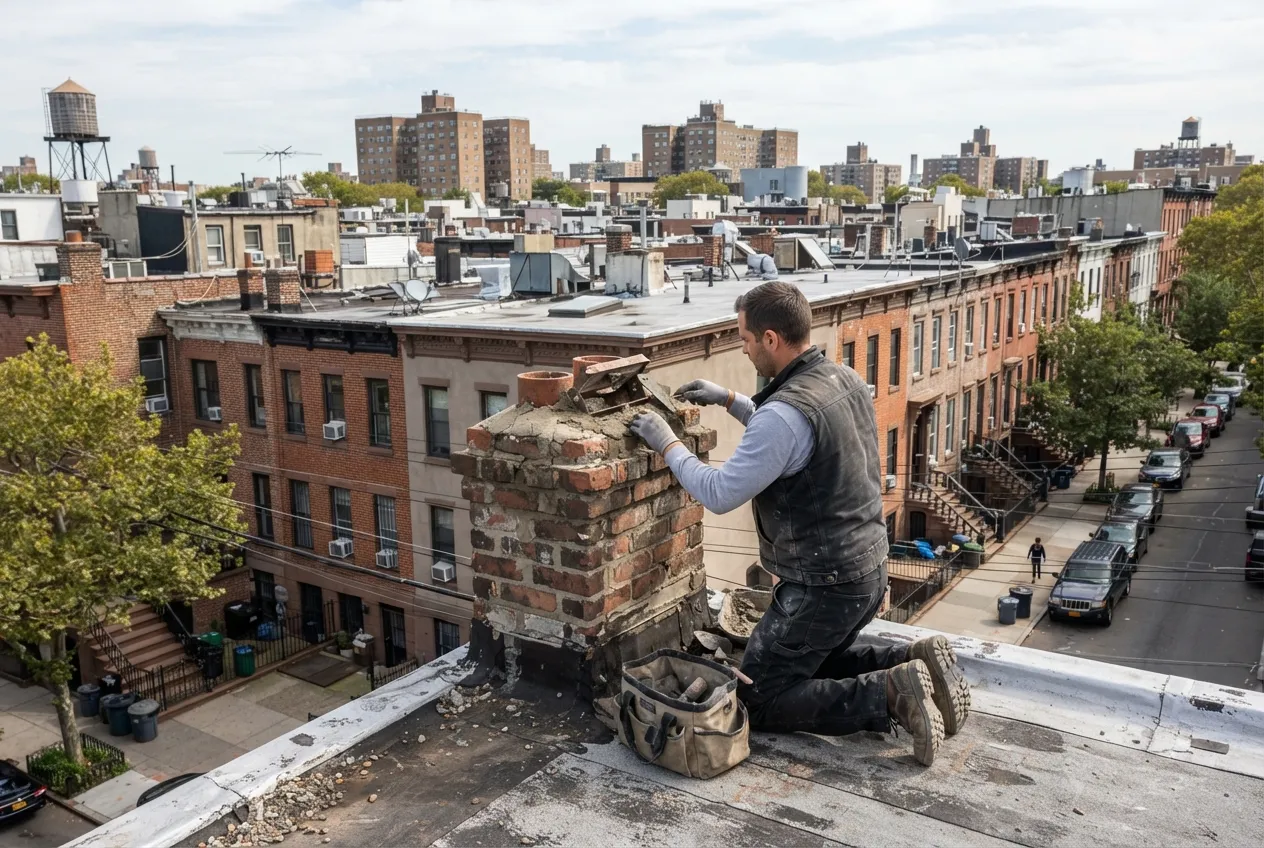
- Firebox repair: replacing cracked or spalled firebrick and repointing failed mortar joints with heat-rated materials
- Smoke chamber repair and smoothing (parging) where rough or damaged surfaces hurt draft or collect creosote
- Hearth inspection and repair of cracks or gaps that could let heat or embers reach nearby materials
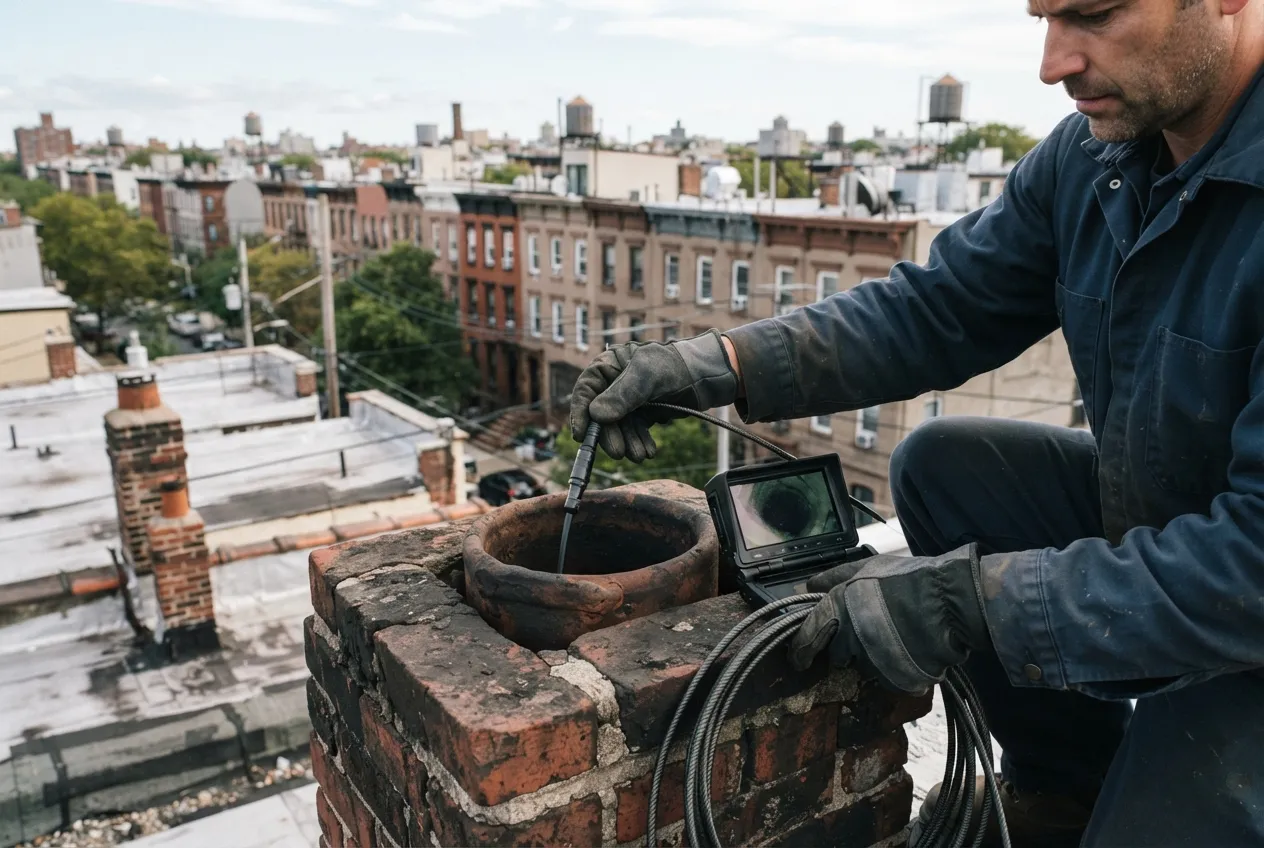
- Camera inspection of the flue when the problem may extend beyond what we can see directly
- A written summary of what we found, what we did, and anything still to watch
How we work in your home and on the roof
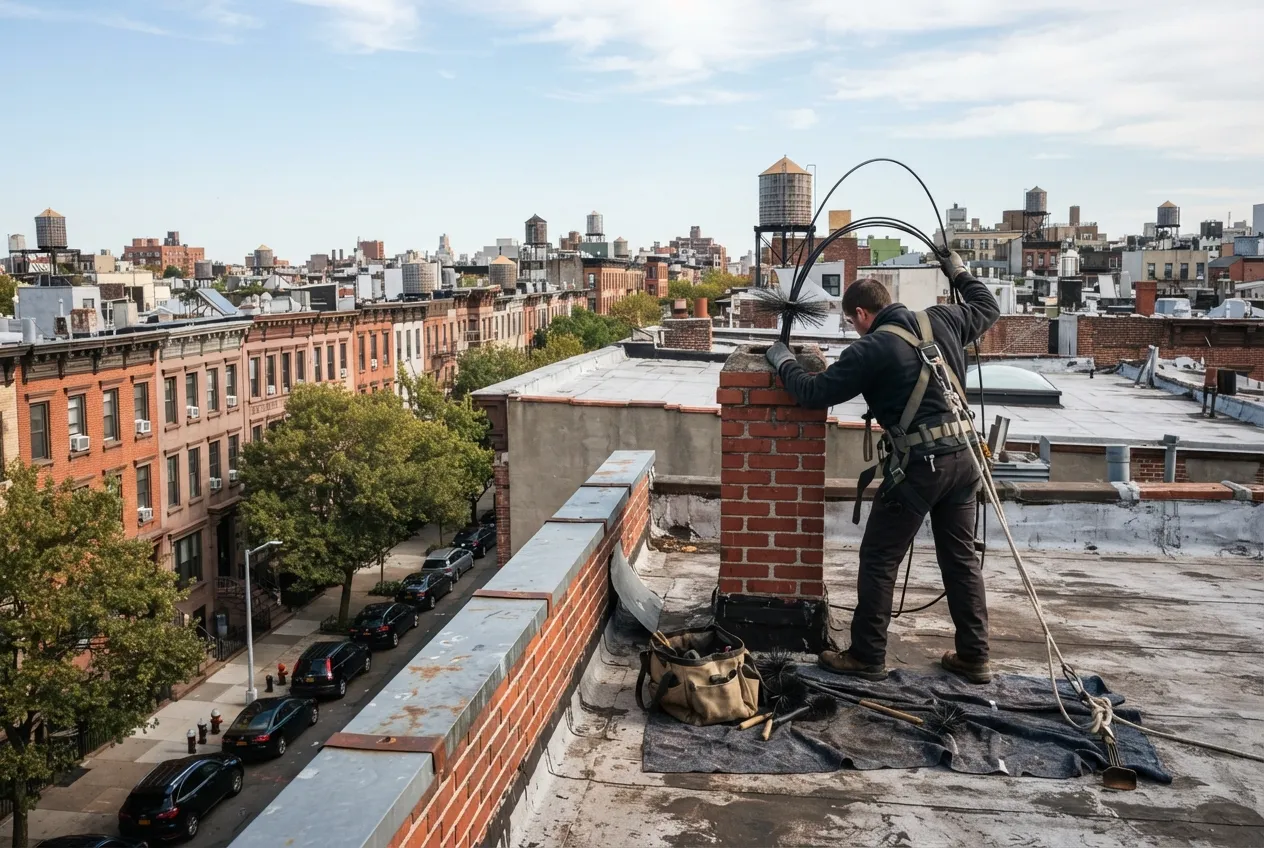
Inside, we lay drop cloths from the door to the fireplace and cover the hearth and nearby floor before any tools come out. We use HEPA vacuums to capture soot and dust as we work, so it stays out of your rugs and furniture. When the flue needs cleaning before a repair can be judged or done properly, we use rotary brushes. Where the trouble may be higher up the chimney, we run a camera through the flue so we can show you what we see instead of guessing.
On the roof, we check the chimney crown, cap, and the top of the flue. Missing caps, cracked crowns, and open flues are common reasons for water in the firebox and animals in the chimney. If a top-sealing damper is part of the repair, it is installed and tested from up there. We only go up when access is safe, and we tell you beforehand if your roof needs special arrangements.
Time for your annual chimney check?
The standard we follow
Our work follows the NFPA 211 standard. It calls for chimneys, fireplaces, and vents to be inspected once a year. Chimney professionals use three inspection levels. A Level 1 inspection fits when nothing about the system has changed. A Level 2 inspection applies when the system changes, such as a new appliance or a switch of fuel, or when the home is being sold. A Level 3 inspection is needed when a suspected hidden hazard can only be reached by opening part of the chimney or building.
Most fireplace and damper repairs start with a Level 1 or Level 2 inspection. We tell you which level fits your situation and why.
What affects the price
Every fireplace is different, so we quote after seeing yours. These are the main factors that shape the cost of a repair:
- Chimney height and how easy or difficult the roof is to reach
- Fuel type: wood-burning, gas logs, or a converted fireplace
- Flue size and condition, including any existing liner
- How much soot and creosote buildup has to be removed before repairs
- The type of damper and whether it can be repaired or must be replaced
- Whether a camera inspection is needed, and how much masonry repair the firebox or smoke chamber requires
How a visit works
When you contact us, we ask a few questions about what you're noticing, the type of fireplace, and roof access, then set an appointment. On the day, the technician protects the work area and inspects the system. Next, they walk you through the findings, often with photos or camera footage. Simple fixes, like adjusting or freeing a damper, can often be done the same visit. Larger masonry work or a damper replacement may need a return trip once materials are ready.
Before we leave, we clean up, test the damper, and check draft where it makes sense. We also give you a written summary of the work and any follow-up we recommend.