The short answer
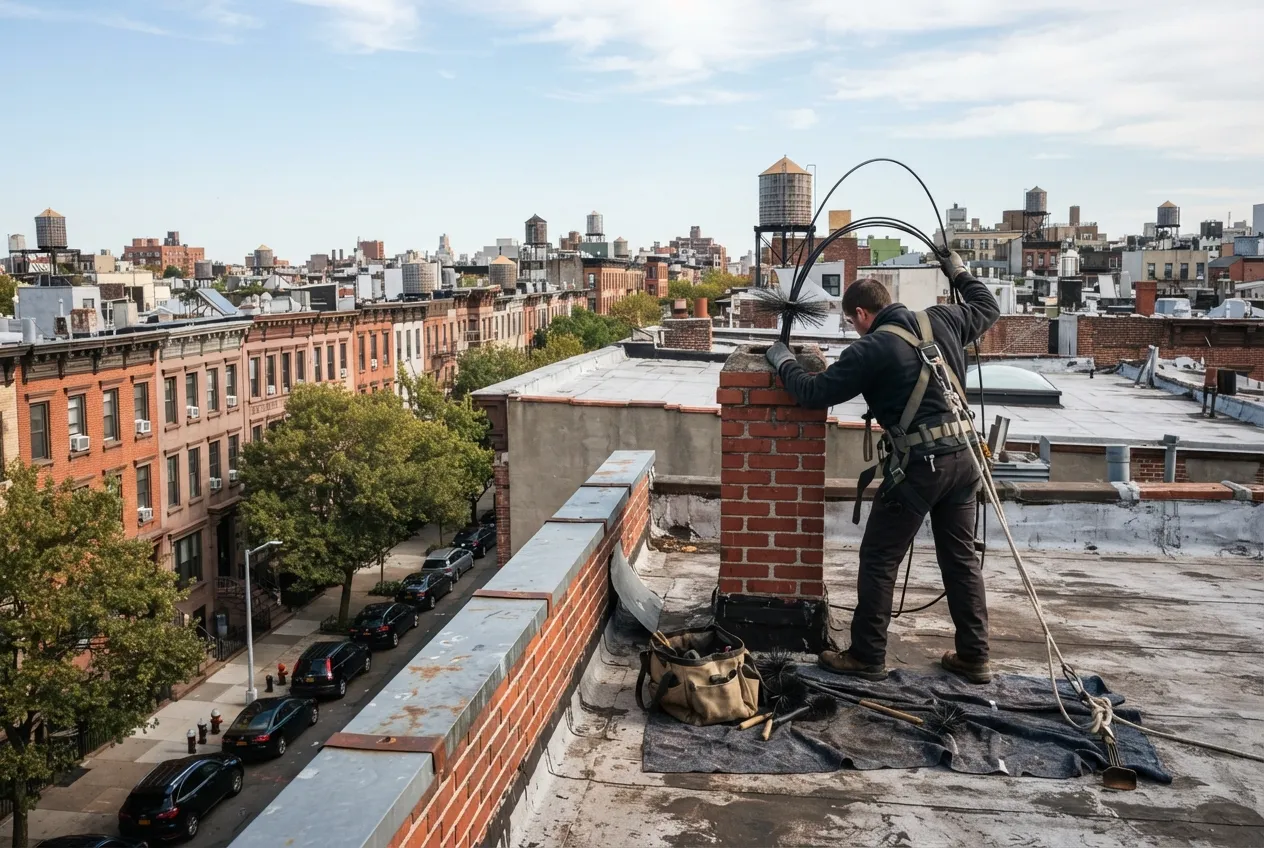
If your Sunset Park chimney has cracked or missing flue tiles, or your building is converting its boiler from oil to gas, you will likely need a new chimney liner. ClearStack inspects the flue, sizes a liner to the appliance it serves, and installs it so exhaust is carried safely out of the house.
Many chimneys in Sunset Park were built long before today's boilers, water heaters and gas fireplaces existed. Over decades, masonry flues crack, mortar joints wash out, and old clay tiles shift or break. A damaged or missing liner can let heat, moisture and exhaust gases reach the brick and the wood framing around it. ClearStack Chimney Service installs new chimney liners for homes and buildings in Sunset Park, across ZIP codes 11220 and 11232. We're based in Dyker Heights, about 2 miles south, so getting to your chimney is a short trip.
Why Sunset Park Chimneys Often Need Relining
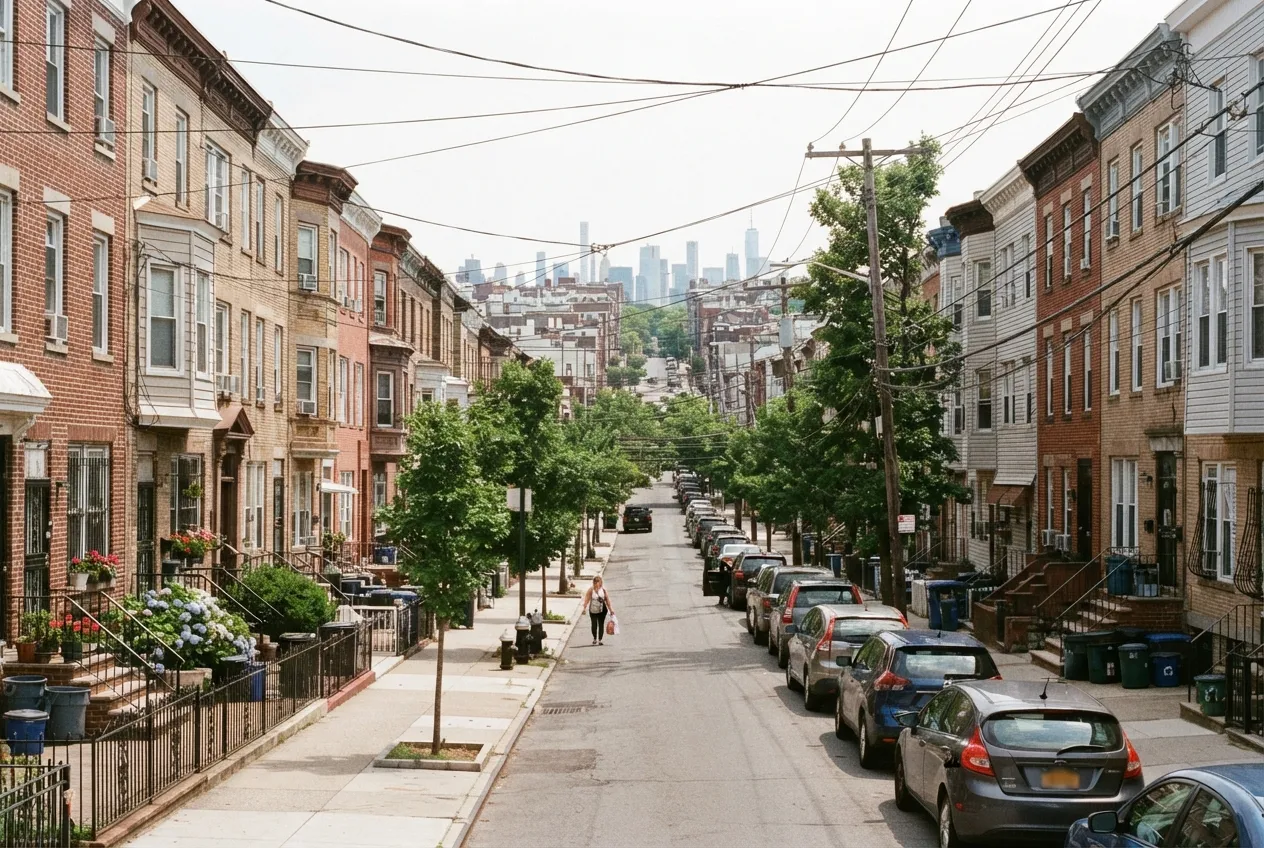
Sunset Park's housing is mostly rowhouses, brownstones and pre-war apartment buildings, with some detached homes mixed in. Most of these chimneys are brick, and many were lined with clay tile or not lined at all. Brick and clay hold up for a long time, but they don't last forever. Freeze-thaw cycles, years of acidic exhaust and settling of the building can open gaps that you can't see from the roof or the basement.
In attached rowhouses, chimneys often share walls with the house next door. That makes a sound liner even more important, because a leak in the flue can let exhaust or heat move into the wall cavities between homes.
- Pieces of tile or mortar falling into the cleanout or firebox
- Water stains, peeling paint or crumbling brick near the chimney
- White staining (efflorescence) on the outside brick
- A boiler or water heater that has trouble venting, or a smell of exhaust
- An inspection that found cracked, missing or offset flue tiles
Oil-to-Gas Conversions Usually Mean a New Liner
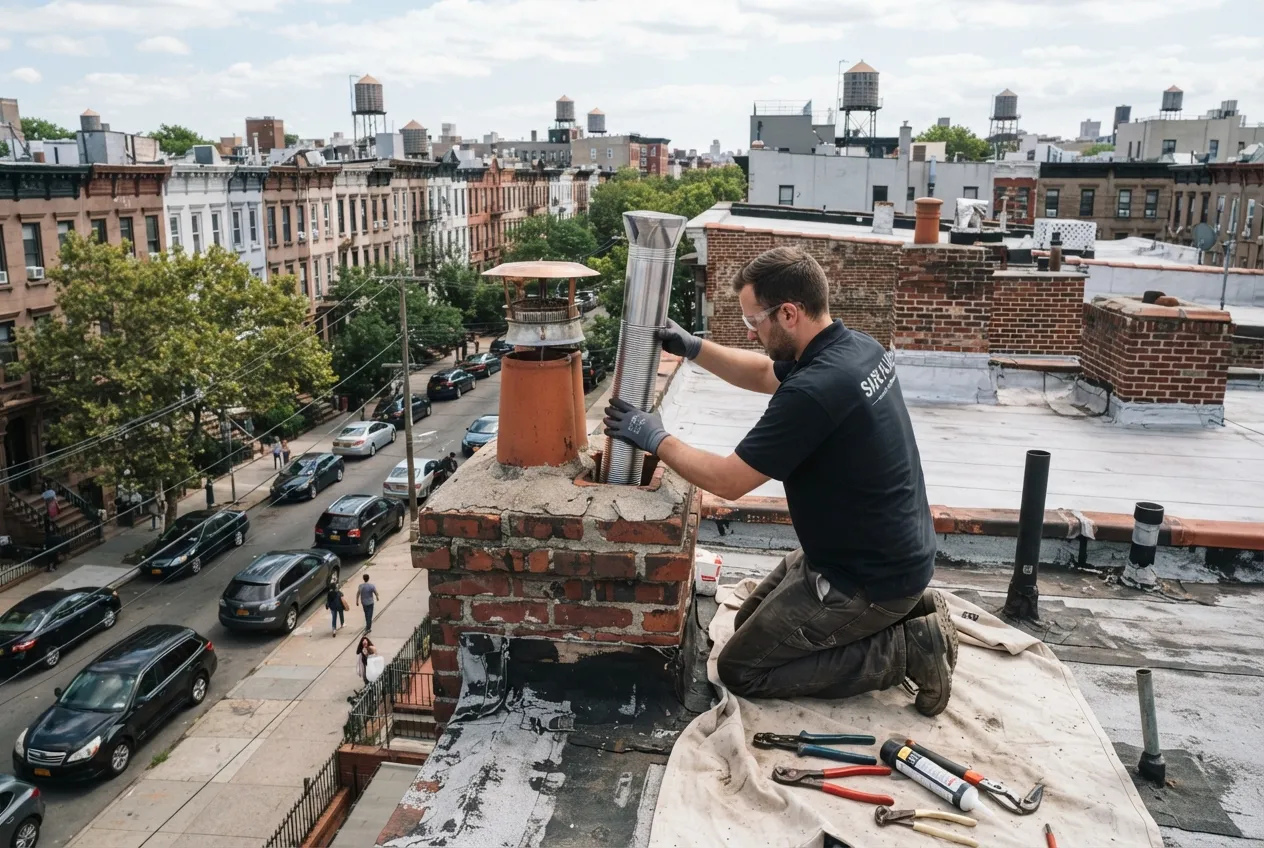
A lot of Sunset Park buildings have switched, or plan to switch, their heating from oil to gas. When a New York City building converts its boiler from oil to gas, the chimney has to be evaluated as part of the work. A new liner is often needed. Gas exhaust produces acidic condensate, and that condensate can corrode a masonry flue that handled oil exhaust without trouble for years.
If you're planning a conversion, bring us in early. We can inspect the chimney, tell you whether the existing flue can be used, and coordinate liner sizing with your heating contractor so the new appliance vents correctly from the first day.
How We Install a Chimney Liner
Every liner job starts with an inspection. Liner size and material depend on the appliance connected to the flue and on what shape the chimney is in. We don't guess at either one.
- Inspect the flue, usually with a camera, and document its condition
- Clean out soot, debris and loose tile so the new liner has a clear path
- Measure the flue and match the liner diameter to the appliance's venting needs
- Lower the liner from the roof and connect it at the appliance end
- Install a top plate and cap to keep out rain, animals and debris
- Test the draft and show you photos of the finished work
Time for your annual chimney check?
Choosing the Right Liner Material
There isn't one liner that works for every chimney. Our certified technicians recommend a material based on the fuel, the appliance and the condition of the masonry. We'll explain the options before any work begins.
- Stainless steel: the most common choice for gas and oil boilers and water heaters, and well suited to the tight, offset flues found in older rowhouses
- Aluminum: used only for certain gas appliances where it is appropriate
- Cast-in-place: a poured lining that can also add strength to a chimney with deteriorated interior masonry
- Clay tile: a traditional option, generally practical only when the chimney is being rebuilt
Timing Your Liner Work Around Heat Season
New York City's heat season runs from October 1 through May 31. During those months, building owners must keep apartments heated to the city's minimum temperatures. Owners of multi-family buildings in Sunset Park should finish liner work before October whenever they can, because a boiler that can't vent safely may have to stay off until the flue is repaired.
The NFPA 211 standard calls for chimneys, fireplaces and vents to be inspected once a year. A Level 1 inspection covers a system that hasn't changed. A Level 2 inspection applies when the system changes, such as a new appliance or a fuel switch, or when the home is sold. A Level 3 inspection is used when a hidden hazard can only be reached by opening part of the chimney or building. Relining after a conversion is exactly the kind of change that calls for a Level 2 inspection.
More services in Sunset Park
- Chimney Sweep in Sunset Park
- Chimney Inspection in Sunset Park
- Chimney Repair in Sunset Park
- Air Duct Cleaning in Sunset Park