The short answer
A chimney inspection checks your firebox, damper, flue liner, crown, cap and flashing for damage, blockages and creosote buildup. The NFPA 211 standard calls for an inspection once a year, and a deeper inspection when you change appliances or fuel, or sell the home.
A chimney inspection tells you whether your fireplace, wood stove or boiler flue can safely carry smoke and exhaust out of your home. In Brooklyn and nearby cities, many chimneys run through older brick rowhouses and multi-family buildings, where weather, settling and fuel changes cause damage that isn't visible from the living room. ClearStack Chimney Service's certified technicians inspect the firebox, flue, smoke chamber, crown and cap, then explain what they found in plain terms so you can decide what, if anything, needs to happen next.
Signs you need a chimney inspection
Some problems are obvious. Others stay hidden until a chimney fire or a heavy rain exposes them. If you notice any of the following, schedule an inspection before your next fire or before your heating system starts working hard for the season.
None of these signs points to a single cause. A smell might come from creosote buildup, from a missing cap letting rain in, or from a downdraft. The inspection is how you find out which one it is.
- A smoky or tarry creosote smell, especially on humid days or when the fireplace isn't in use
- Poor draft, where smoke rolls into the room instead of rising up the flue
- Debris, mortar grit, or flakes of brick or tile collecting in the firebox
- White, chalky staining on interior or exterior brick, which is a sign that water is moving through the masonry
- Scratching, chirping or fluttering sounds from inside the chimney
- Water, rust or damp ash in the firebox after rain
- A new heating appliance, a switch from oil to gas, or an upcoming home sale
What a chimney inspection includes
Every inspection covers the readily accessible parts of the system, inside and out. Here is what we check:
Afterward, you get a written summary with photos. It shows what's in good shape, what should be watched, and what needs repair.
- Firebox walls, floor and mortar joints, checked for cracks, gaps and heat damage
- Damper operation and seal
- Smoke shelf and smoke chamber, checked for creosote, debris and deteriorated parging
- Flue liner condition, including cracked or missing tiles and gaps between sections
- Creosote and soot levels, and whether a sweep is needed
- Clearances to nearby wood framing, where visible
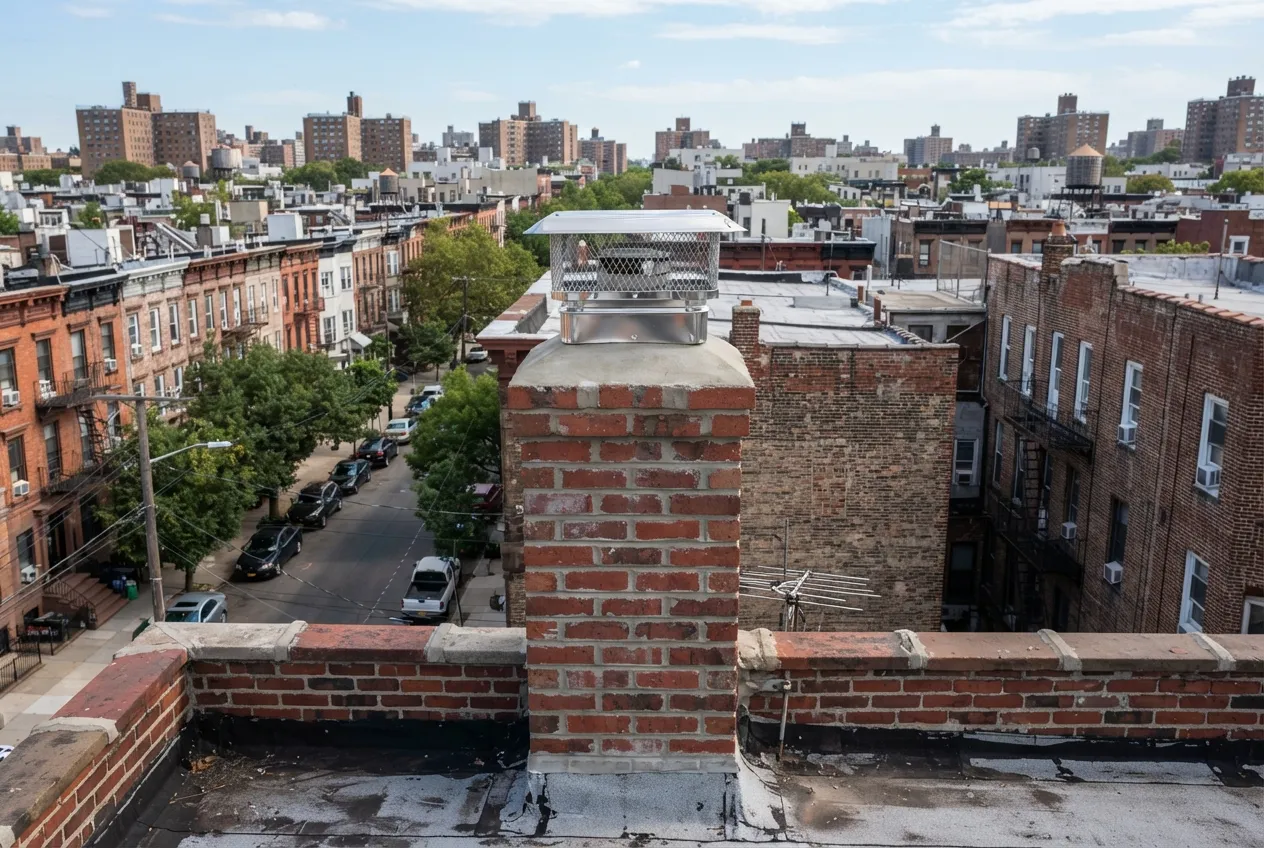
- Chimney crown, cap and spark arrestor
- Exterior brick and mortar above the roofline, including spalling and loose bricks
- Flashing where the chimney meets the roof
- Connections from boilers, furnaces, water heaters or stoves that vent into the flue
- Signs of animal nesting or blockage
How our crew works in your home and on the roof
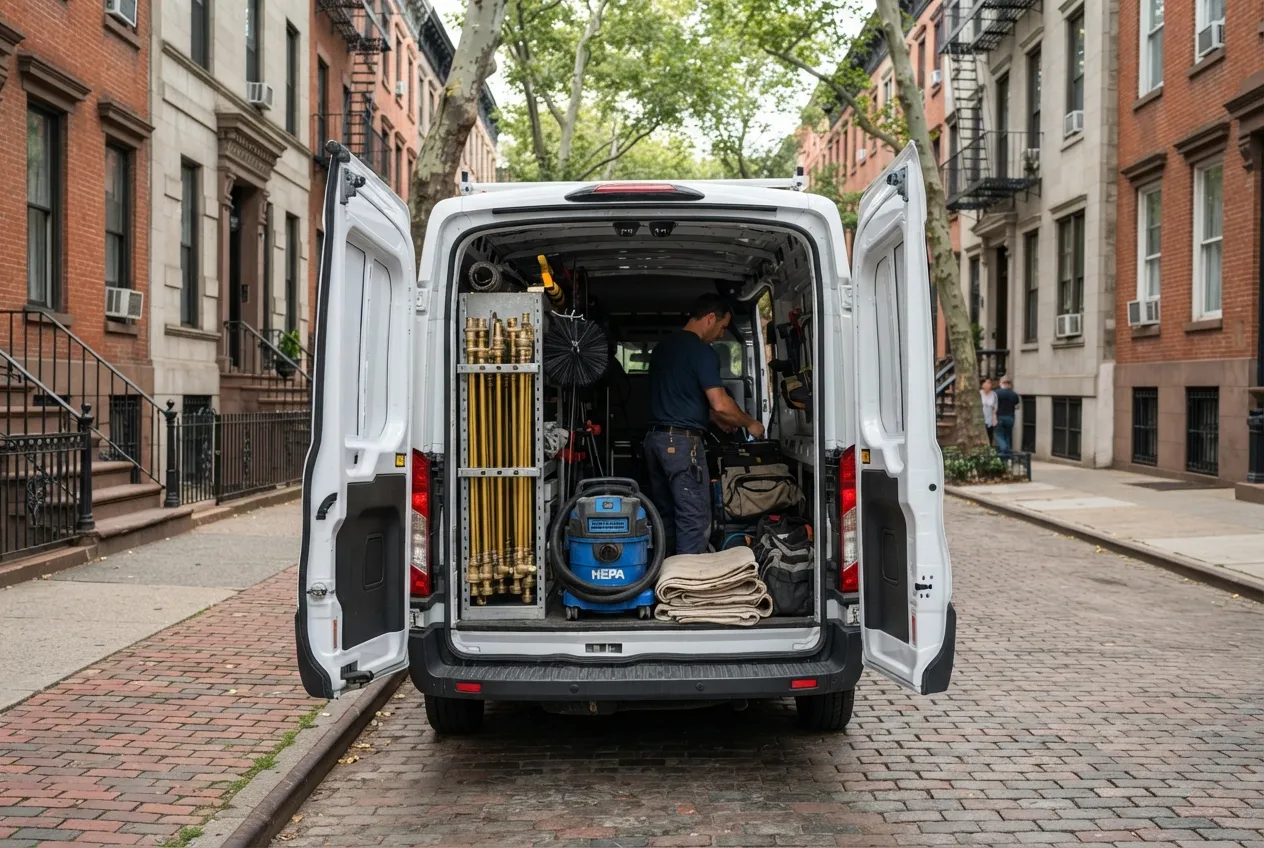
Inside, we lay drop cloths from your door to the hearth and set up a HEPA vacuum at the firebox opening so soot doesn't drift into the room. We use bright lights and mirrors to look up past the damper. When a flue is too dirty to see its surface, we clean it with rotary brushes first so the liner can actually be inspected.
Where we can't see the full length of the flue directly, we run a camera through it. The camera shows cracked tiles, open joints and corrosion that a flashlight can't reach. It also records images you can review with us afterward.
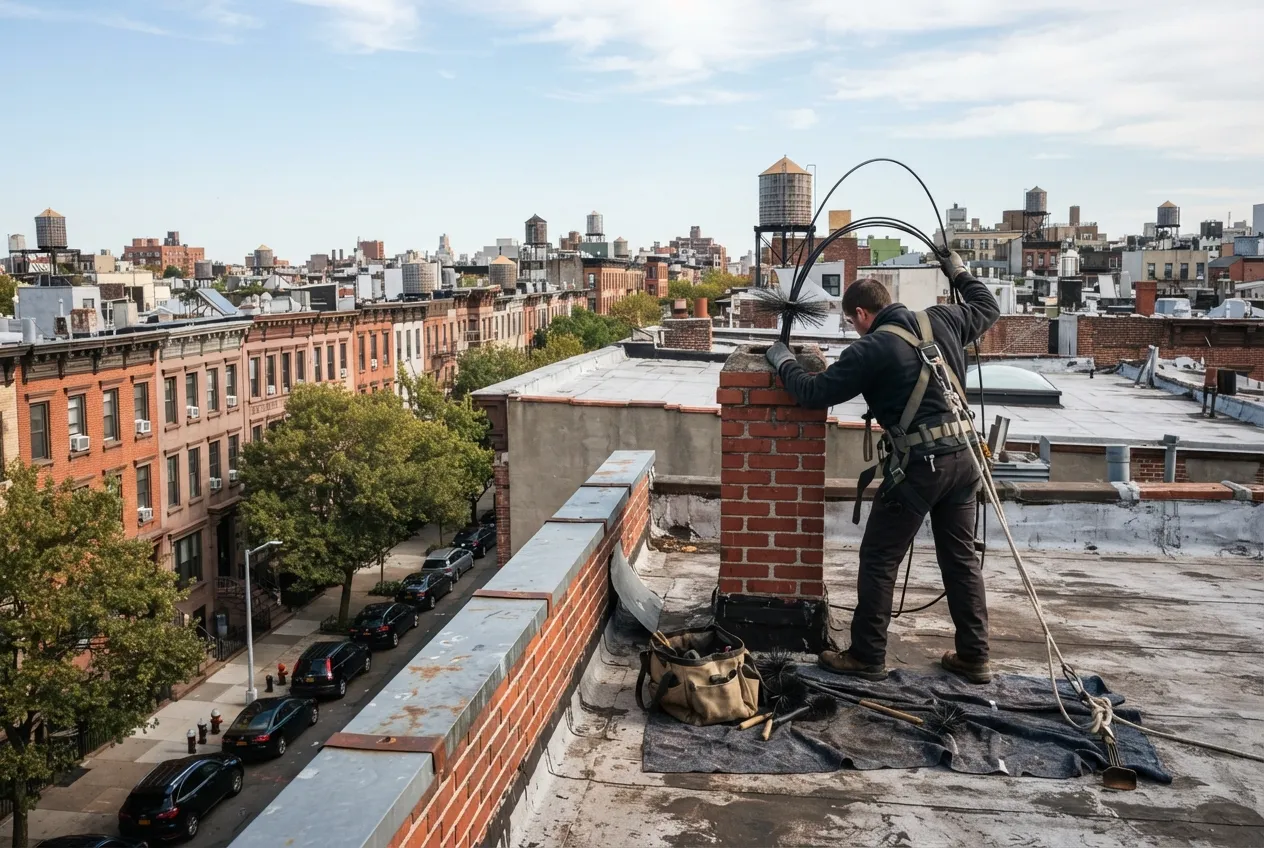
On the roof, we check the crown, cap, flashing and upper brickwork. Many Brooklyn roofs are flat with hatch access, while pitched roofs and taller buildings may call for ladders and extra safety gear. We'll ask about roof access when you book so we arrive with the right equipment. Before we leave, we vacuum the work area and carefully fold up the drop cloths.
Time for your annual chimney check?
The standard we follow
We follow the NFPA 211 standard, which calls for chimneys, fireplaces and vents to be inspected once a year. Chimney professionals use three inspection levels:
Fuel conversions deserve special attention in New York City. When a building converts its boiler from oil to gas, the chimney has to be evaluated as part of the work. A new liner is often needed, because gas exhaust produces acidic condensate that can corrode a masonry flue.
If you own a multi-family building, keep in mind that the city's heat season runs from October 1 through May 31. During that time, apartments must be kept heated to the city's minimum temperatures. Inspecting the boiler flue before October means you won't discover a problem at a time when heat is required.
- Level 1: for a system that hasn't changed and is used the same way as before
- Level 2: when the system changes, such as a new appliance or a switch of fuel, or when the home is sold
- Level 3: when a hidden hazard has to be reached by opening part of the chimney or building
What affects the price
We quote each job after learning about your chimney. These are the main factors:
Repairs are always quoted separately, and we won't start any repair work without your approval.
- The height of the chimney and how we reach the roof
- Fuel type (wood, gas or oil) and how many appliances vent into the flue
- Flue size, the number of flues, and liner condition
- How much creosote or soot has to be cleared before the flue can be seen
- Whether a camera inspection is needed
- Whether repairs are needed after the inspection
How a visit works
When you book, tell us what kind of appliance uses the chimney, when it was last used or serviced, and how we can get to the roof. If you've noticed a smell, a leak or a noise, mention it so we know where to look first.
Please let the fireplace or stove cool completely before we arrive. If a boiler or furnace vents into the chimney, we may ask you to shut it off while we work.
On the day of the visit, we protect the floor, inspect inside, then go up to the roof. We'll walk you through what we found and show you the photos. You'll receive a written summary, and if repairs or cleaning are needed, a separate quote. What you do next is up to you.
Chimney Inspection by city
- Chimney Inspection in Dyker Heights
- Chimney Inspection in Bensonhurst
- Chimney Inspection in Bath Beach
- Chimney Inspection in Bay Ridge
- Chimney Inspection in Borough Park
- Chimney Inspection in Mapleton
- Chimney Inspection in Sunset Park
- Chimney Inspection in Kensington
- Chimney Inspection in Midwood
- Chimney Inspection in Gravesend
- Chimney Inspection in Ditmas Park
- Chimney Inspection in Parkville