The short answer
A chimney cap keeps rain, animals and debris out of the flue, and a chase cover seals the top of a framed or prefab chimney. If you hear animals in the chimney, find water in the firebox or see rust or white staining on the chimney, it's time to have the top checked and the cap or cover replaced or fitted.
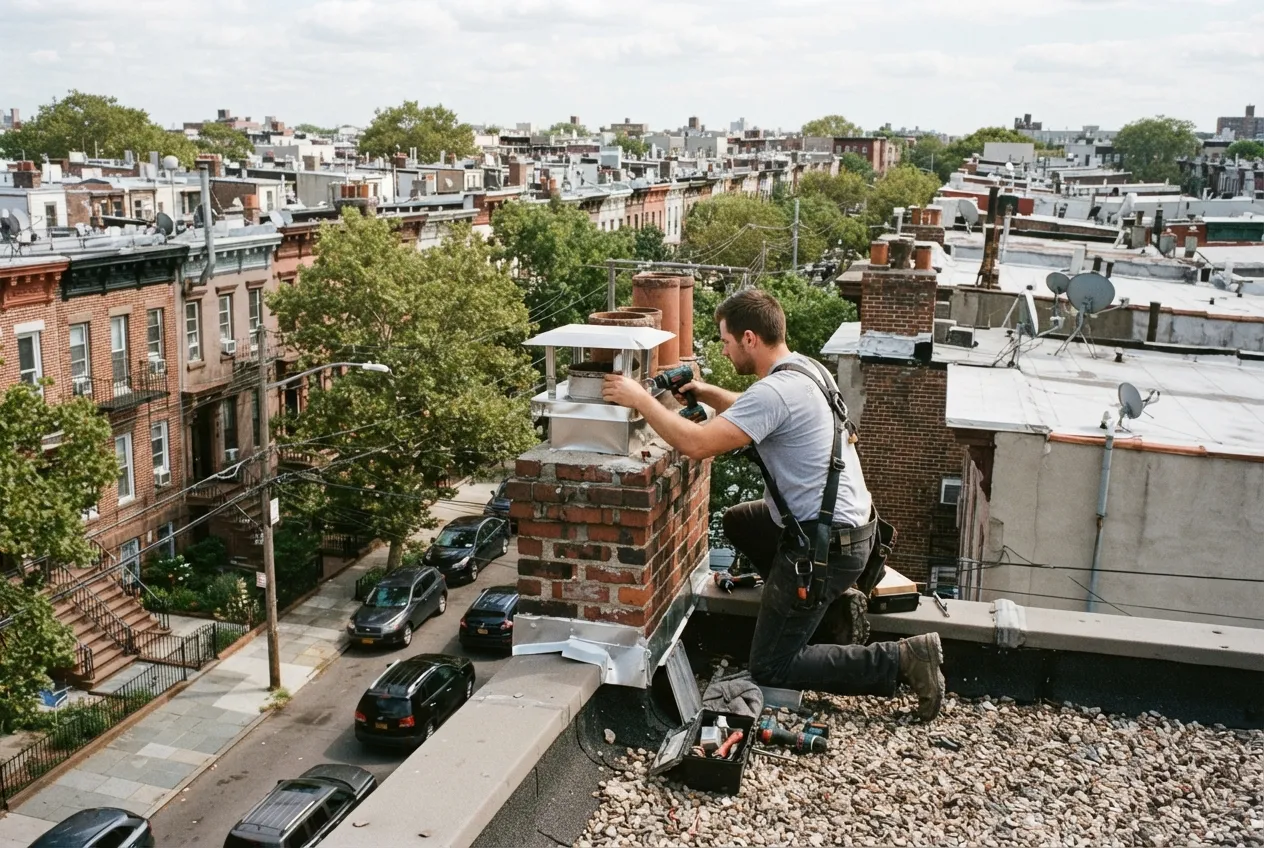
The top of a chimney takes more weather than almost any other part of a house. A chimney cap sits over the flue opening to keep out rain, snow, leaves and animals, and to stop sparks from landing on the roof. On prefabricated or framed chimneys, a chase cover is the metal panel that seals the top of the wood or siding enclosure around the flue. When either one is missing, rusted, cracked or the wrong size, water and debris get in where they can do real damage: rusted dampers, soaked masonry, stained ceilings and nests that block exhaust. ClearStack Chimney Service measures, installs and replaces caps and chase covers for homeowners in Brooklyn and nearby areas. Our certified technicians start by checking the flue and the top of the chimney so the new cap or cover fits the actual opening and the problem it needs to solve.
Signs you need a new chimney cap or chase cover
Most owners notice a cap or chase cover problem from inside the house first. Water and animals get into the flue long before anyone climbs onto the roof to look. If you see any of the signs below, the top of the chimney is worth checking before the next heating season, and certainly before the next storm.
- Scratching, chirping or rustling sounds coming from the chimney or fireplace
- Water, puddles or wet ash in the firebox after rain or snow
- Debris, twigs, leaves or flakes of brick and mortar dropping into the firebox
- White staining on the chimney brick, a sign that moisture is moving through the masonry
- Poor draft or smoke rolling into the room, which a nest or debris blockage can cause
- Rust streaks running down the chimney or siding below a metal chase cover
- A chase cover that sags or holds standing water in the middle
What's included
Every cap and chase cover job starts with a look at the flue and the top of the chimney. A cap only helps if it fits the flue tile or liner correctly and the masonry or chase beneath it is sound. Here is what the visit covers.
- Visual inspection of the chimney top, crown, flue tile or liner, and any existing cap or chase cover
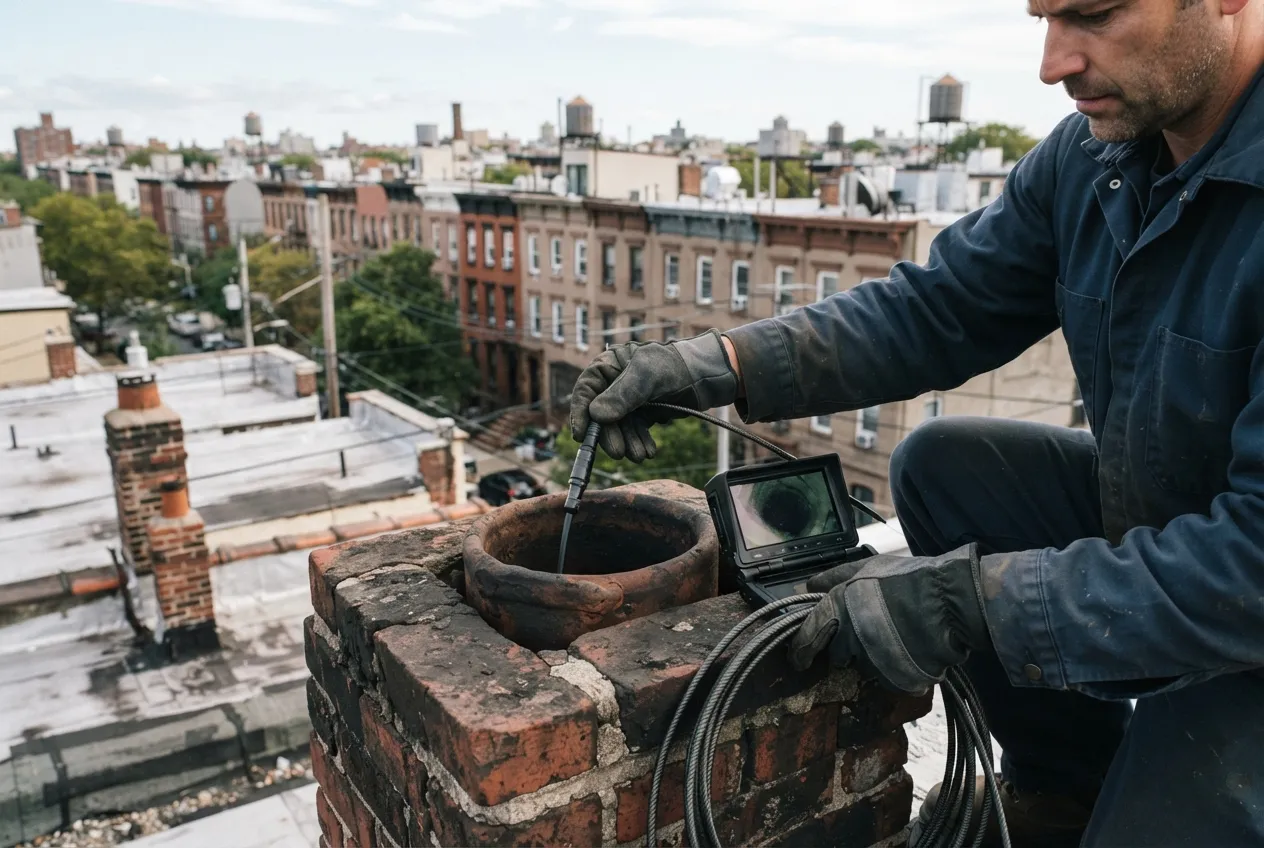
- Camera check of the flue when there are signs of a nest, blockage or water damage inside
- Removal of nests and debris from the top of the flue, done humanely where animals may be present
- Measuring each flue opening, or the full chase top, so the new piece fits properly
- Installing a cap with mesh screening sized to keep out animals and stop sparks
- Fabricating or fitting a sloped chase cover so water runs off instead of pooling
- Sealing the cover at the edges and fastening the cap securely against wind
- Removing and hauling away the old cap or cover
- Photos of the chimney top before and after, plus notes on any other issues found
How we work on the roof and inside your home
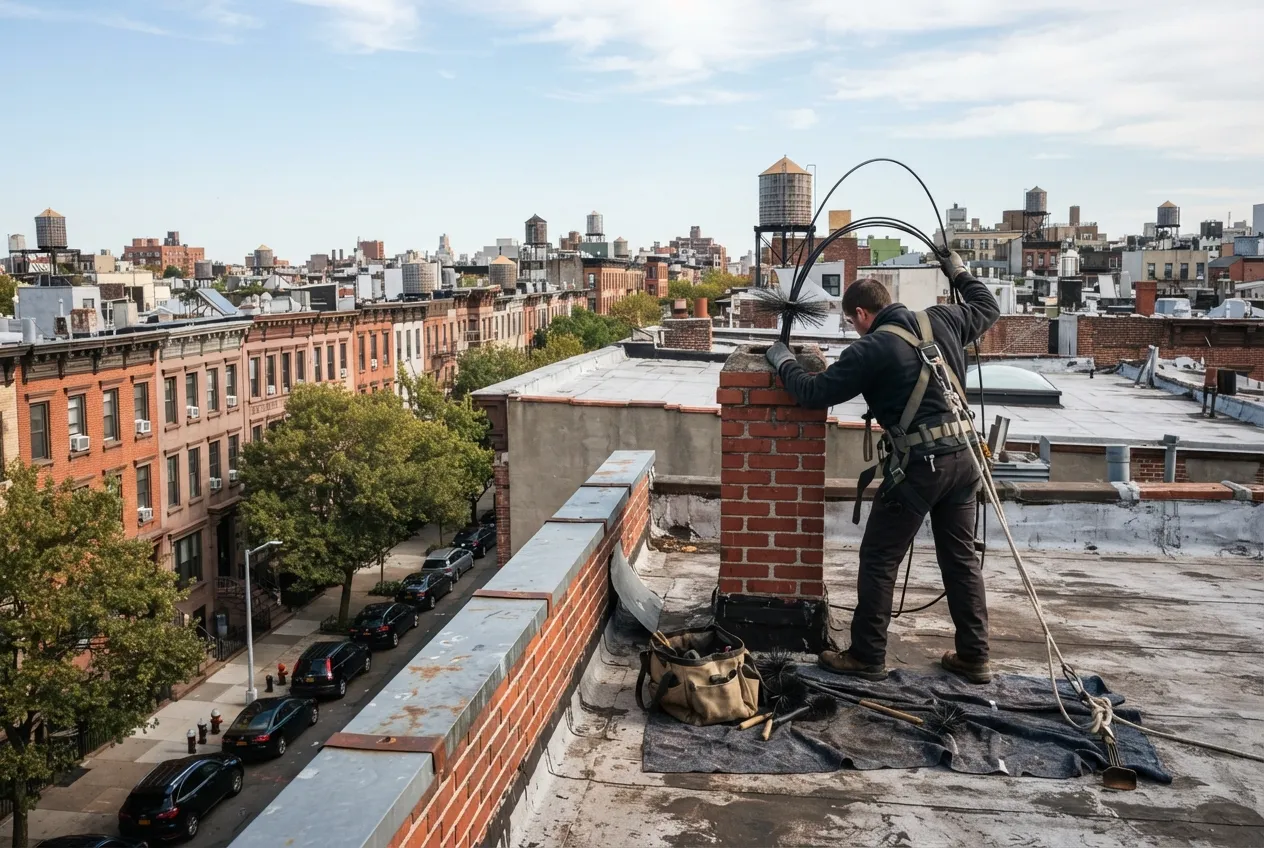
On the roof, the crew sets up safe access with ladders and fall protection suited to the roof pitch and height. Many Brooklyn rowhouses and multi-family homes have flat roofs reached through a hatch or bulkhead, and some homes have steep pitched roofs. Either way, we plan access before we start. We check the crown and flue tiles for cracks, clear the opening, then measure and install the cap or cover. Fasteners and sealant are chosen for the material, whether masonry, a metal liner or a framed chase.
Inside the house, we protect the fireplace area with drop cloths before any debris comes down the flue. If the flue needs sweeping because of buildup or a nest, we use rotary brushes and HEPA vacuums so soot and dust stay out of your living space. When a camera inspection is needed, we run the camera from the firebox or the top of the chimney and show you what we found.
Time for your annual chimney check?
The standard we follow
The NFPA 211 standard calls for chimneys, fireplaces and vents to be inspected once a year. Chimney professionals use three inspection levels. Level 1 applies when nothing about the system has changed. Level 2 applies when the system changes, for example a new appliance or a switch of fuel, or when the home is sold. Level 3 applies when a hidden hazard has to be reached by opening part of the chimney or the building. Most cap and chase cover jobs happen alongside a Level 1 inspection. If we find damage that needs a closer look, we explain which level of inspection would be appropriate and why.
If your building is converting its boiler from oil to gas, the chimney has to be evaluated as part of that work. A new liner is often needed because gas exhaust produces acidic condensate that can corrode a masonry flue. In that case, the cap should be fitted to the new liner rather than the old flue.
What affects the price
Every chimney top is different, so we give a quote after seeing the chimney rather than quoting one flat rate. The main factors are listed below.
- Chimney height, roof pitch and how the crew reaches the roof
- Number of flues and their size and shape, since multi-flue and odd-sized openings may need a custom cap
- Whether the chimney is masonry or a framed chase, and the size of the chase top
- Fuel type and the condition of the flue tile or liner
- How much debris, nesting material or buildup has to be cleared first
- Whether a camera inspection or repairs to the crown, masonry or chase are needed
How a visit works
When you contact us, we ask about the signs you have noticed, your fuel type and your roof access. At the visit, the technician protects the work area, inspects the chimney top and flue, and explains what is going on, with photos. If a standard cap fits, it can often be installed the same day. Custom caps and chase covers are measured on the first visit and installed once they are made. Before we leave, we clean up the work area and go over anything else we noticed. New York City's heat season runs from October 1 through May 31, so scheduling cap and cover work in late spring or summer helps you avoid the fall rush.