The short answer
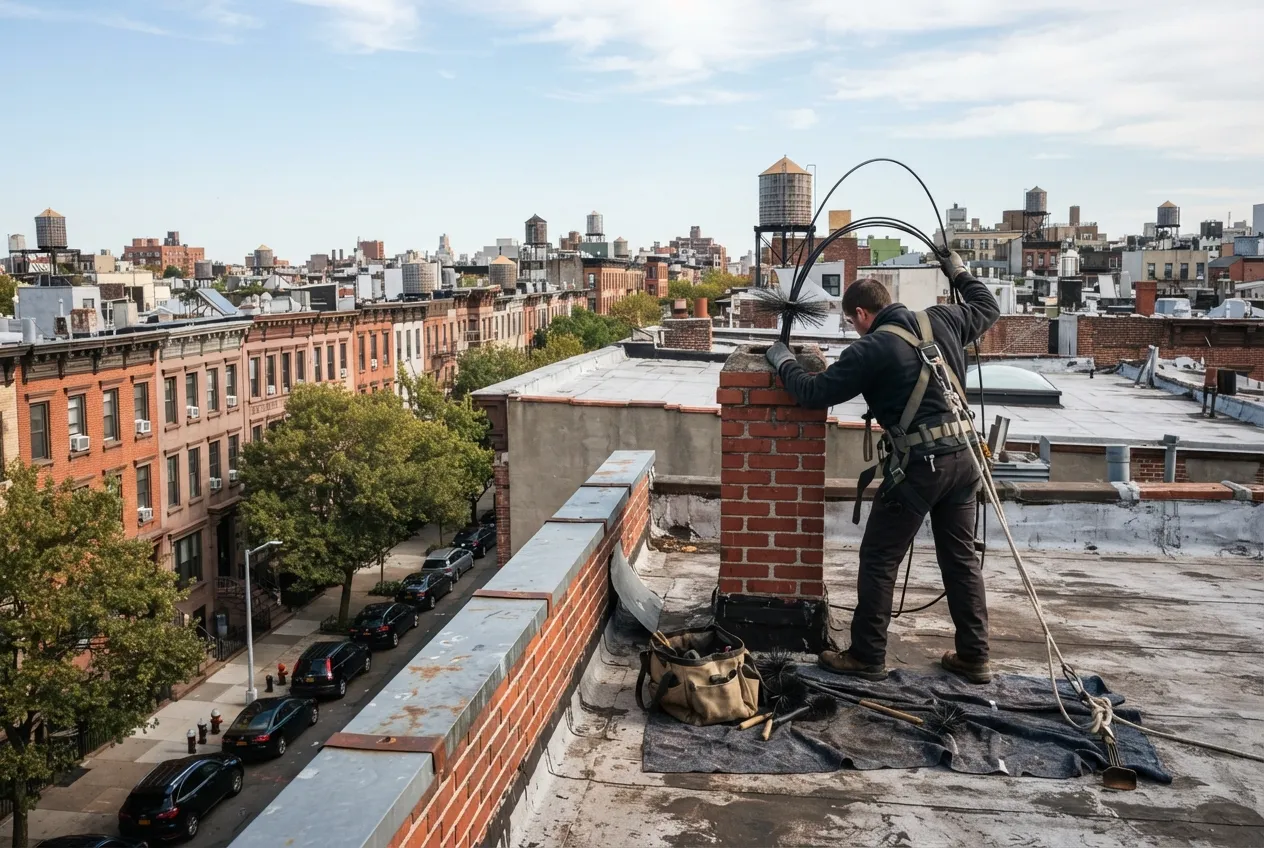
Yes, ClearStack Chimney Service covers all of Kensington, Brooklyn (ZIP 11218) from our Dyker Heights office about 2 miles away. Our certified technicians handle chimney sweeping, inspections, repairs, liners, waterproofing, and air duct and dryer vent cleaning for the neighborhood's detached homes, rowhouses, and pre-war buildings.
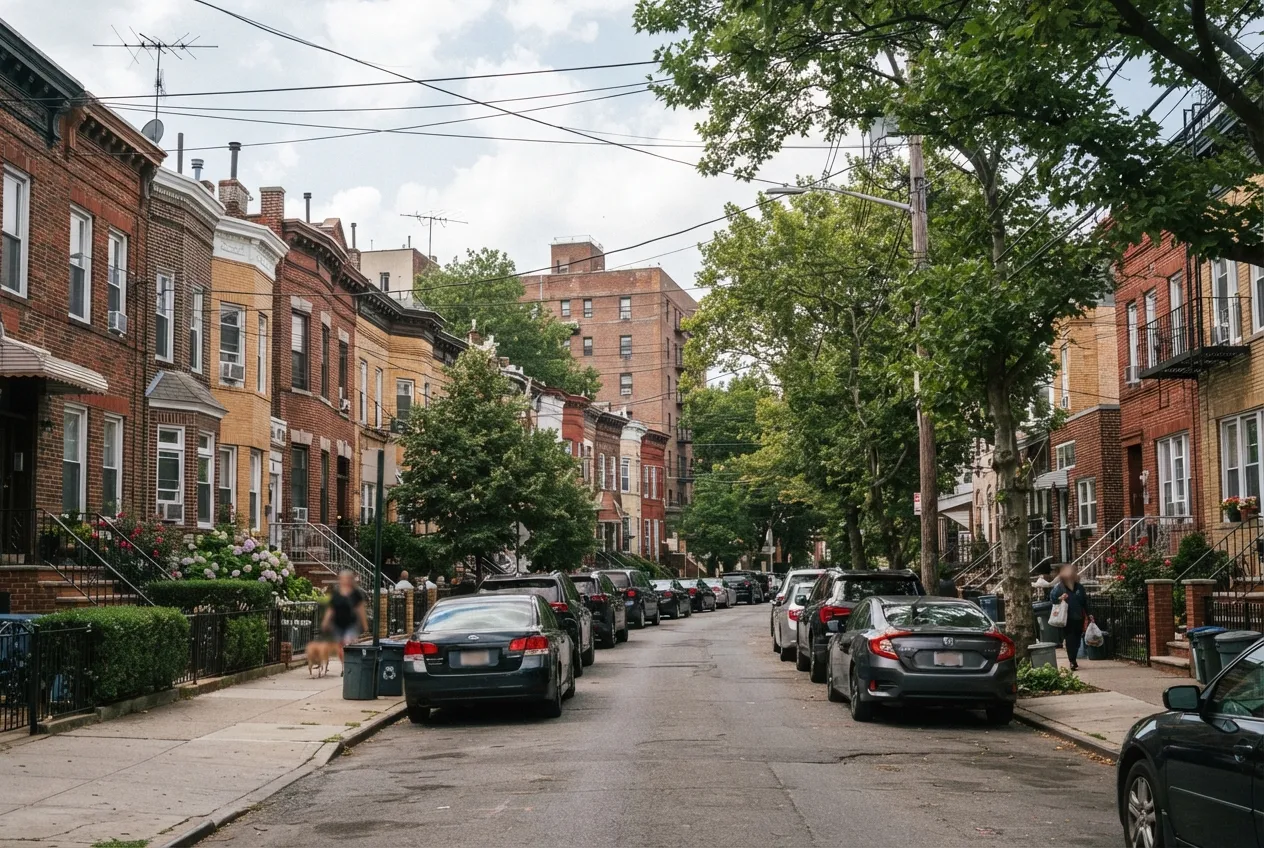
ClearStack Chimney Service works throughout Kensington, Brooklyn (ZIP 11218), about 2 miles northeast of our office in Dyker Heights. Kensington's housing mix includes detached homes, attached rowhouses, and pre-war apartment buildings. That means we see everything from wood-burning fireplaces to masonry flues serving a shared boiler. Our certified technicians sweep, inspect, and repair chimneys, install liners, and clean air ducts and dryer vents. This page covers what local homeowners and building owners ask about most and how Brooklyn's seasons affect the work.
Chimney Service for Kensington Homes and Buildings
Many houses in Kensington were built when wood and coal were the main ways to heat a home, and their masonry chimneys have seen decades of use since. Some fireplaces still burn wood. Some have been closed off. Many flues now vent a gas boiler or water heater instead. Each setup wears differently, so we start by looking at how your chimney is actually used today.
In pre-war apartment buildings, a single tall flue often serves the building's boiler, so a problem there can affect every unit. In detached homes and rowhouses, the chimney is usually the owner's responsibility alone. We work with both homeowners and building owners.
- Chimney sweep: removes soot, creosote, and debris from the flue
- Chimney inspection: an annual check, plus deeper inspections when something changes
- Chimney repair: repointing, crown repair, and fixes for loose or cracked brick
- Chimney liner installation: new liners for damaged flues or new appliances
- Chimney cap and chase cover: keeps out rain, birds, and animals
- Chimney waterproofing: a breathable treatment that helps brick shed water
- Fireplace and damper repair: restores a working seal and safe operation
- Chimney rebuilding: replaces sections too damaged to repair
- Dryer vent cleaning: clears lint from the full vent run
- Air duct cleaning: for visible mold, vermin, or heavy dust and debris
How Brooklyn Weather Wears on a Chimney
Kensington gets cold, wet winters with plenty of nights below freezing and days that climb back above it. Water soaks into brick and mortar, then freezes and expands, which slowly pushes the masonry apart. Over a few seasons, this shows up as cracked crowns, loose bricks, crumbling joints, and stains on ceilings or walls near the chimney.
Spring rain, summer thunderstorms, and coastal storms in fall and winter add more water. Humid summers can also bring a strong odor out of a fireplace that has a damp, sooty flue.
Caught early, the fixes are usually straightforward. A chimney cap keeps out rain and animals, and a chase cover protects framed chimneys. A breathable waterproofing treatment helps the brick shed water, and repointing or crown repair addresses failed mortar. When the damage has gone too far, rebuilding the top section of the chimney may be the safer choice.
Yearly Inspections and Sweeping
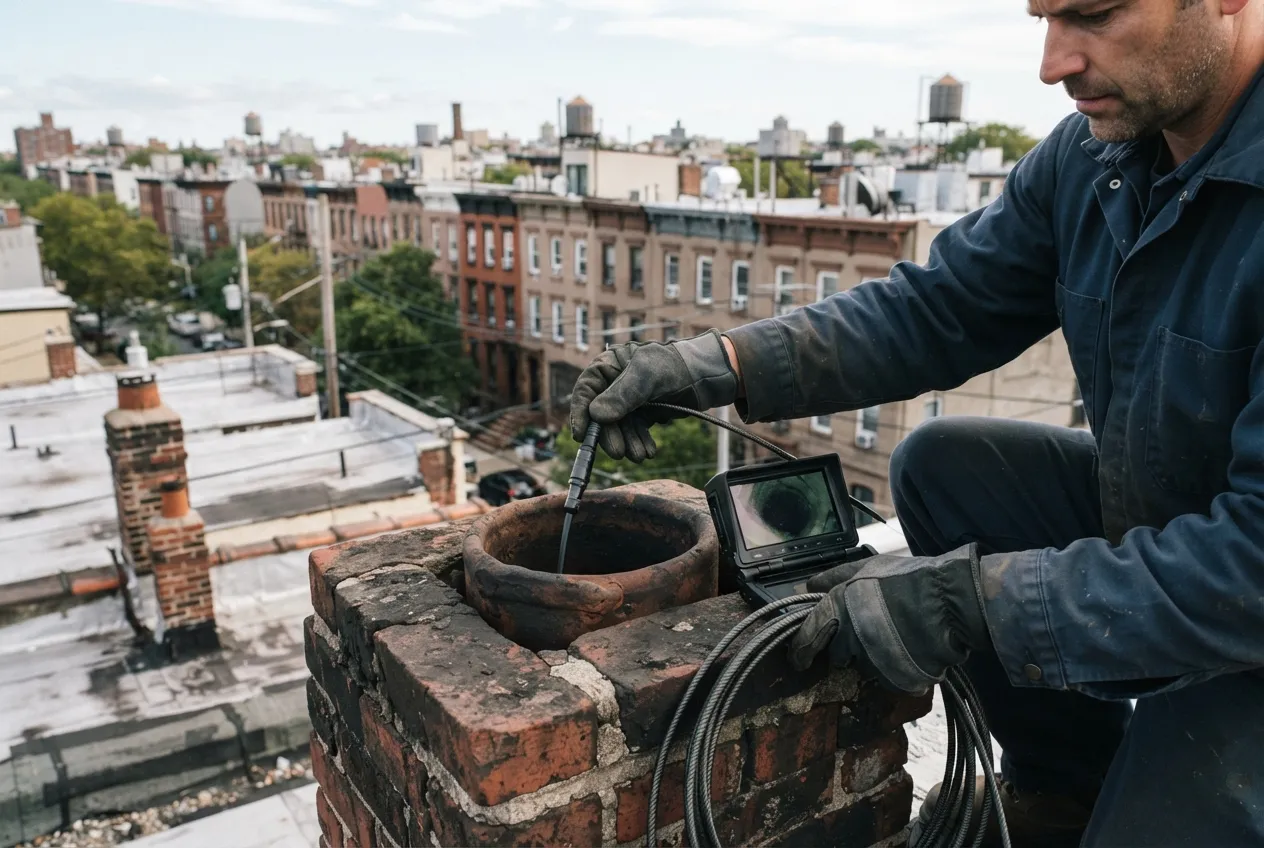
The NFPA 211 standard calls for chimneys, fireplaces, and vents to be inspected once a year. Chimney professionals use three inspection levels. Level 1 applies when nothing about the system has changed. Level 2 applies when the system changes, such as a new appliance or a switch of fuel, or when the home is sold. Level 3 applies when a hidden hazard can only be reached by opening part of the chimney or building.
New York City's heat season runs from October 1 through May 31, and building owners must keep apartments heated to the city's minimums during that time. For boiler flues and fireplaces alike, late summer and early fall are the practical time for an inspection and sweep. The system isn't running every day yet, and a needed repair won't leave anyone in a cold building.
Time for your annual chimney check?
Oil-to-Gas Conversions and Chimney Liners
When a New York City building converts its boiler from oil to gas, the chimney has to be evaluated as part of the work. A new liner is often needed because gas exhaust produces acidic condensate that can corrode an old masonry flue.
Some Kensington homes and buildings are planning a conversion. Others have already converted without a liner check. In either case, we can inspect the flue and, where needed, install a liner sized for the new appliance. We also install liners when an inspection finds cracked clay tiles or gaps in an older flue.
Dryer Vent and Air Duct Cleaning
According to the U.S. Fire Administration, failure to clean is the leading factor contributing to clothes dryer fires in homes. Long or winding vent runs, common in attached houses and apartments, collect lint quickly. Signs you're due include clothes taking longer to dry, a hot laundry room, or lint around the outside vent flap.
For air ducts, we follow the EPA's guidance. Cleaning makes sense when there is substantial visible mold growth, vermin, or excessive dust and debris. The EPA also notes that duct cleaning hasn't been shown to prevent health problems, so we won't promise that it will. We explain the process before we start and are careful with chemical treatments, which the EPA also urges caution about.
ZIP codes we serve
- 11218
Services in Kensington
- Chimney Sweep in Kensington
- Chimney Inspection in Kensington
- Chimney Repair in Kensington
- Air Duct Cleaning in Kensington
- Chimney Liner Installation in Kensington