The short answer
Most chimneys that are used regularly should be checked once a year and swept when soot or creosote has built up, as the NFPA 211 standard recommends. A ClearStack sweep cleans the flue, smoke chamber and firebox, includes a basic inspection, and is done with drop cloths and HEPA vacuums so soot stays out of your home.
A fireplace or wood stove that goes unswept builds up creosote, soot and debris inside the flue. Creosote is flammable, and a flue narrowed by soot, fallen masonry or a nest can push smoke back into the room instead of carrying it up and out. ClearStack Chimney Service sweeps chimneys for homeowners in Brooklyn and nearby cities, including brownstone fireplaces, freestanding wood stoves and the flues that serve oil and gas boilers. Our certified technicians clean the flue from the firebox to the cap, check the system as they work, and leave your living space the way they found it. Below you'll find the signs that a sweep is due, what's included, how the crew works inside your home and on the roof, and what to expect from a visit.
Signs you need a chimney sweep
Many homeowners don't think about the chimney until something seems off. If you notice any of the following, schedule a sweep and inspection before your next fire. If smoke is coming into the room, stop using the fireplace until the flue has been checked.
- A smoky or tar-like creosote smell, especially on humid days or when the air conditioning is running
- Poor draft: the fire is hard to start, burns weakly, or smoke drifts into the room
- Soot, debris or flakes of brick and mortar collecting in the firebox
- White staining on the chimney brick, a sign that moisture is moving through the masonry
- Scratching, chirping or flapping sounds that suggest birds or animals in the flue
- Water or damp ash in the firebox after rain
What's included in a chimney sweep
Every sweep covers the full path the smoke travels, not just the part you can see from the hearth. When we're done, we explain what we found in plain terms and show you photos of anything that needs attention.
- Protecting the hearth and nearby floors and furniture with drop cloths
- Brushing the full length of the flue to remove soot and creosote
- Cleaning the smoke chamber and smoke shelf above the damper
- Checking that the damper opens, closes and seals
- Vacuuming the firebox and removing all debris
- Removing nests or blockages where they can be safely reached
- Checking the chimney cap, crown and visible masonry from the roof when access allows
- A basic visual inspection, with a camera inspection recommended when the flue's condition can't be confirmed by eye
- Photos and a written summary of findings and any recommended repairs
How our crew works in your home and on the roof
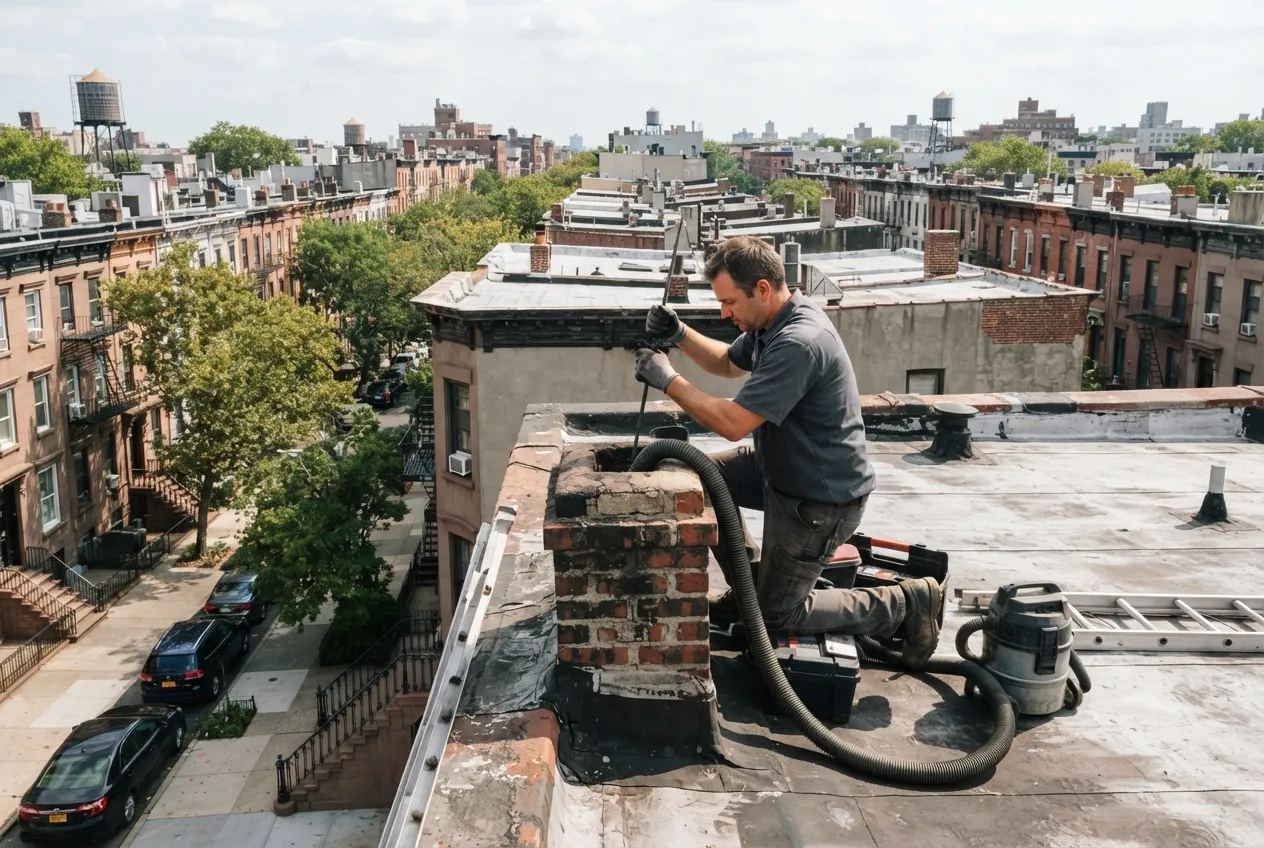
Inside, the crew starts by laying drop cloths from the door to the fireplace and covering the hearth. We seal the fireplace opening and run a HEPA vacuum during the sweep, which keeps fine soot from drifting into the room. Rotary brushes on flexible rods are run through the flue to scrape buildup from the liner walls, and the loosened material falls to the firebox, where it's bagged and vacuumed out.
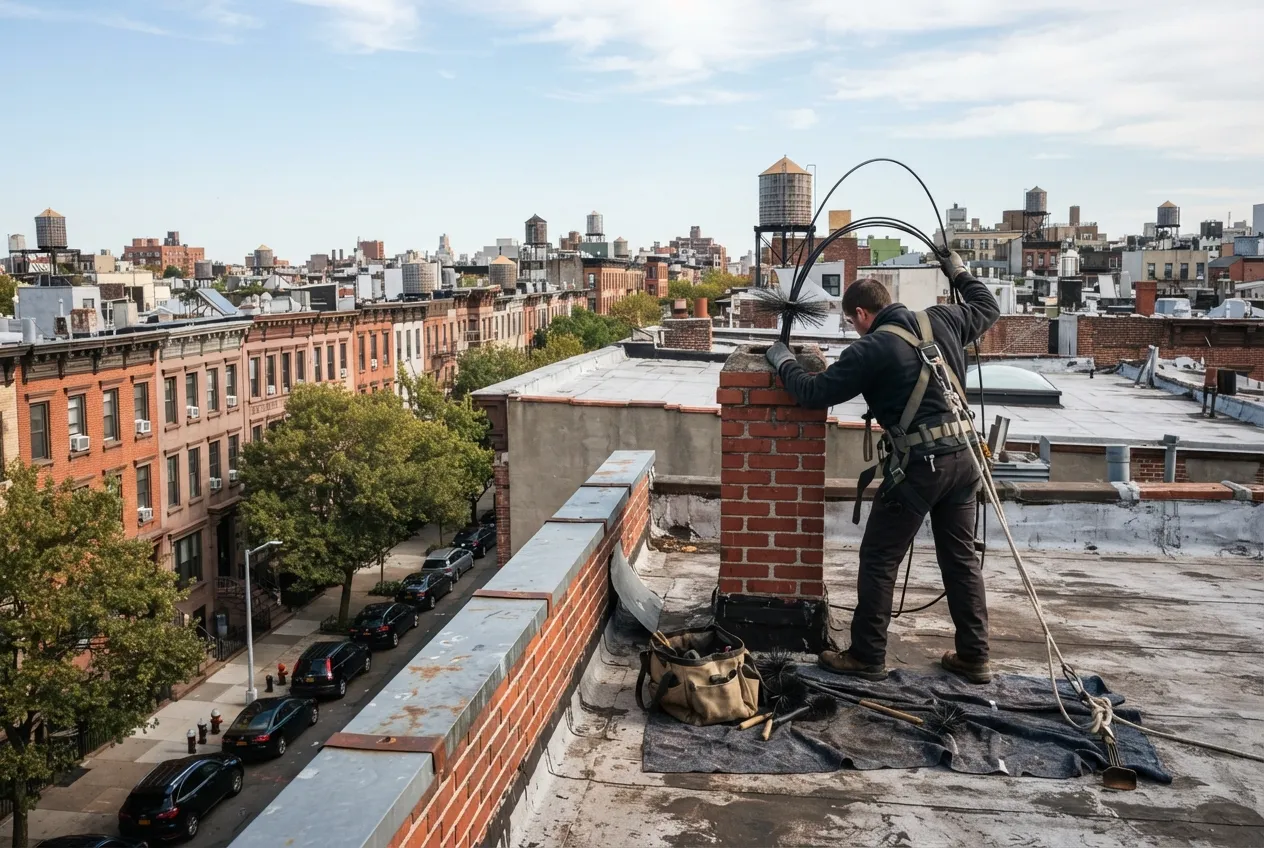
On the roof, a technician looks at the cap, the crown and the top of the flue, and can brush from above when the chimney's layout calls for it. In row houses and attached homes, we confirm which flue belongs to your fireplace or appliance before starting, since several flues often share one chimney stack.
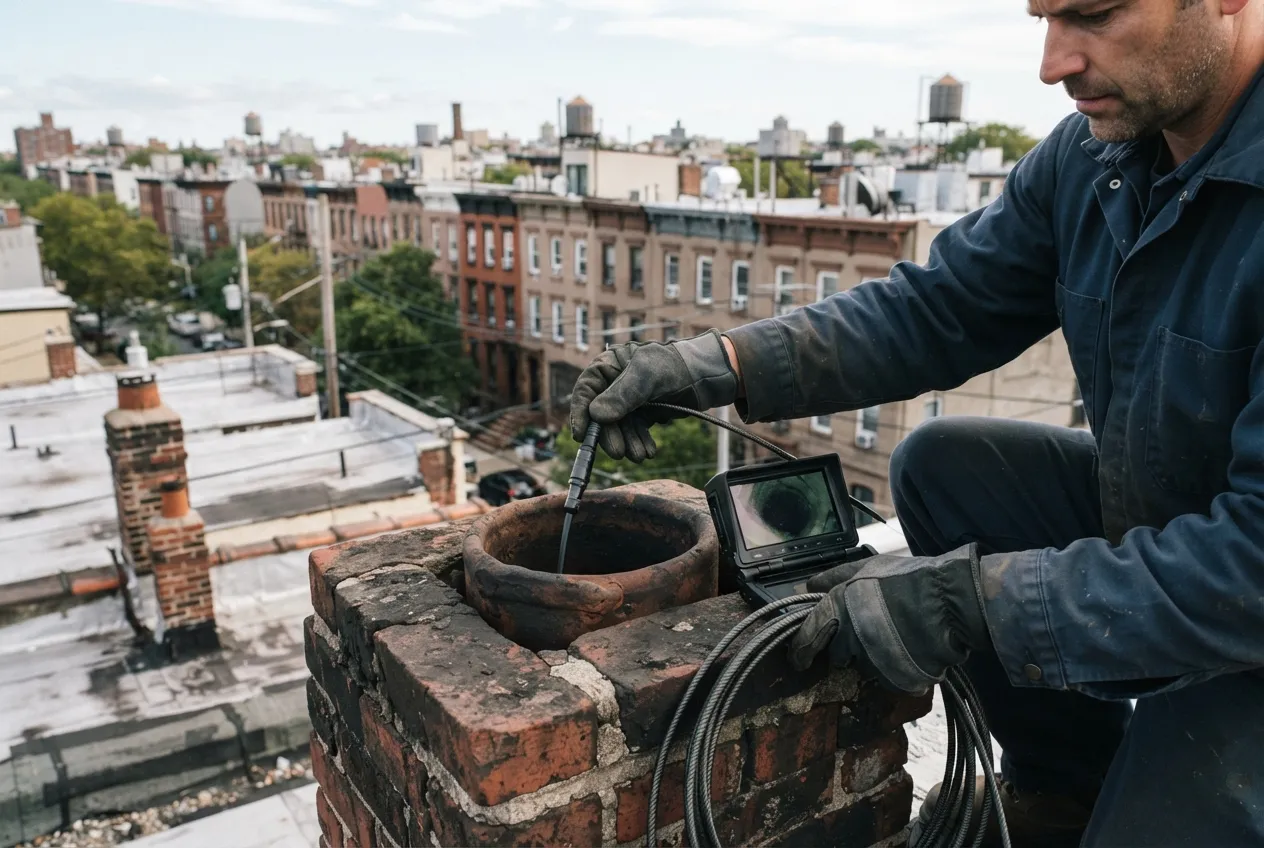
When the flue can't be judged by eye, we run a camera through it to look for cracks, gaps between liner tiles, heavy glazed creosote or obstructions. The footage lets you see the same thing we do before you decide on any repair.
Time for your annual chimney check?
The standard we follow
Our work follows NFPA 211, the national standard for chimneys, fireplaces and vents. It calls for these systems to be inspected once a year, whether or not you think they need cleaning. Chimney professionals use three inspection levels. A Level 1 inspection is for a system that hasn't changed and is in regular use. A Level 2 inspection is called for when something changes, such as a new appliance or a switch from one fuel to another, and when a home is sold. A Level 3 inspection is needed only when a suspected hidden hazard can't be reached without opening part of the chimney or the building.
Fuel changes matter in New York City. When a building converts its boiler from oil to gas, the chimney has to be evaluated as part of that work, and a new liner is often needed because gas exhaust produces acidic condensate that can corrode a masonry flue. Since the city's heat season runs from October 1 through May 31, late summer or early fall is a practical time to have a boiler flue checked, before the heat needs to stay on.
What affects the price of a sweep
We give you a clear quote before any work starts. The main factors that affect the cost are:
- Chimney height and how easy it is to reach the roof safely
- Fuel type: wood, oil and gas each leave different kinds of residue
- Flue size, shape and the condition of the liner
- How much soot, creosote or debris has built up, including hardened, glazed creosote that takes extra work to remove
- Whether a camera inspection is needed to assess the flue
- Whether repairs, such as a new cap, damper work or liner work, are recommended and approved
How a visit works
When you book, we ask what you burn, how often you use the fireplace or stove, and whether you've noticed any warning signs. Please don't use the fireplace for at least a day before the visit so the ashes are cold and the flue can be cleaned safely.
On the day of the visit, the crew sets up drop cloths and vacuums, sweeps the flue, checks the roof where access allows, and cleans up. Most standard sweeps take a couple of hours, though heavy buildup or a camera inspection can add time. Before leaving, the technician goes over the findings with you, shares photos, and explains any recommended repairs and why they matter. Nothing beyond the agreed sweep is done without your approval.
Chimney Sweep by city
- Chimney Sweep in Dyker Heights
- Chimney Sweep in Bensonhurst
- Chimney Sweep in Bath Beach
- Chimney Sweep in Bay Ridge
- Chimney Sweep in Borough Park
- Chimney Sweep in Mapleton
- Chimney Sweep in Sunset Park
- Chimney Sweep in Kensington
- Chimney Sweep in Midwood
- Chimney Sweep in Gravesend
- Chimney Sweep in Ditmas Park
- Chimney Sweep in Parkville