The short answer
Chimney waterproofing means sealing the openings where water enters, like the crown, flashing and cap, and then coating the brick with a vapor-permeable water repellent. It is worth doing when you see water in the firebox, white staining or flaking brick, and the masonry has to be repaired and dry before the repellent goes on.
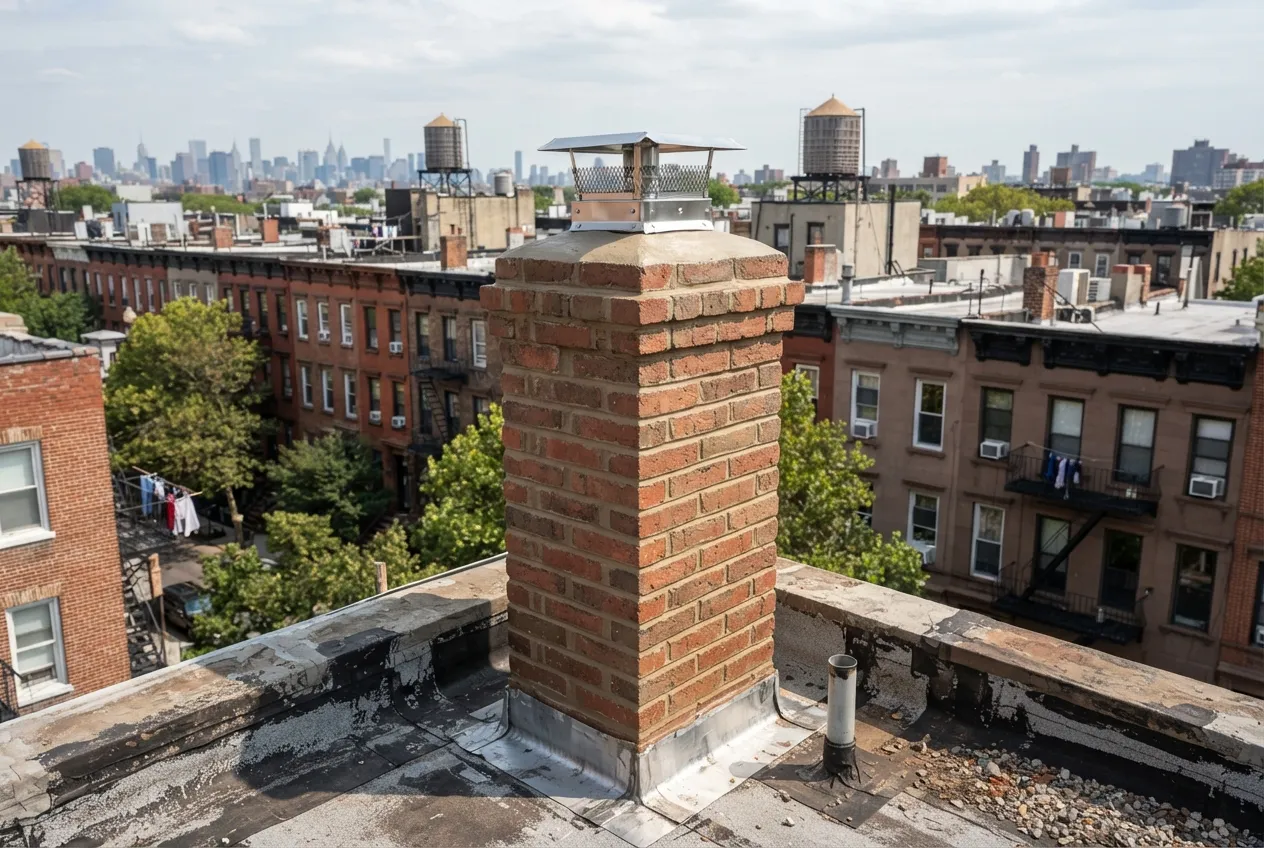
Brick and mortar look solid, but they act like a sponge. Every rainstorm pushes water into the face of a chimney, and in a Brooklyn winter that water freezes, expands and pries the brick apart from the inside. Over a few seasons you get crumbling joints, flaking brick faces, rusted dampers and water dripping into the firebox. Chimney waterproofing slows that cycle down. ClearStack's certified technicians first find and fix the places where water is getting in, such as a cracked crown, loose flashing or a missing cap. Then they apply a breathable masonry water repellent that sheds rain but still lets moisture inside the brick escape. We serve homeowners in Brooklyn and nearby cities, from row houses and brownstones to detached homes with tall exterior stacks.
Signs you need it
Water damage to a chimney usually shows up slowly, and much of it happens where you can't see it. These are the signs homeowners most often notice before calling us. If you see more than one, the chimney has probably been taking on water for a while.
- Water or damp ash in the firebox after a rainstorm
- White, powdery staining on the brick (efflorescence), inside or outside
- Flakes of brick, bits of mortar or other debris collecting in the firebox
- A strong, musty smoke or creosote smell, especially on humid days, because damp creosote gives off more odor
- Brick faces popping off or mortar joints you can push a fingernail into
- Water stains on the ceiling or wall next to the chimney
- A rusty damper or firebox parts that stick when you try to move them
What is included
A waterproofing visit covers more than a coat of sealer. Repellent sprayed over a cracked crown or open joints won't stop leaks, so we check every common entry point first and tell you what we find before any work starts.
- Visual check of the chimney exterior, crown, cap and flashing from the roof
- Check of the firebox, damper and smoke chamber from inside the home
- Camera inspection of the flue where water damage or a leak source is suspected
- Cleaning loose dirt, moss and efflorescence off the brick so the repellent can bond
- Pointing small open mortar joints and sealing hairline cracks in the crown
- Resealing or noting repairs needed on the flashing where the chimney meets the roof
- Checking that the chimney cap is present, secure and sized to the flue
- Applying a vapor-permeable masonry water repellent to the exposed brick and mortar
- Photos of the chimney before and after, with written notes on anything that still needs attention
How our crew works on the roof and in your home
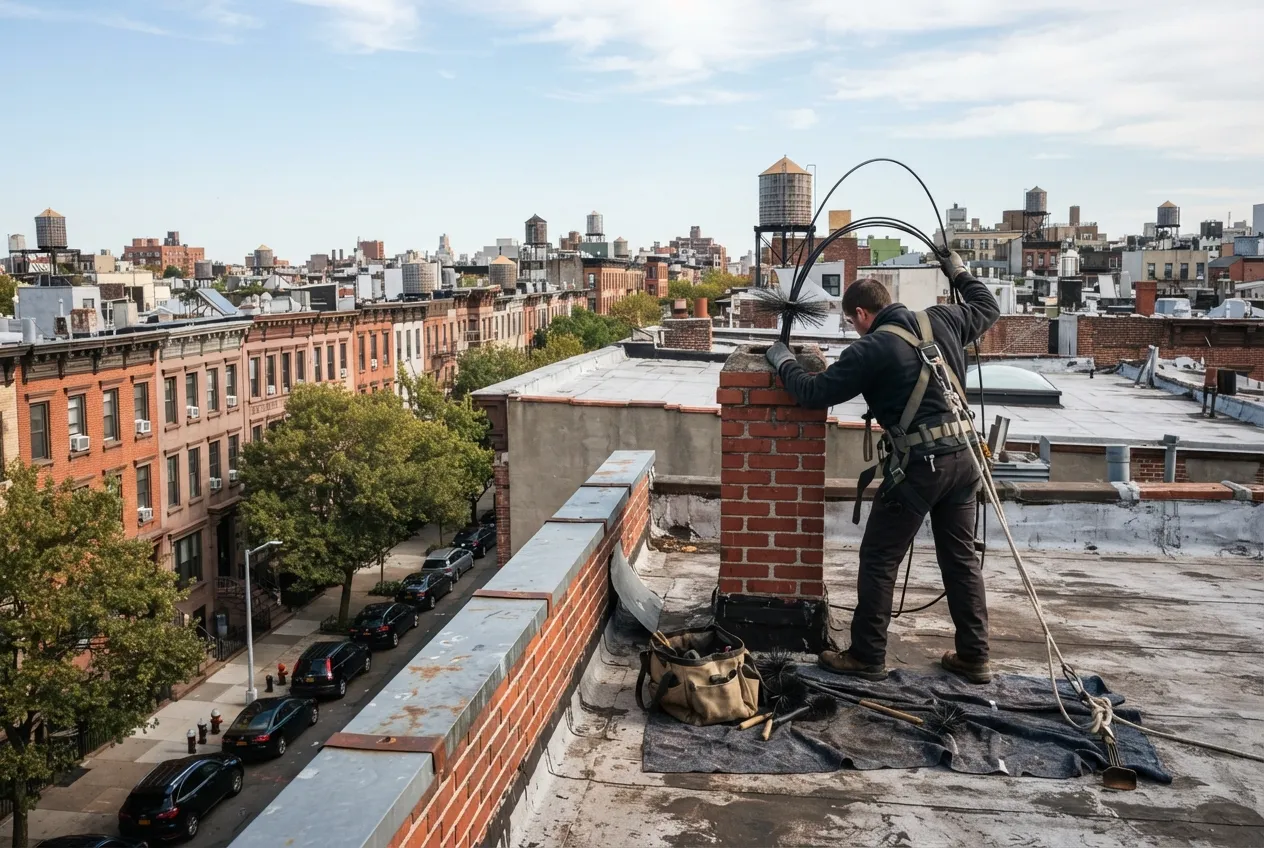
On the roof, the crew sets up safe access first. On attached houses that often means working from the roof hatch or a neighboring roof line, and on detached homes it means ladders placed so they don't damage gutters. We clean the masonry, make small repairs and let them cure before applying the repellent. We only apply it when the brick is dry and no rain is expected, so we sometimes have to reschedule around the weather.
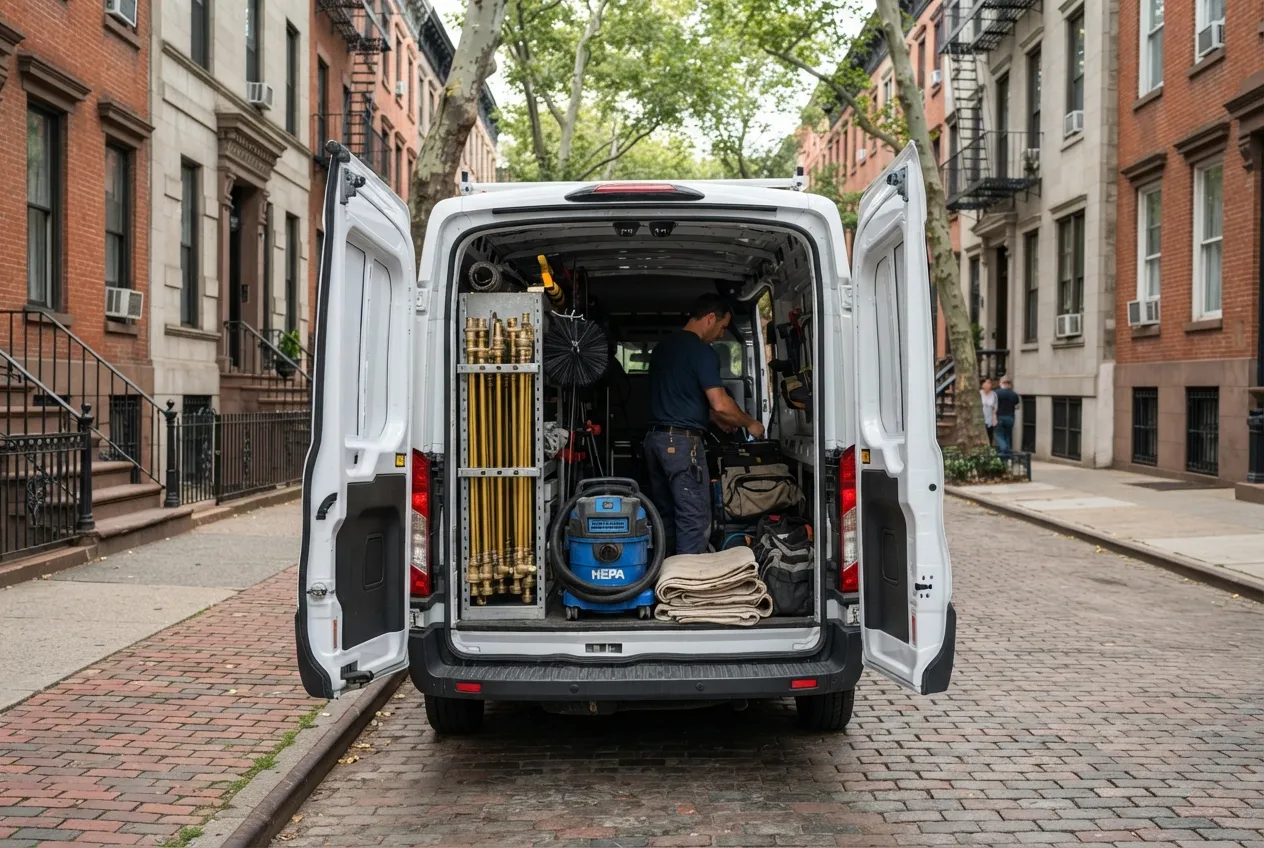
Inside, we lay drop cloths from the door to the fireplace and seal the fireplace opening. If the flue needs sweeping before we inspect it, we use rotary brushes and run HEPA vacuums the whole time to catch soot and fine dust. When we need to see the flue lining, we run a camera up the chimney and show you the footage on the spot. Before we leave, we clean up the work area and walk you through what we did.
Time for your annual chimney check?
The standard we follow
Our chimney work follows NFPA 211, the national standard for chimneys, fireplaces and vents. It calls for these systems to be inspected once a year. Chimney professionals use three inspection levels. Level 1 is for when nothing about the system has changed. Level 2 is for when the system changes, such as a new appliance or a switch in fuel, or when the home is sold. Level 3 is for when a hidden hazard can only be reached by opening part of the chimney or the building.
Most waterproofing visits include a Level 1 inspection. If you are buying or selling a home, or the water damage looks extensive, we will explain whether a Level 2 inspection makes sense. If your building has switched its boiler from oil to gas, the chimney has to be evaluated as part of that work. A new liner is often needed, because gas exhaust produces acidic condensate that can eat away at a masonry flue from the inside. Waterproofing the outside won't fix that problem, so we check for it.
What affects the price
Every chimney is different, so we quote after we have seen yours. These are the main factors:
- Chimney height and how hard the roof is to reach
- How much brick surface is exposed and needs repellent
- Condition of the brick, mortar and crown, and how much repair is needed first
- Flashing condition and whether it can be resealed or needs replacement
- Whether a cap has to be added or replaced
- Fuel type, and whether a past oil-to-gas conversion raises liner questions
- Flue size and condition, and whether a camera inspection is needed
- How much soot or creosote buildup has to be swept before the inspection
How a visit works
You contact us and describe what you are seeing, and we set a time. When the crew arrives, they inspect the chimney inside and out, show you photos or camera footage, and explain the cause of the problem in plain terms. You get a written quote before we start any repairs or waterproofing. Minor sealing can often be finished the same day. Larger masonry repairs need time to cure, so the repellent goes on during a second visit.
Late summer and early fall are good times to book. The brick is usually dry, and the work is done before you start using the fireplace and before the city's heat season begins on October 1.