The short answer
Borough Park homes usually need a new chimney liner when the old clay or masonry flue is cracked, when a boiler converts from oil to gas, or when a new appliance is installed. A properly sized stainless steel or other approved liner keeps exhaust inside the flue and away from the brick and the rooms around it.
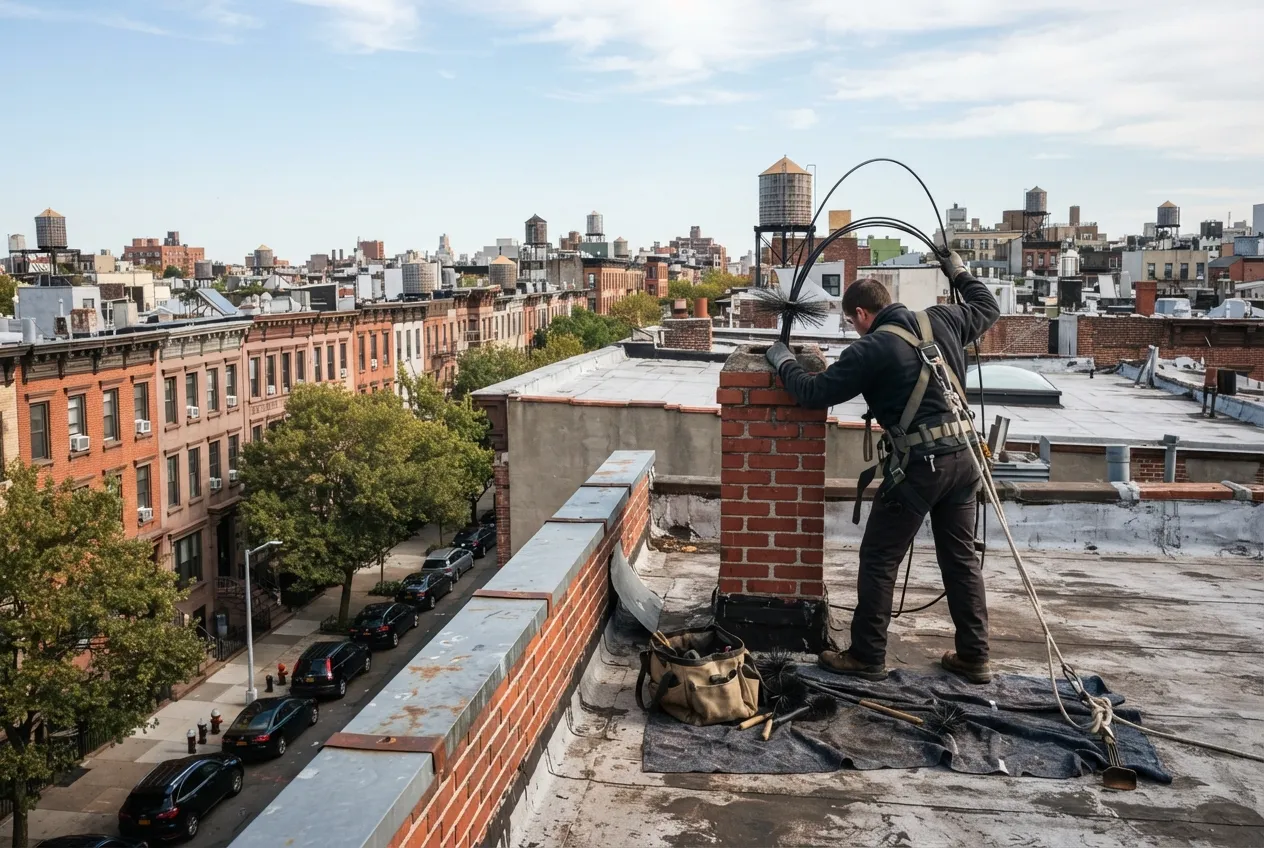
A chimney liner is the protective channel inside your flue that carries smoke or exhaust gases up and out of the house. In many Borough Park homes, that channel is an original clay tile flue, a bare masonry shaft, or a liner that no longer matches the appliance connected to it. ClearStack Chimney Service installs new liners for rowhouses, semi-detached and detached homes, and pre-war apartment buildings throughout Borough Park and ZIP code 11219. Our office in Dyker Heights is about a mile southwest, so we can reach your home without trouble. Our certified technicians start with an inspection, explain what we find in plain terms, and size the liner to the boiler, water heater, furnace, or fireplace it will serve.
Why Older Borough Park Chimneys Often Need Relining
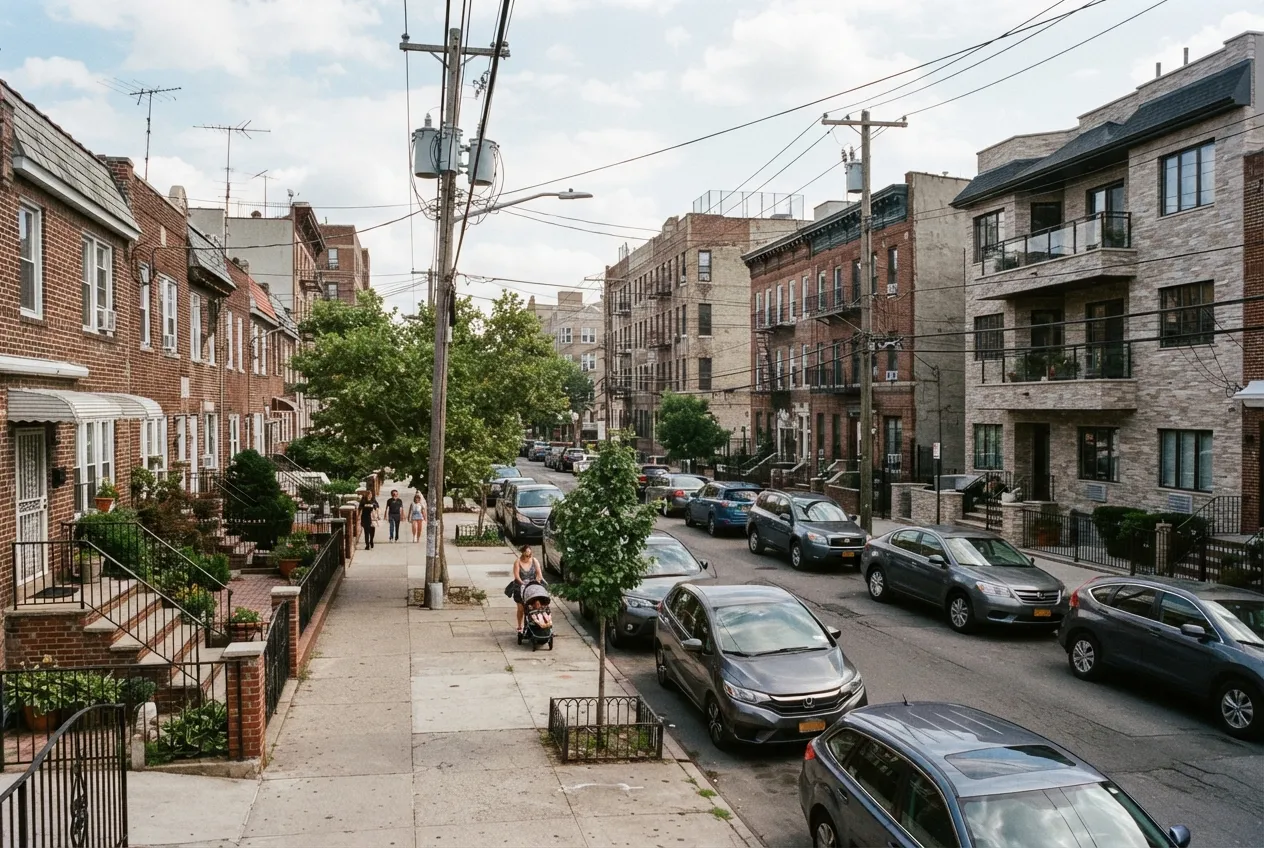
Much of Borough Park's housing is older brick construction, including attached rowhouses and multi-family buildings. Chimneys in these homes were typically built for coal or oil heat, and many have served several generations of heating equipment. Over that time, clay flue tiles can crack, mortar joints between tiles can wash out, and some chimneys never had a tile liner to begin with.
When the flue is damaged, heat and exhaust can reach the surrounding brick and framing. In attached homes, a shared party wall means a problem in one chimney can affect more than one household. A new liner restores a sealed, continuous path from the appliance to the top of the chimney.
Oil-to-Gas Conversions and Your Chimney
Many Brooklyn homes and buildings have switched boilers from oil to gas. When a New York City building converts its boiler from oil to gas, the chimney has to be evaluated as part of the work. A new liner is often needed because gas exhaust produces acidic condensate that can corrode a masonry flue.
That condensate can soak into old mortar and tile, which leads to crumbling flue walls, debris falling to the base of the chimney, and stains or damp spots on interior walls. If you are planning a conversion or have already completed one without a chimney evaluation, we can inspect the flue and tell you whether it needs a liner sized for the new equipment.
Choosing the Right Liner for Your Home
There is no single liner that fits every chimney. We base the recommendation on the appliance, the fuel, the flue's dimensions, and the condition of the existing masonry.
- Stainless steel liners: the most common choice for gas and oil boilers and water heaters, and suitable for many wood-burning fireplaces and stoves when the correct grade is used.
- Liners for multiple appliances: when a boiler and water heater share a chimney, venting has to be sized for both, or each may need its own flue.
- Insulated liners: used where the chimney runs along an exterior wall or where extra clearance to combustibles is needed.
- Fireplace relines: for homes with a working wood-burning fireplace, the liner must match the fireplace opening so the fire drafts properly.
Time for your annual chimney check?
What Installation Looks Like
Most liner jobs follow the same basic steps. We explain each one before work starts so you know what to expect, including whether we need roof access and where we will be working inside the house.
- Inspection of the existing flue, including camera inspection where needed, to confirm its condition and measure it.
- Cleaning the flue and removing loose tile or debris so the new liner can pass through.
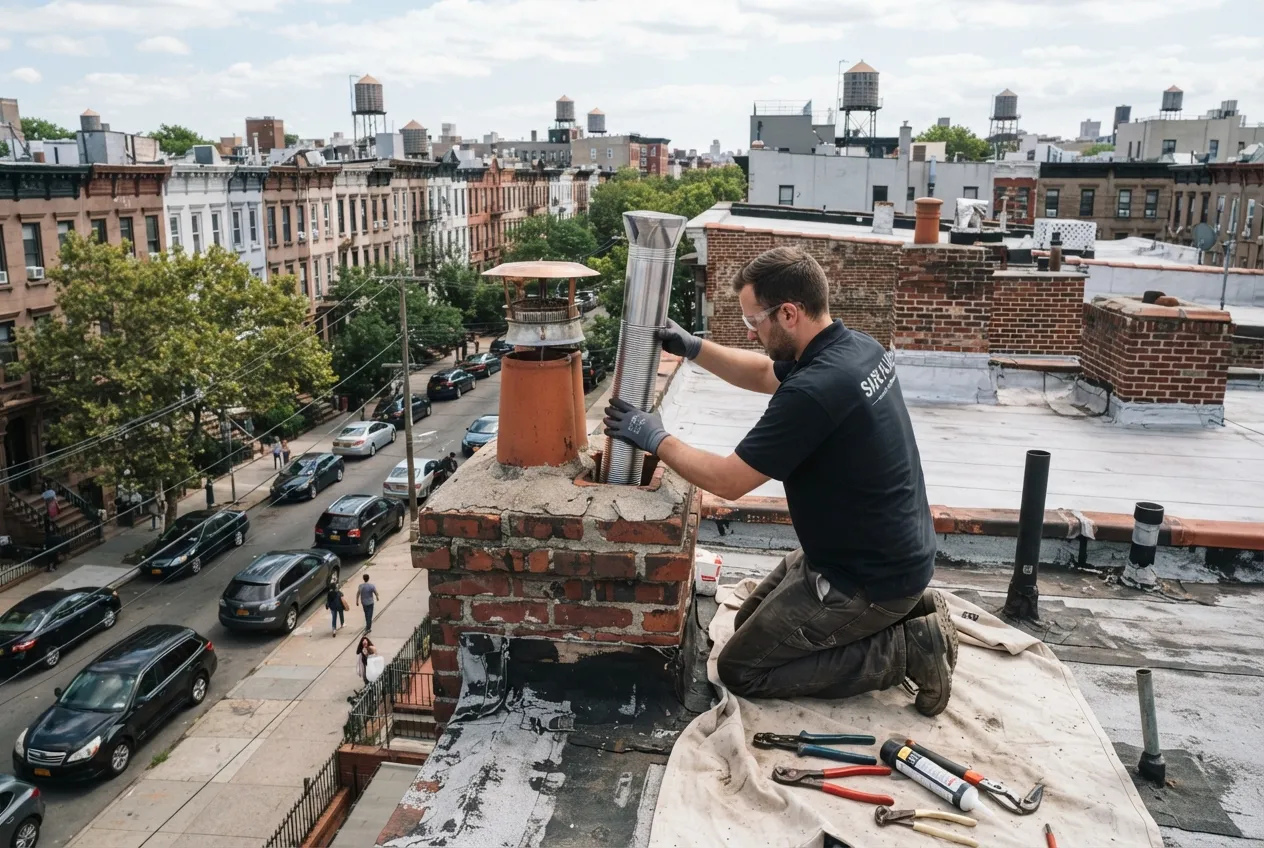
- Lowering the liner from the roof and connecting it to the appliance at the base.
- Installing a top plate and cap to seal the chimney crown area and keep out rain and animals.
- Checking draft and connections once the appliance is running.
Planning Around Heat Season
New York City's heat season runs from October 1 through May 31. During that period, building owners must keep apartments heated to the city's minimum temperatures. For multi-family buildings in Borough Park, that makes late spring and summer the practical time to reline a boiler chimney, since the heating system can be taken offline without leaving tenants in the cold.
The NFPA 211 standard calls for chimneys, fireplaces, and vents to be inspected once a year. A Level 2 inspection is called for when the system changes, such as a new appliance or a switch of fuel, or when the home is sold. Both situations often lead to relining. We also serve nearby Kensington, Dyker Heights, Sunset Park, Ditmas Park, and Parkville.
More services in Borough Park
- Chimney Sweep in Borough Park
- Chimney Inspection in Borough Park
- Chimney Repair in Borough Park
- Air Duct Cleaning in Borough Park