The short answer
Midwood homes often need a new chimney liner after an oil-to-gas boiler conversion, a new appliance, or when an old clay or unlined flue is cracked or deteriorating. ClearStack inspects the chimney first, then installs a liner sized to the appliance or fireplace it serves.
A chimney liner is the protective channel inside your flue that carries smoke and exhaust gases up and out of your home. In Midwood, many chimneys were built long before today's high-efficiency boilers and water heaters, and some were built with no liner at all. Over decades, the original clay tiles or bare masonry can crack, erode or simply stop matching the appliance connected to them. ClearStack Chimney Service installs new chimney liners for homes in Midwood's 11204 and 11230 ZIP codes. Our office in Dyker Heights is about 2 miles west, so we can schedule inspections and installs without long travel windows. Our certified technicians start by finding out what your chimney actually needs before recommending a liner.
Why Midwood Chimneys Often Need New Liners
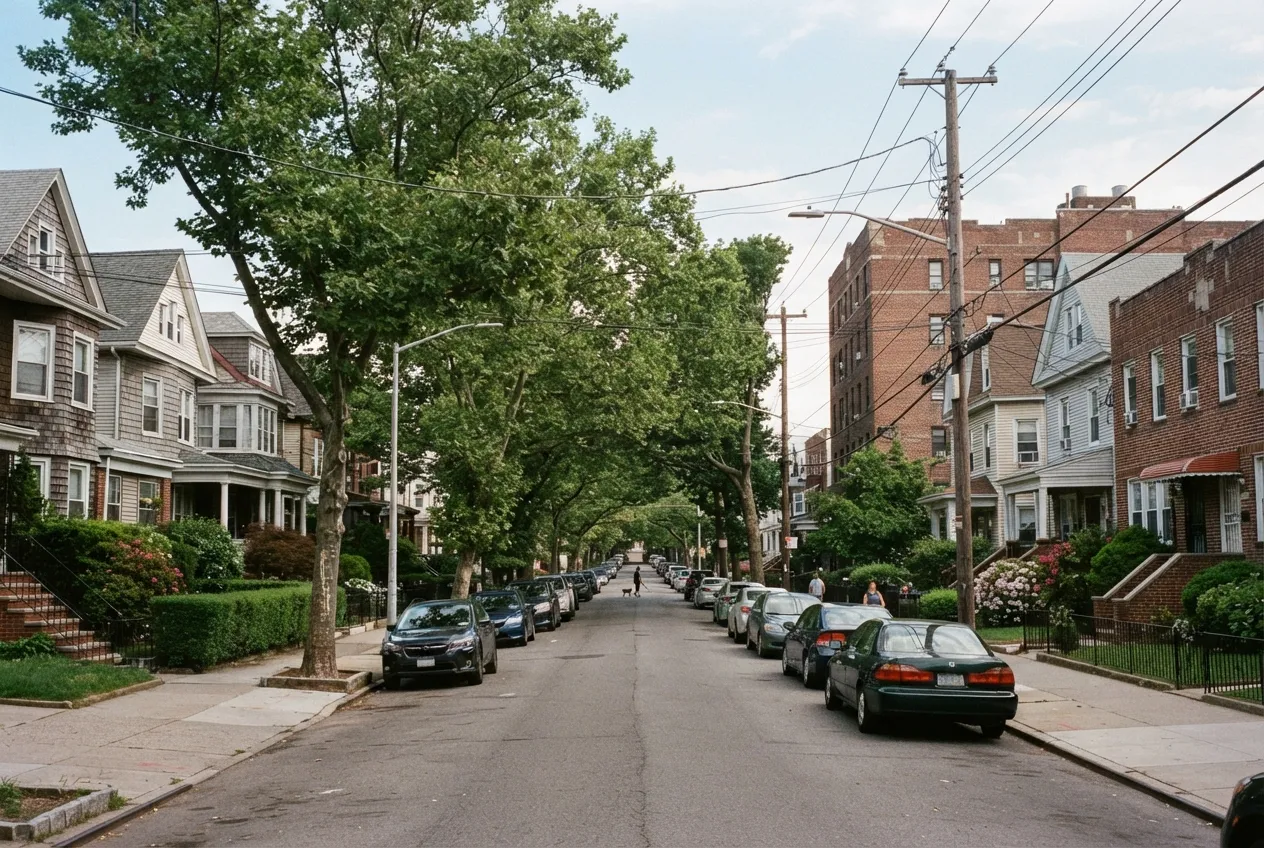
Midwood's housing is a mix of detached and semi-detached homes, attached rowhouses and pre-war apartment buildings. Many of these chimneys were originally built for coal or oil heat. Those fuels behave differently than natural gas, and a flue that worked fine for decades may not be suited to what's connected to it now.
The most common reason we see is a boiler conversion. When a New York City building converts its boiler from oil to gas, the chimney has to be evaluated as part of the work. A new liner is often needed because gas exhaust produces acidic condensate that can corrode a masonry flue. That moisture can eat away at mortar joints and clay tiles from the inside, where you can't see it.
Fireplaces are the other big category. A wood-burning fireplace in an older home may have a cracked clay liner, missing sections, or gaps between tiles that let heat and gases reach the surrounding brick and framing.
- Converting from oil to gas heat
- Installing a new boiler, furnace or water heater
- Cracked, crumbling or missing clay flue tiles
- White staining, flaking brick or damp spots on walls near the chimney
- Bits of tile or masonry falling into the firebox or boiler connection
- A fireplace you want to start using again after years of disuse
Start With the Right Inspection
The NFPA 211 standard calls for chimneys, fireplaces and vents to be inspected once a year. It describes three inspection levels. A Level 1 inspection fits when nothing about the system has changed. A Level 2 inspection is called for when the system changes, such as a new appliance or a switch of fuel, or when the home is sold. A Level 3 inspection is used when a hidden hazard has to be reached by opening part of the chimney or building.
For most liner projects in Midwood, a Level 2 inspection is the starting point. It typically includes a camera look at the full length of the flue so we can see the condition of the interior and measure it accurately. That tells us whether a liner is needed, what type makes sense, and what size it should be.
Liner Options We Install
There isn't one liner that fits every chimney. The right choice depends on the fuel, the appliance, the size and shape of the flue, and the condition of the masonry.
We'll explain why we're recommending a particular option for your chimney. If the masonry needs repair before a liner goes in, we'll tell you that up front.
- Stainless steel liners: the most common choice for gas boilers, water heaters and many wood-burning setups. They resist acidic condensate and can be fitted through bends and offsets.
- Aluminum liners: used in some gas-only applications where the appliance manufacturer allows them.
- Cast-in-place liners: a mortar-like material formed inside the flue, sometimes used where the existing masonry needs added strength.
- Clay tile relining: possible in some cases, though it usually involves more disruption to the chimney.
Time for your annual chimney check?
What Installation Looks Like
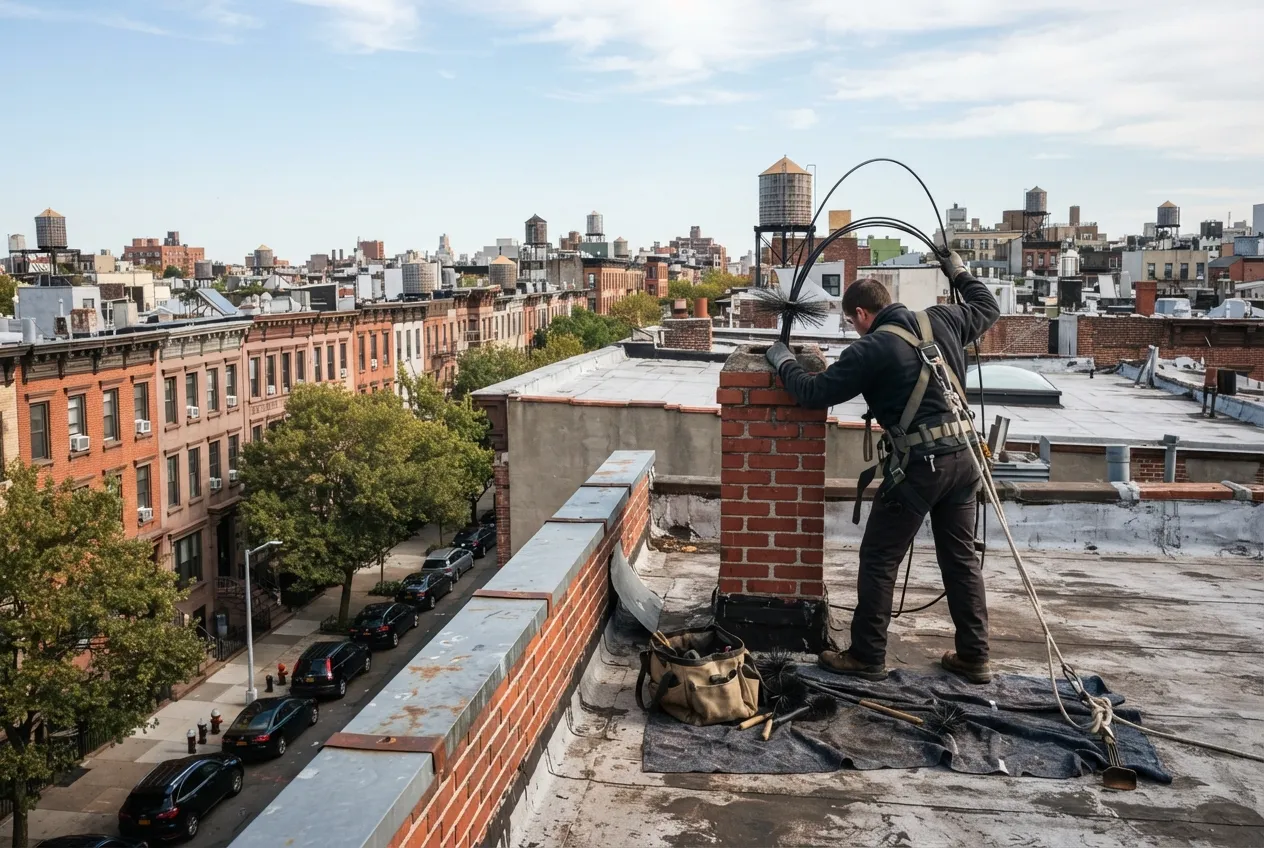
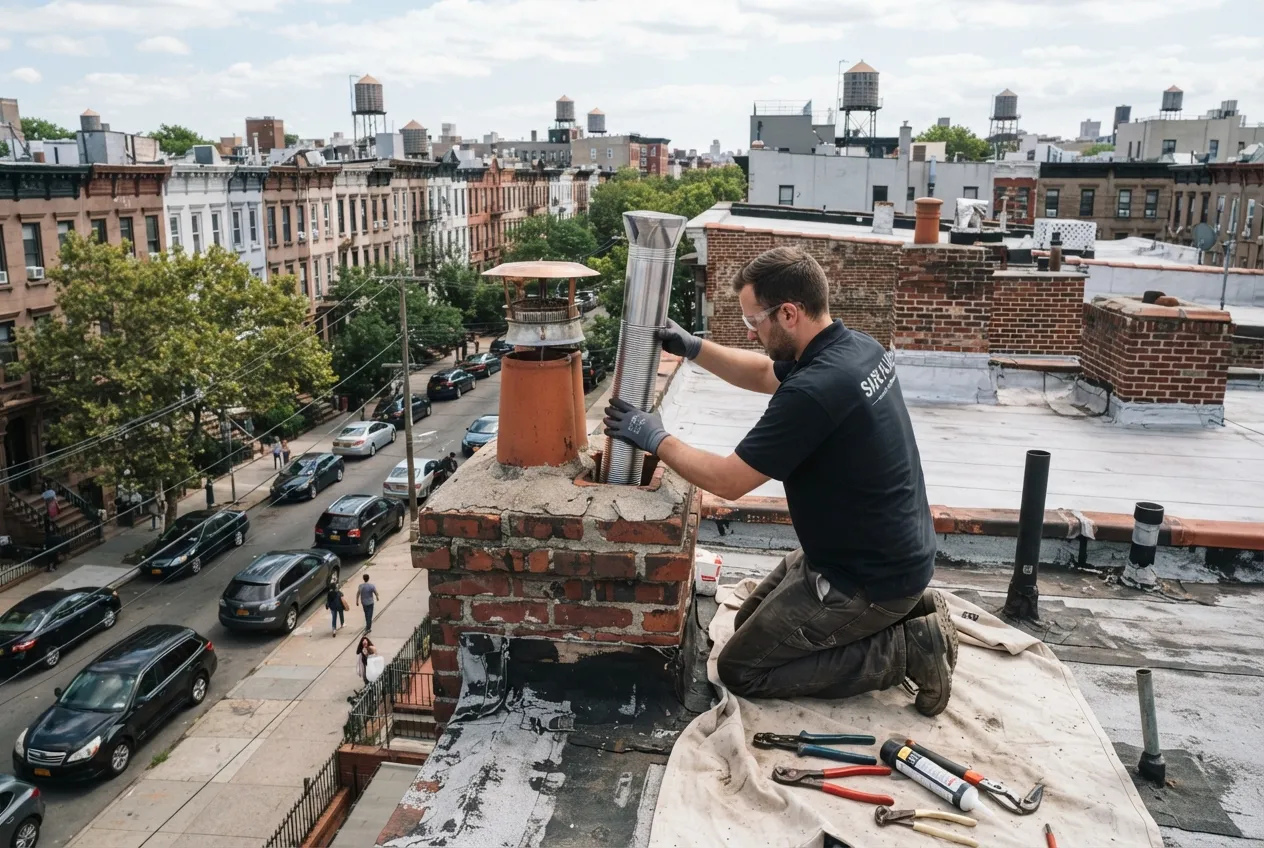
Most stainless steel liner installs are done from the roof. The technician sweeps the flue clean, lowers the liner down the chimney, and connects it at the bottom to the appliance or fireplace damper area. At the top, we fit a cap that keeps rain, debris and animals out. Insulation may be added around the liner when the chimney calls for it.
In attached rowhouses and apartment buildings, roof access and shared walls take some planning. We'll talk through access, timing and any coordination with your heating contractor before the work day.
Timing Around Heat Season
New York City's heat season runs from October 1 through May 31, when building owners must keep apartments heated to the city's minimum temperatures. If you own a multi-family building in Midwood, scheduling liner work before October helps you avoid taking a boiler offline during the cold months. Homeowners with oil-to-gas conversions planned should bring us in early so the chimney work lines up with the boiler install.
We also serve nearby Mapleton, Ditmas Park, Parkville, Bensonhurst and Kensington.
More services in Midwood
- Chimney Sweep in Midwood
- Chimney Inspection in Midwood
- Chimney Repair in Midwood
- Air Duct Cleaning in Midwood