The short answer
If your clothes take longer to dry, the dryer runs hot, or lint is piling up around the outside vent, the vent likely needs cleaning. The U.S. Fire Administration identifies failure to clean as the leading factor contributing to home clothes dryer fires. ClearStack cleans the full vent run from the dryer to the exterior opening and checks the airflow before we leave.
Every load of laundry sends lint into your dryer vent, and not all of it makes it outside. Over time that lint coats the duct walls, collects at bends and joints, and packs into the exterior hood. In Brooklyn rowhouses, brownstones and multi-family homes, dryer vents often run a long way: across a basement ceiling, up through an interior wall, or all the way to the roof. Every extra foot and every elbow gives lint another place to settle. ClearStack Chimney Service cleans the full vent run, from the back of the dryer to the outside opening. Our certified technicians check that air moves freely when the job is done and show you what came out of the vent.
Signs you need it
A clogged dryer vent usually gives warnings before it becomes a serious problem. Most owners notice the dryer getting slower first. Here are the signs we hear about most often:
- Clothes need a second or third cycle to dry, especially towels and heavy items
- The dryer, the laundry area or the clothes themselves feel unusually hot
- A burning or scorched smell while the dryer is running
- Lint collecting behind the dryer, around the wall connection or on the outside vent hood
- The exterior flap stays closed, or barely moves, while the dryer runs
- Chirping, scratching or nesting material at the outside vent opening
- A musty smell or extra humidity in the laundry room
- A newer dryer showing a vent blockage or restricted airflow message
Why dryer vent cleaning matters
According to the U.S. Fire Administration, failure to clean is the leading factor contributing to clothes dryer fires in homes. Lint burns easily, and a restricted vent traps heat inside the dryer and duct. When hot, moist air can't escape, the dryer works harder and runs hotter, and lint keeps building up.
Your lint screen only catches part of it. The rest travels into the duct, where you can't reach it with a hand or a household vacuum. Long runs, flexible foil hose, and vents that turn several corners before reaching the outside are the most likely to clog. We generally suggest having the vent checked about once a year. Large households, homes that dry a lot of laundry, and homes with long or roof-mounted vents may need it sooner.
What's included
A standard dryer vent cleaning with ClearStack covers the whole system, not just the part you can see behind the machine.
- Carefully pulling the dryer out and disconnecting it, including gas dryers, with attention to the gas line
- Cleaning the transition hose between the dryer and the wall, and checking it for crushing, kinks or damage
- Brushing and vacuuming the full duct run from the wall connection to the exterior termination
- Clearing lint from the dryer's exhaust outlet and the lint screen housing
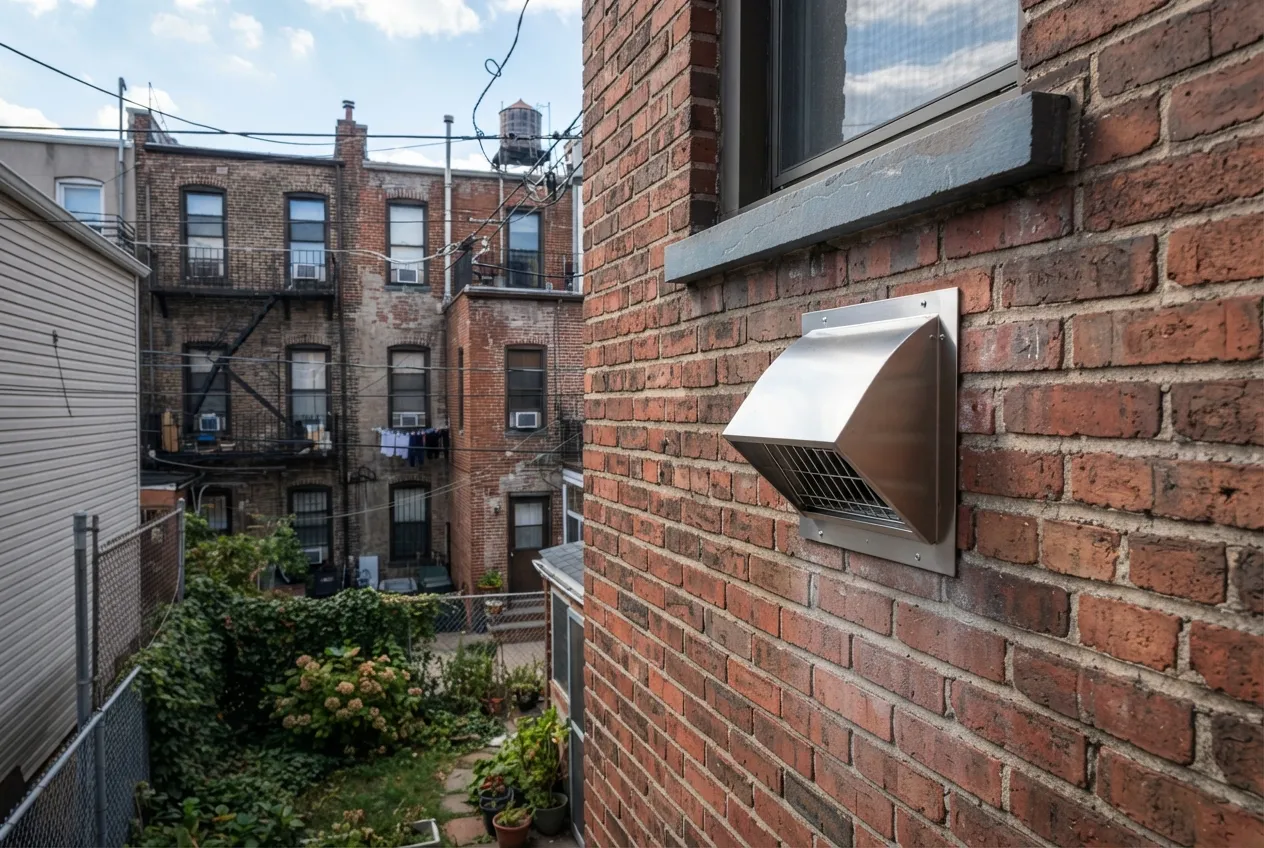
- Cleaning the exterior vent hood and checking that the flap or damper opens and closes freely
- Removing bird nests or other debris from the opening when present
- Checking airflow at the exterior once the dryer is reconnected and running
- Reconnecting the dryer and putting it back in place
- Showing you the results and pointing out any problems we found, such as loose joints, damaged duct or a hood that needs replacing
Time for your annual chimney check?
How our crew works inside your home and on the roof
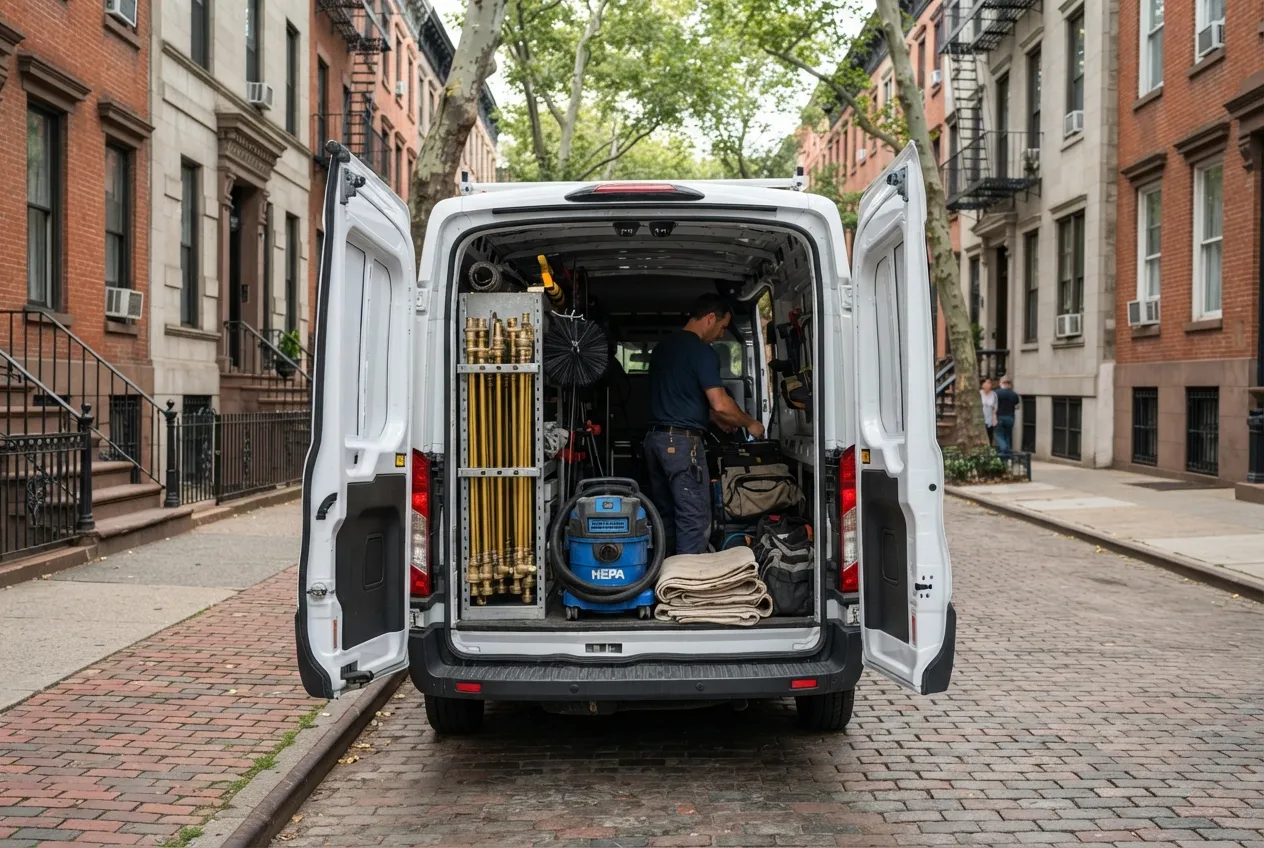
Inside, we put drop cloths down along the work path and around the laundry area before we move anything. We clean the duct with rotary brushes on flexible rods sized for dryer ducting. The brushes loosen lint packed onto the duct walls and at the elbows. A HEPA vacuum connected to the duct captures the loosened lint and dust, so it isn't blown into your basement or living space.
When a vent is very long, runs inside a wall, or still shows weak airflow after cleaning, we may use a camera to look inside the duct. A camera can show crushed sections, separated joints or a blockage the brushes couldn't clear, so you can see the problem yourself instead of taking our word for it.
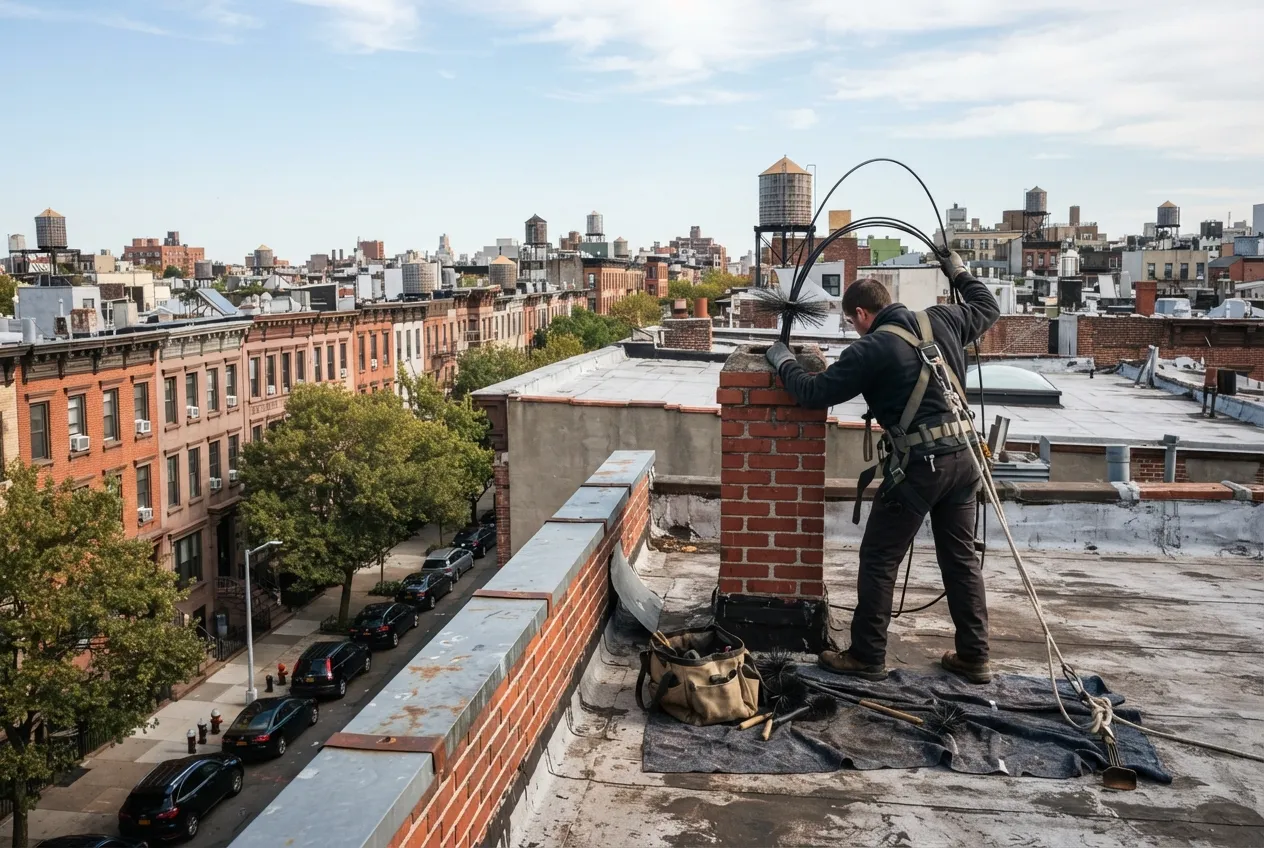
Many Brooklyn homes vent the dryer through the roof. In those cases a technician works from the roof as well, cleaning down from the termination cap and clearing nests or lint caught in the cap screen. Roof vents tend to clog faster because lint has to travel upward against gravity, so we pay close attention to the cap and the top section of the duct.
What affects the price
Every vent is different, so we don't quote a single flat figure without knowing the setup. These are the main factors:
- Length of the vent run and how many bends it has
- Whether the vent exits through a wall or the roof, and how easy the roof is to reach
- How much lint has built up, and whether nests or other blockages are present
- Whether the dryer is gas or electric, and how much space there is to move it safely
- The type and condition of the duct, such as rigid metal versus flexible foil
- Whether a camera inspection is needed to find a hidden problem
- Whether repairs are needed, such as replacing a transition hose, damaged duct sections or the exterior hood
How a visit works
When you contact us, we'll ask a few questions: where the dryer is located, where the vent exits, roughly how long the run is, and what problems you've noticed. That helps us send the right equipment and give you a clear idea of what to expect.
On the day of the visit, the technician walks through the laundry area and checks the exterior or roof termination before starting. After cleaning, we reconnect the dryer, run it, and check the airflow outside. Then we walk you through what we removed and what we saw. If something needs repair, we explain the issue and your options before doing any additional work. Please clear a path to the dryer and let us know about pets or access issues ahead of time.