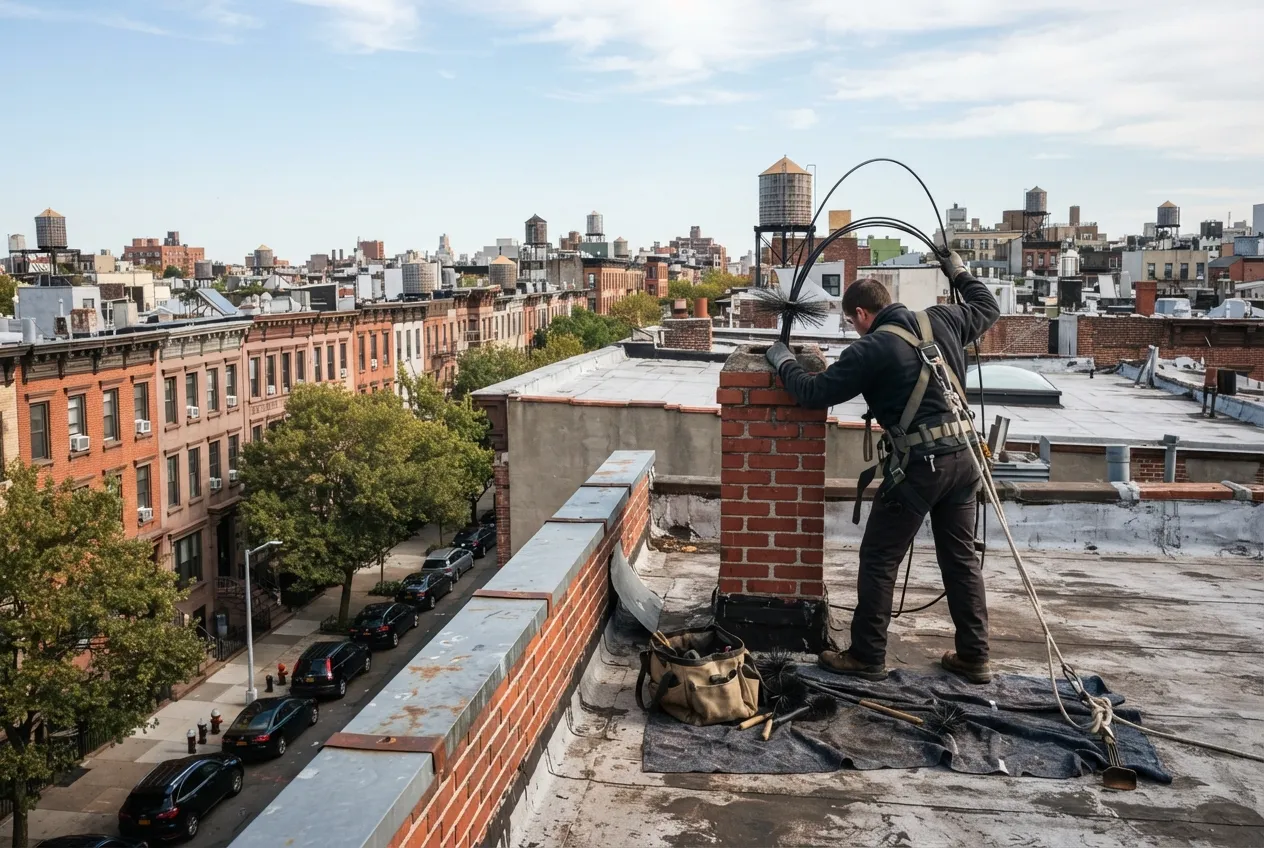
The short answer
A chimney liner protects your home from heat and corrosive exhaust. It is often needed when an old clay liner is damaged or when a boiler is converted from oil to gas. ClearStack Chimney Service inspects, sizes and installs liners for Dyker Heights homes from our local office on 13th Ave.
A chimney liner is the protective channel inside your flue. It carries smoke and exhaust gases out of the house and keeps heat and corrosive byproducts away from the surrounding brick and framing. In Dyker Heights, many homes have older masonry chimneys whose original clay tile liners have cracked, shifted or worn away. Others have chimneys that now serve a different appliance than the one they were built for. ClearStack Chimney Service installs chimney liners from our office at 7421 13th Ave, so homes across the 11228 ZIP code are close by. Our certified technicians inspect the flue first, explain what they found, and recommend a liner only when the chimney needs one.
Why Dyker Heights Chimneys Often Need Relining
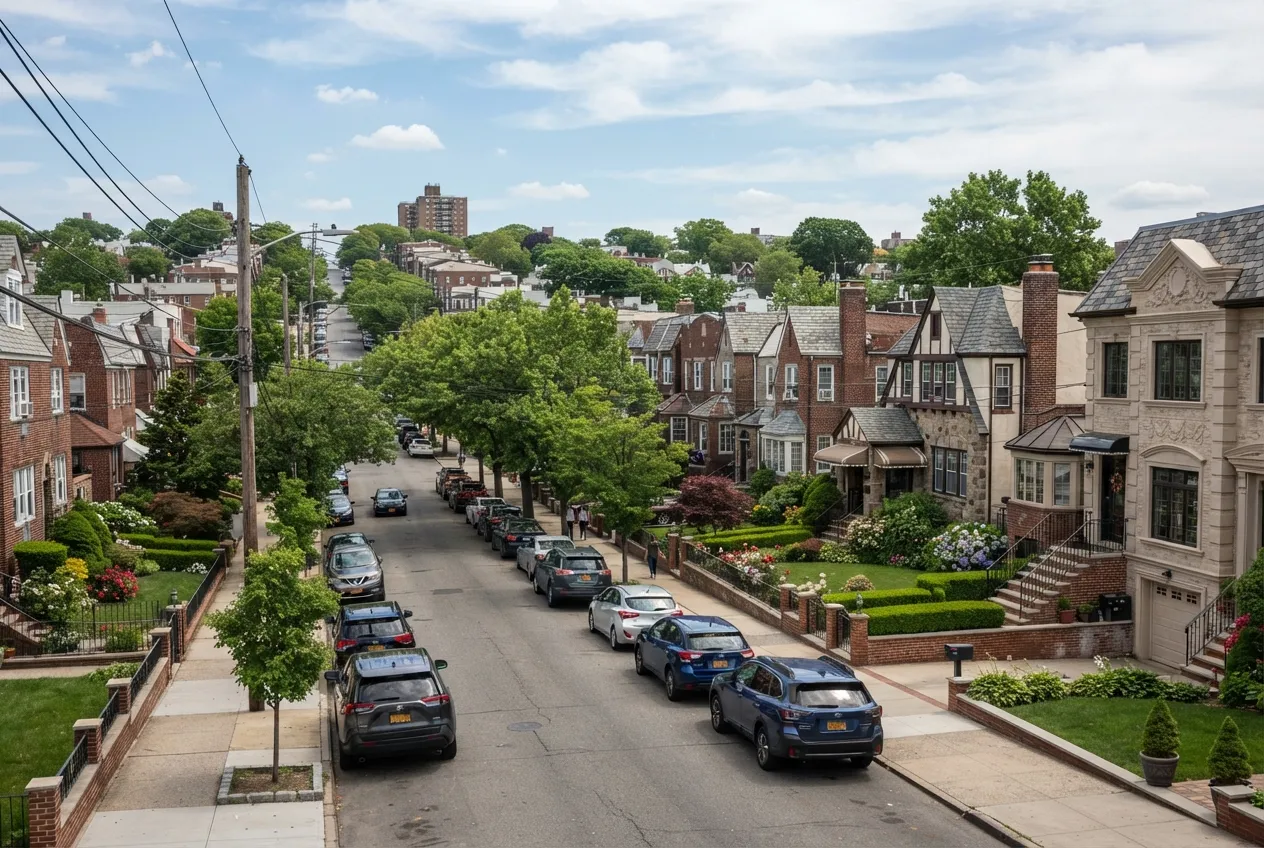
The neighborhood's housing is mostly older: detached homes, attached and semi-attached rowhouses, two-family houses, and some pre-war apartment buildings. Many of these chimneys were built with clay tile liners or with no liner at all. Over decades, freeze-thaw cycles, settling and repeated heating seasons can crack tiles, open mortar joints, and let exhaust reach brick that was never meant to handle it.
Heating systems have also changed in many of these homes. A flue that once vented an oil burner or a fireplace may now serve a gas boiler or water heater. A gas appliance produces cooler exhaust and different byproducts, so an existing flue can be the wrong size or material for the new equipment.
Oil-to-Gas Conversions and Your Chimney
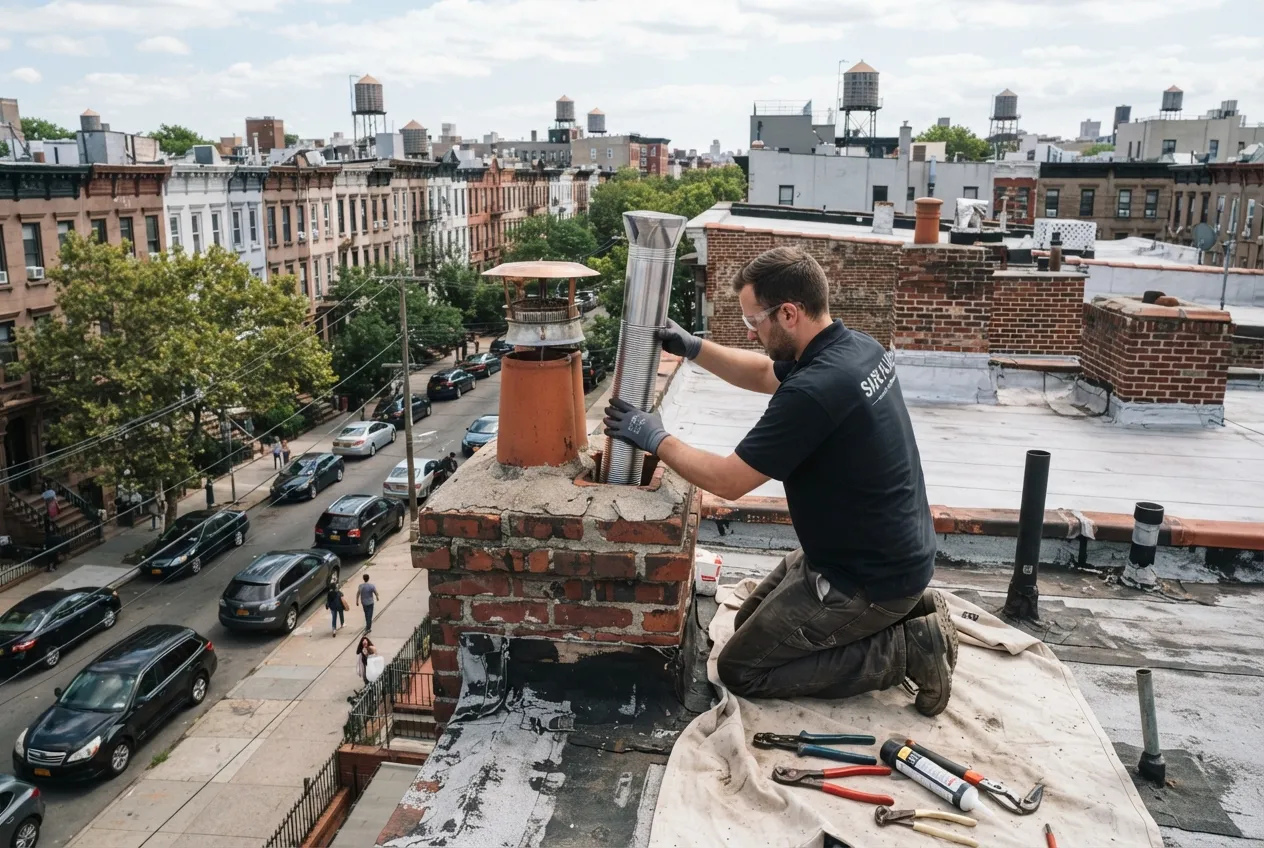
When a New York City building converts its boiler from oil to gas, the chimney has to be evaluated as part of the work. A new liner is often needed. Gas exhaust produces acidic condensate, and that moisture can corrode a masonry flue from the inside. Signs of this damage include crumbling mortar, flaking brick, or white staining on the chimney exterior.
If you are planning a conversion, it helps to bring us in early. We can evaluate the flue, confirm whether a liner is required, and size it to match the new appliance. Your heating contractor can then plan around a chimney that is ready for the change.
What a Liner Installation Involves
Every job starts with an inspection. The NFPA 211 standard calls for a Level 2 inspection when a heating system changes, such as a new appliance or a switch of fuel, and when a home is sold. This level usually includes a camera look down the full length of the flue. If a hidden hazard can only be reached by opening part of the chimney or the building, that calls for a Level 3 inspection, and we will explain why before any opening is made.
Once we know the condition and dimensions of the flue, we recommend a liner type and walk you through the process:
- Cleaning the flue so the liner can be installed properly
- Measuring the flue and matching the liner size to the appliance it will serve
- Installing the liner from the top of the chimney and connecting it at the appliance
- Fitting a cap at the top to keep out rain, debris and animals
- Reviewing the finished work with you, with photos where possible
Time for your annual chimney check?
Choosing the Right Liner
There is no single liner that suits every chimney. Stainless steel liners are common for gas and oil appliances and for relining damaged clay flues, because they handle acidic condensate well and fit through most existing chimneys. Cast-in-place liners can help restore a deteriorated masonry flue. Some fireplace chimneys can be repaired with new clay tile where the structure allows it.
Our recommendation depends on the appliance, the fuel, the flue's shape and size, and the condition of the masonry. We explain the tradeoffs in plain terms so you can make the decision.
Timing Around Heat Season
New York City's heat season runs from October 1 through May 31. During those months, building owners must keep apartments heated to the city's minimum temperatures. For owners of two-family homes and small apartment buildings in Dyker Heights, that makes a chimney problem in midwinter more than an inconvenience.
Scheduling liner work in late spring or summer gives you time to finish an inspection, an installation and any related masonry repair before the boiler needs to run. After the liner is in, the NFPA 211 standard calls for an inspection once a year to keep the system in good order.
Serving Dyker Heights and Nearby Neighborhoods
Our office is in Dyker Heights. We also install chimney liners in Bay Ridge, Bensonhurst, Borough Park, Bath Beach and Sunset Park, where many homes have similar older masonry chimneys and recent heating upgrades.
More services in Dyker Heights
- Chimney Sweep in Dyker Heights
- Chimney Inspection in Dyker Heights
- Chimney Repair in Dyker Heights
- Air Duct Cleaning in Dyker Heights