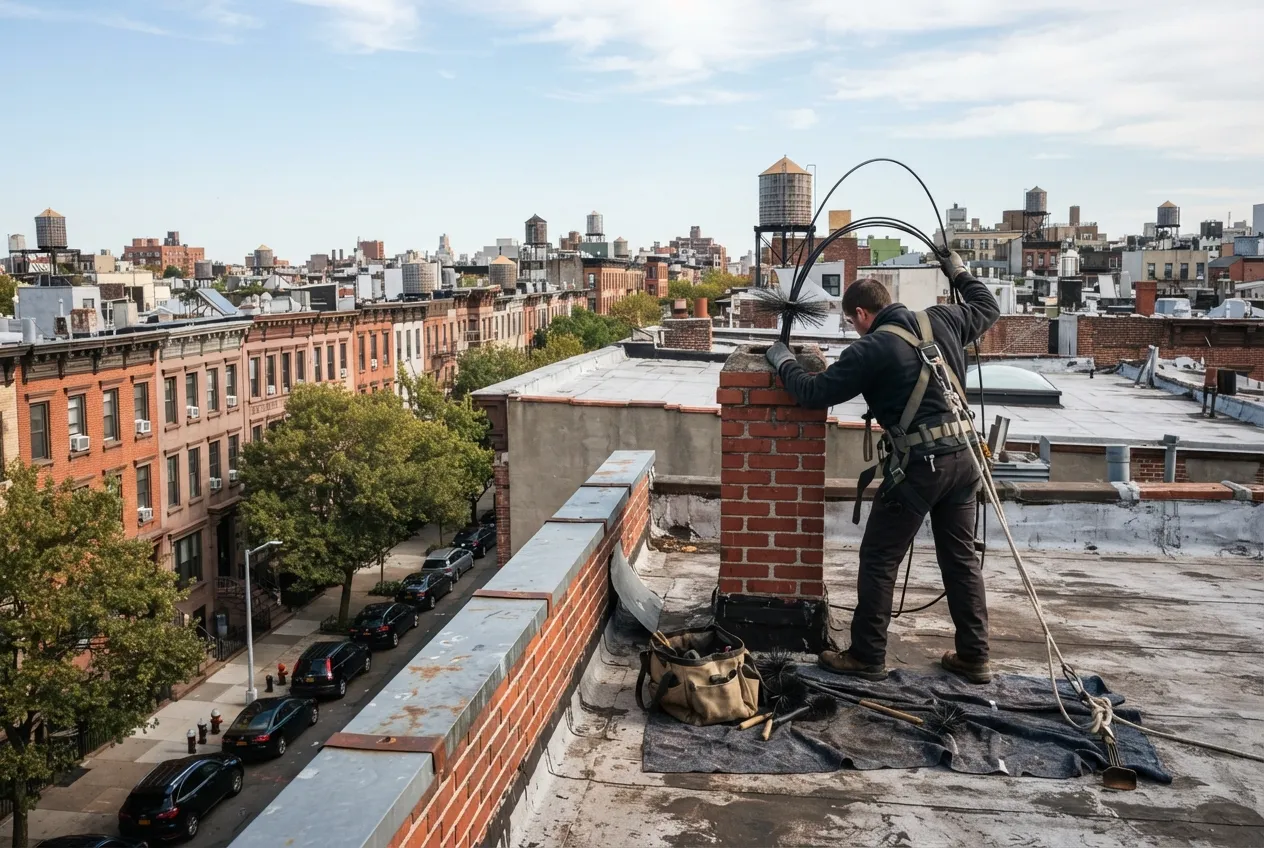
The short answer
Most Bensonhurst chimneys should be inspected once a year, as the NFPA 211 standard recommends. A more detailed inspection is needed when you change appliances or fuel, buy or sell a home, or suspect hidden damage. Booking before the October heat season starts gives you time to handle any repairs.
Whether your Bensonhurst home has a wood-burning fireplace, a boiler venting into a masonry chimney, or both, a yearly inspection tells you whether that chimney is safe to use. ClearStack Chimney Service is based in Dyker Heights, about a mile away, so Bensonhurst is close to home for us. Our certified technicians inspect chimneys in rowhouses, attached two-family homes, detached houses and pre-war apartment buildings throughout the neighborhood. You get a clear written account of what we found, what it means, and what, if anything, needs attention.
Which Inspection Level Your Chimney Needs
The NFPA 211 standard calls for chimneys, fireplaces and vents to be inspected once a year. Chimney professionals use three inspection levels, and the right one depends on what has happened with your home and heating system since the last check.
We'll ask a few questions when you call so we can recommend the right level. Most homes only need a Level 1 inspection in a typical year.
- Level 1: For chimneys where nothing has changed. We examine the readily accessible parts of the chimney, flue and connected appliance.
- Level 2: For when the system changes, such as a new boiler, water heater or fireplace insert, or a switch from oil to gas. It also applies when a home is being sold. This level includes a camera inspection of the flue's interior.
- Level 3: For when a hidden hazard has to be reached by opening part of the chimney or the building. This is used only when a Level 1 or 2 inspection points to a problem that can't be confirmed any other way.
What We Look For in Bensonhurst Homes
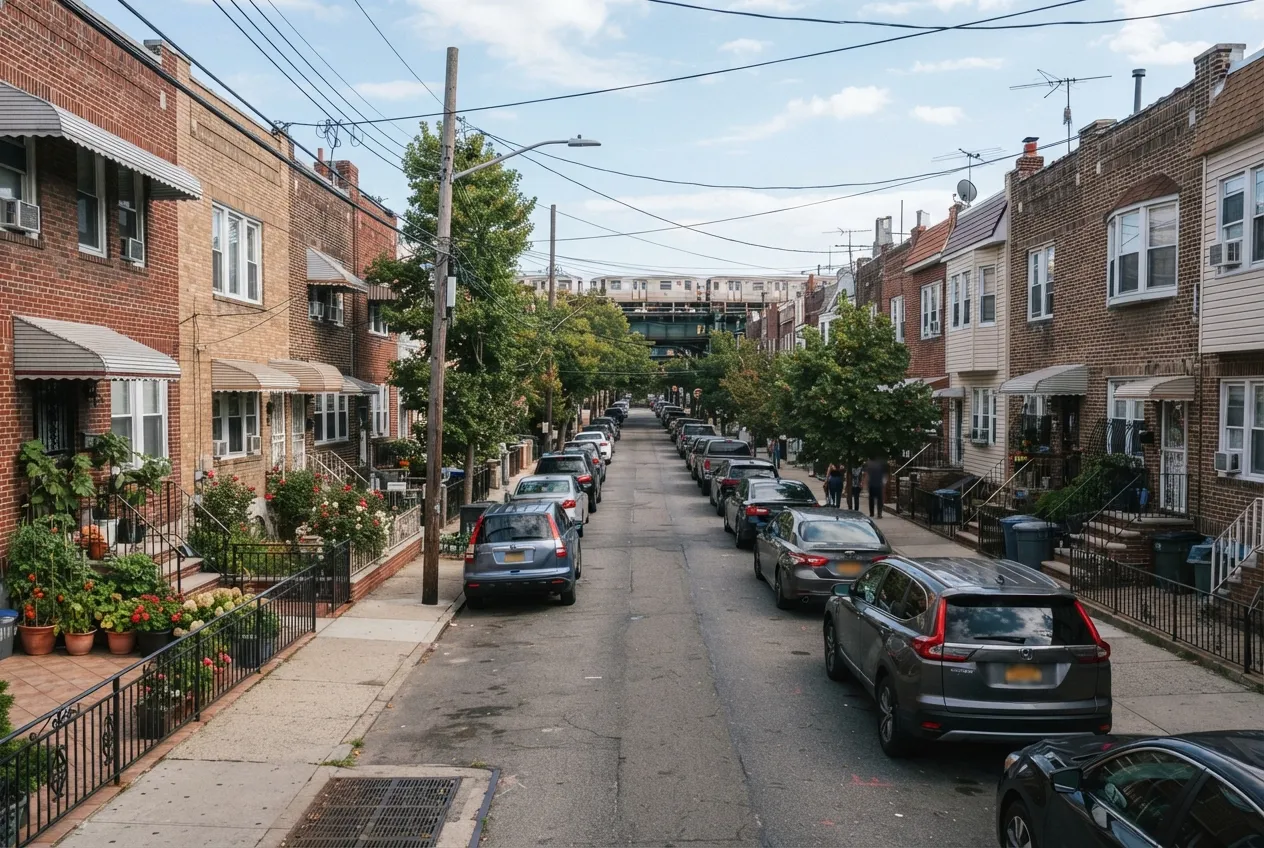
Bensonhurst's housing is mostly attached and semi-attached homes, two-family houses, detached houses, and older apartment buildings. Many of these chimneys have served decades of heating appliances, and some have been altered over the years without anyone keeping track of the changes.
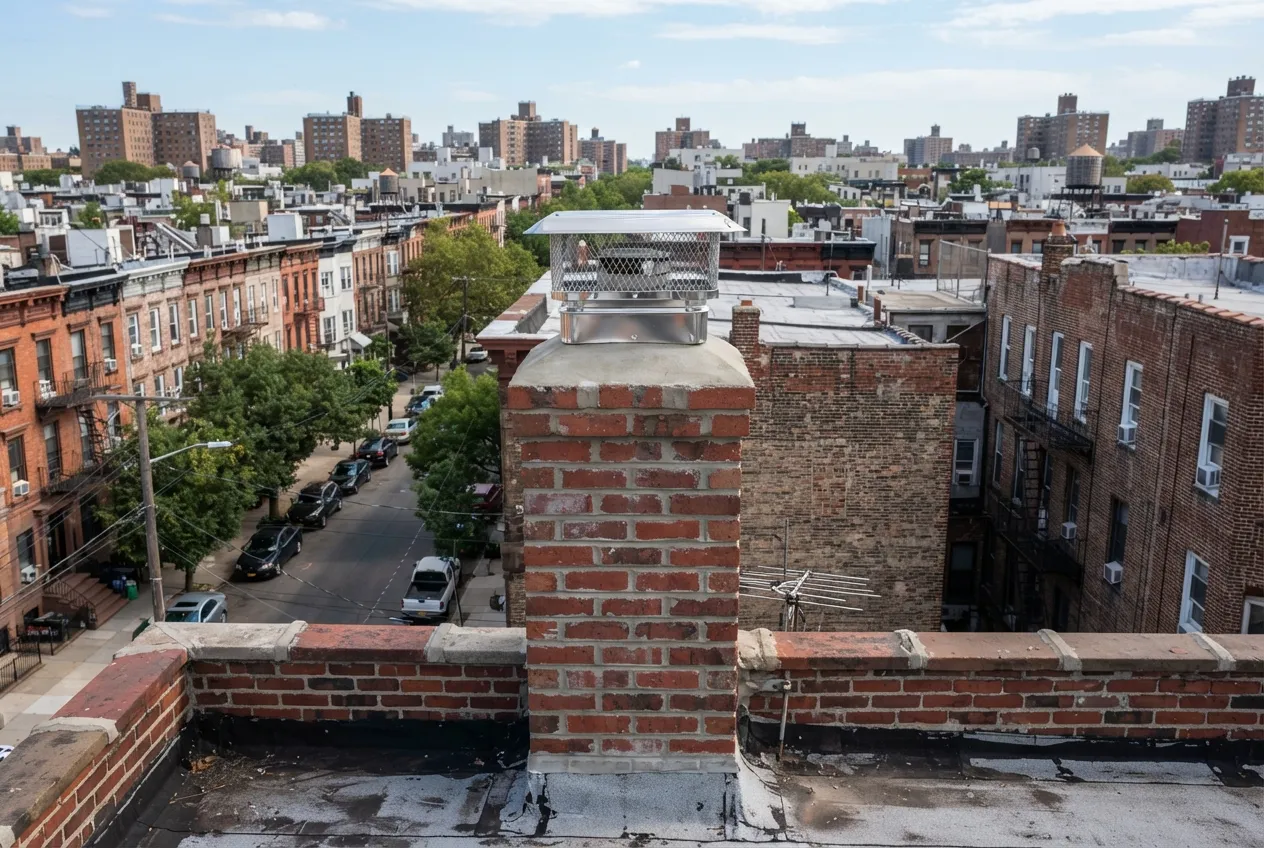
In attached homes, chimneys often sit along shared walls or share a roofline with the house next door. We check how your flue terminates at the roof, whether the crown and flashing are holding up, and whether any cracked mortar joints could let water or exhaust go where it shouldn't. Inside, we look at the flue liner, the connection from your boiler or water heater, and any signs of soot, creosote, moisture staining or blockages from debris or animals.
For fireplaces, we look at the firebox, damper, smoke chamber and hearth extension. In homes where the fireplace hasn't been used in years, we confirm whether it is safe to light before you start using it again.
Converting From Oil to Gas
Many Bensonhurst homes and buildings have switched, or are planning to switch, from oil heat to gas. In New York City, the chimney has to be evaluated as part of an oil-to-gas boiler conversion. A new liner is often needed, because gas exhaust produces acidic condensate that can corrode a masonry flue that was built for oil.
A Level 2 inspection before or during your conversion shows the condition of the existing flue and whether it needs a liner sized for the new appliance. It's easier to plan for that work early than to find out about it late in the project.
Time for your annual chimney check?
Timing Your Inspection Around Heat Season
New York City's heat season runs from October 1 through May 31. During those months, building owners must keep apartments heated to the city's minimum temperatures. If you own a two-family home or a small building with tenants, a chimney problem in January is more than an inconvenience.
Scheduling your inspection in late spring or summer gives you room to arrange any cleaning or repairs before the boiler is running full time. If you heat with wood or use your fireplace on cold nights, the same timing makes sense.
What Happens During the Visit
Our technicians protect the area around your fireplace or boiler before starting. We explain what we're checking as we go and show you photos or camera footage of anything that concerns us. Afterward you receive a written report describing the chimney's condition and any recommended next steps, in plain language.
We also serve nearby Bath Beach, Mapleton, Dyker Heights, Gravesend and Borough Park, so neighbors and family across this part of Brooklyn can book the same way.
More services in Bensonhurst
- Chimney Sweep in Bensonhurst
- Chimney Repair in Bensonhurst
- Air Duct Cleaning in Bensonhurst
- Chimney Liner Installation in Bensonhurst