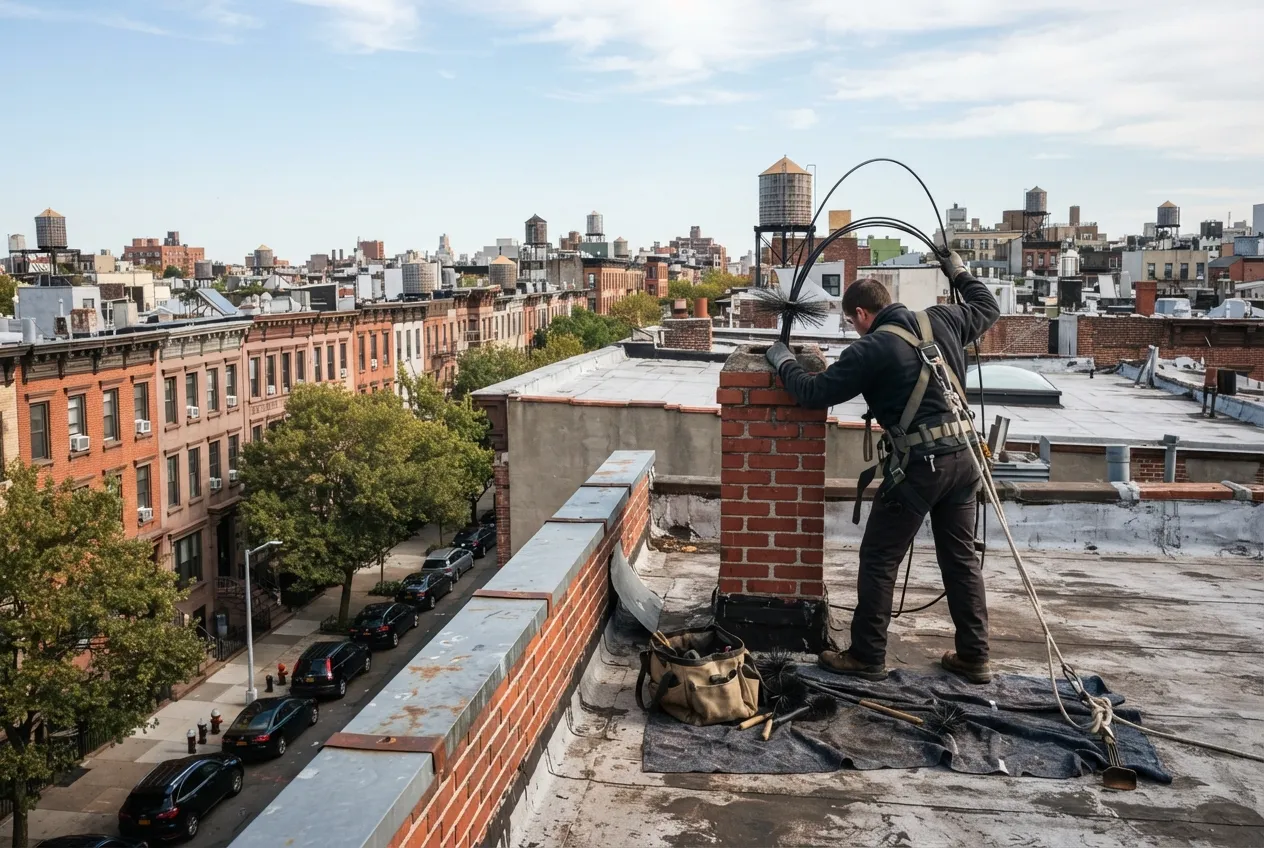
The short answer
The NFPA 211 standard calls for chimneys, fireplaces and vents to be inspected once a year. Most Mapleton homes need a Level 1 inspection, but a boiler change, an oil-to-gas conversion or a home sale calls for a more detailed Level 2. Scheduling before the city's heat season starts on October 1 gives you time to make repairs.
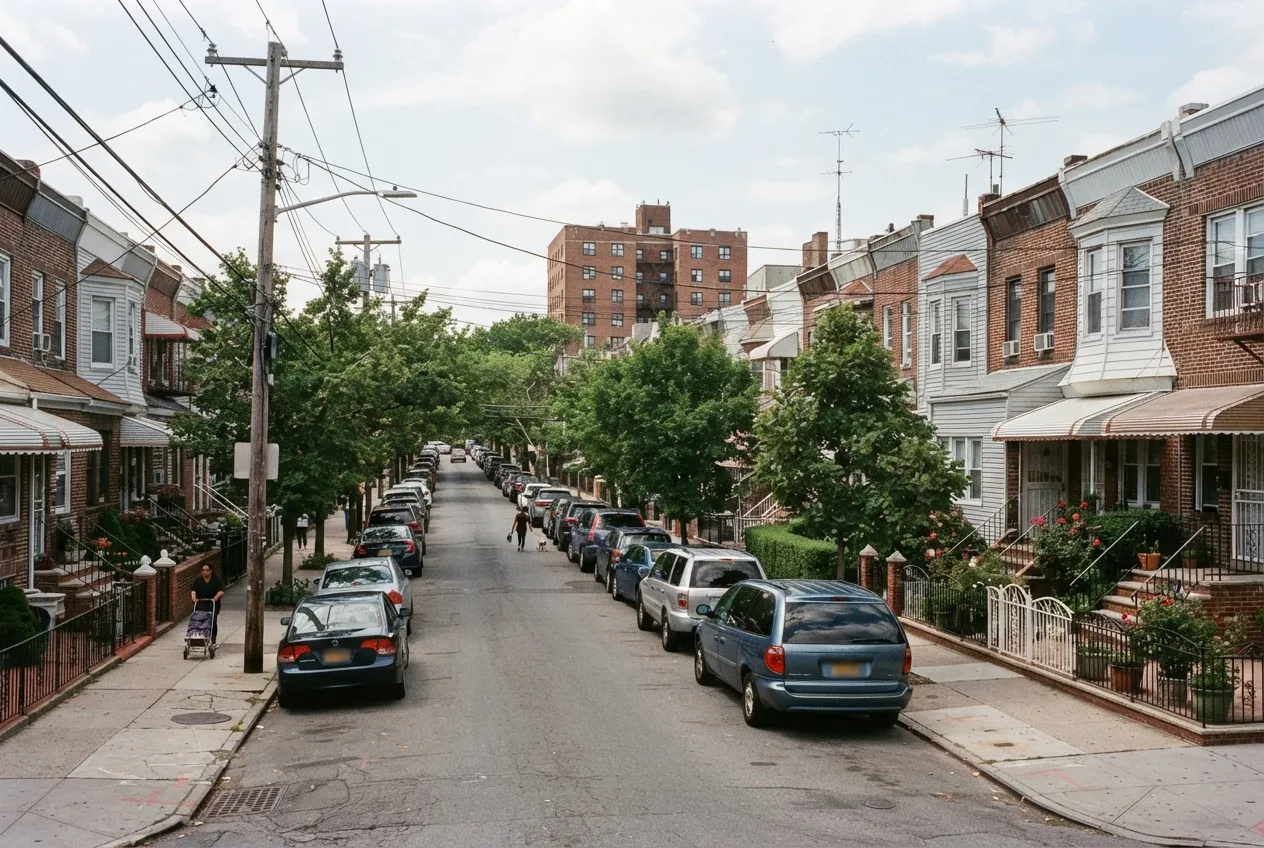
Many Mapleton homes have a chimney that does more work than people realize. In two-family houses, detached and semi-detached homes, rowhouses and small pre-war apartment buildings, the flue often serves the boiler or water heater year-round, not just a fireplace on winter weekends. ClearStack Chimney Service is based in Dyker Heights, about two miles west of Mapleton. Our certified technicians inspect chimneys throughout ZIP codes 11204 and 11230. This page covers what a chimney inspection involves, which level your home likely needs, and when to schedule it.
Why Mapleton Chimneys Need a Yearly Look
The NFPA 211 standard recommends a yearly inspection for every chimney, fireplace and vent. The reason is simple. Flues wear out quietly. Mortar joints erode, clay tiles crack, and debris or nests block the opening. From inside the house you usually can't tell anything has changed.
In many Mapleton homes the chimney connects to the heating system. A problem in the flue can push exhaust back into the basement instead of carrying it up and out. That's why inspection matters even if you never light a fire. A boiler running from fall into spring sends far more exhaust through the chimney than an occasional fireplace does.
Which Inspection Level Fits Your Home
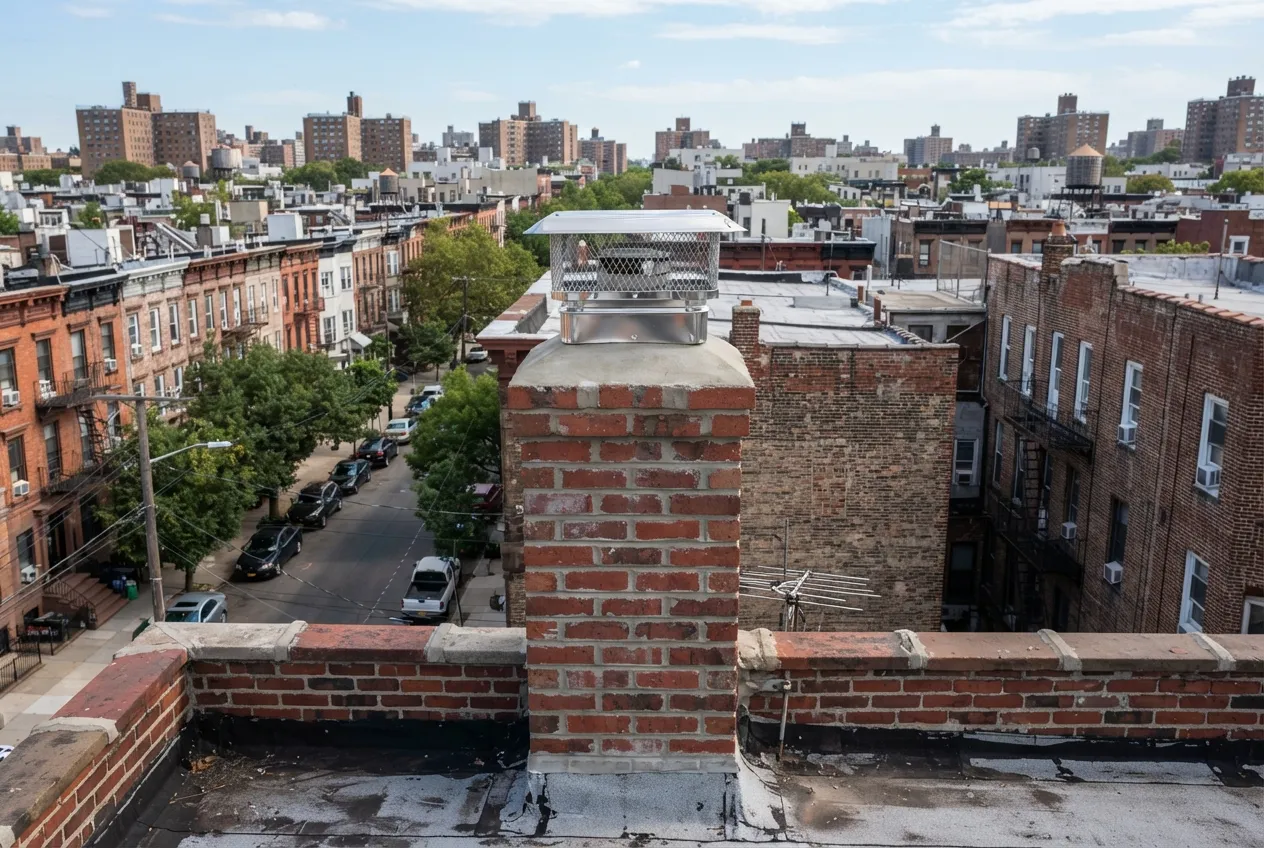
Chimney professionals use three inspection levels. The right one depends on your home's history, not on how old the house looks.
- Level 1: For a chimney with no recent changes to the appliance, fuel or structure. We check the accessible parts of the chimney, the firebox or appliance connection, and the flue for blockages and obvious damage.
- Level 2: Needed when something about the system changes. Common triggers are a new boiler or water heater, a switch from oil to gas, or a home sale. It includes everything in Level 1 plus a camera inspection of the flue's interior and a look at accessible areas like the attic and basement.
- Level 3: Used only when a hidden hazard is suspected and the only way to reach it is to open part of the chimney or the building. We recommend it when a Level 2 inspection points to a problem that can't be confirmed any other way.
Oil-to-Gas Conversions and Chimney Liners
Many older Brooklyn homes and buildings still have masonry chimneys built for oil heat. When a New York City building converts its boiler from oil to gas, the chimney has to be evaluated as part of the work. A new liner is often needed. Gas exhaust produces acidic condensate, and over time that moisture can eat away at an unlined or old masonry flue.
If you're planning a conversion in Mapleton, or one was done without a chimney evaluation, a Level 2 inspection shows whether the existing flue is suitable or needs a liner. We explain what we find and share camera images so you can coordinate with your heating contractor.
Time for your annual chimney check?
Timing Your Inspection Around Heat Season
New York City's heat season runs from October 1 through May 31. During that time, building owners must keep apartments heated to the city's minimum temperatures. If you own a two-family house or a small building and rent out a unit, a chimney problem in January is more than an inconvenience. It can leave tenants without heat while repairs wait.
Late spring and summer are the most practical times to book. The boiler is idle or running lightly, and there's time to schedule a cleaning, a cap replacement or a liner before cold weather. Early fall also works, but schedules fill as October approaches.
What You Get After the Visit
After the inspection, the technician walks you through the results in plain language. You'll learn what's in good shape, what needs attention now, and what to watch over the next year. We point out issues like missing caps, cracked crowns, deteriorated mortar, flue blockages and loose connector pipes. We separate urgent repairs from items that can wait.
Besides Mapleton, our technicians regularly serve nearby Midwood, Bensonhurst, Ditmas Park, Parkville and Borough Park.
More services in Mapleton
- Chimney Sweep in Mapleton
- Chimney Repair in Mapleton
- Air Duct Cleaning in Mapleton
- Chimney Liner Installation in Mapleton