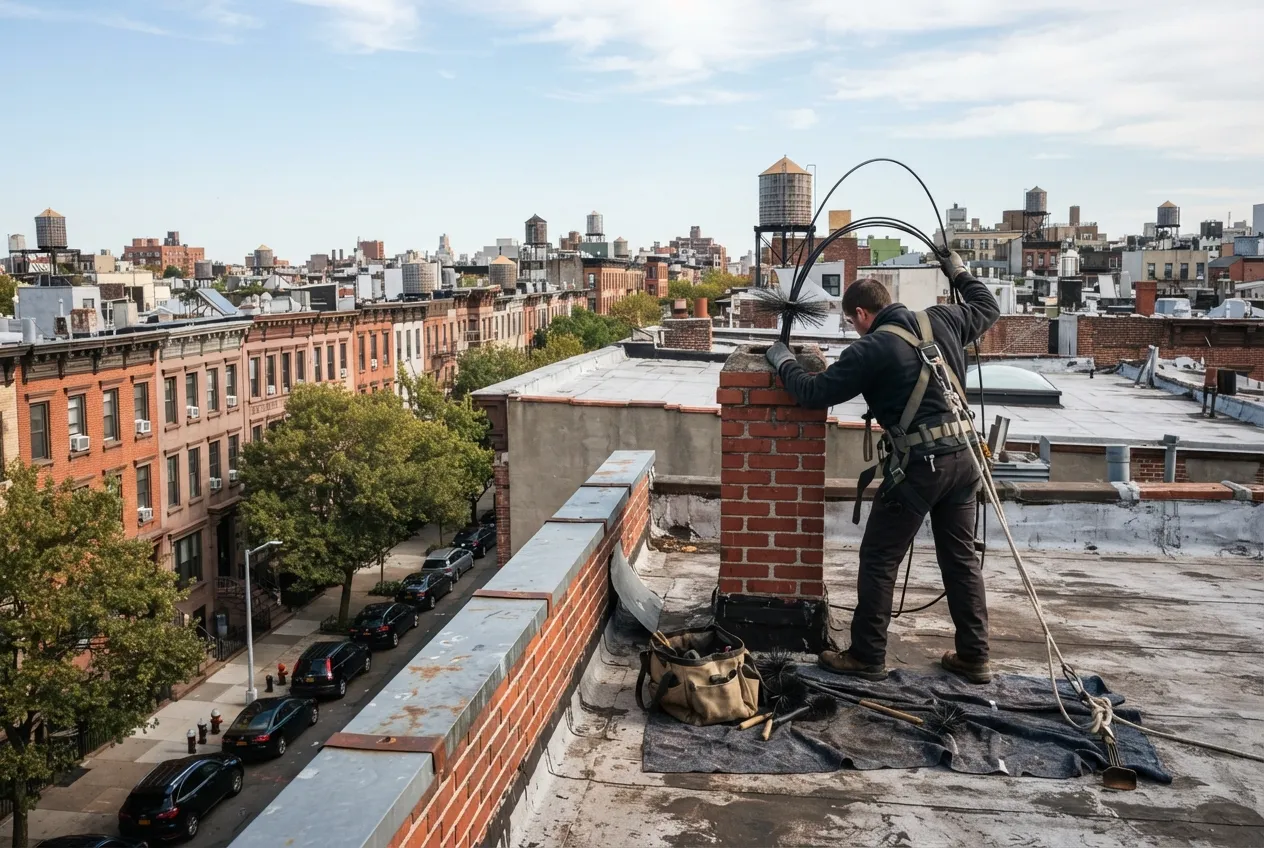
The short answer
A chimney in Sunset Park should be inspected once a year, as the NFPA 211 standard recommends, and again whenever you change appliances or fuel, or sell the home. ClearStack performs Level 1, 2 and 3 inspections for rowhouses, brownstones and multi-family buildings throughout 11220 and 11232.
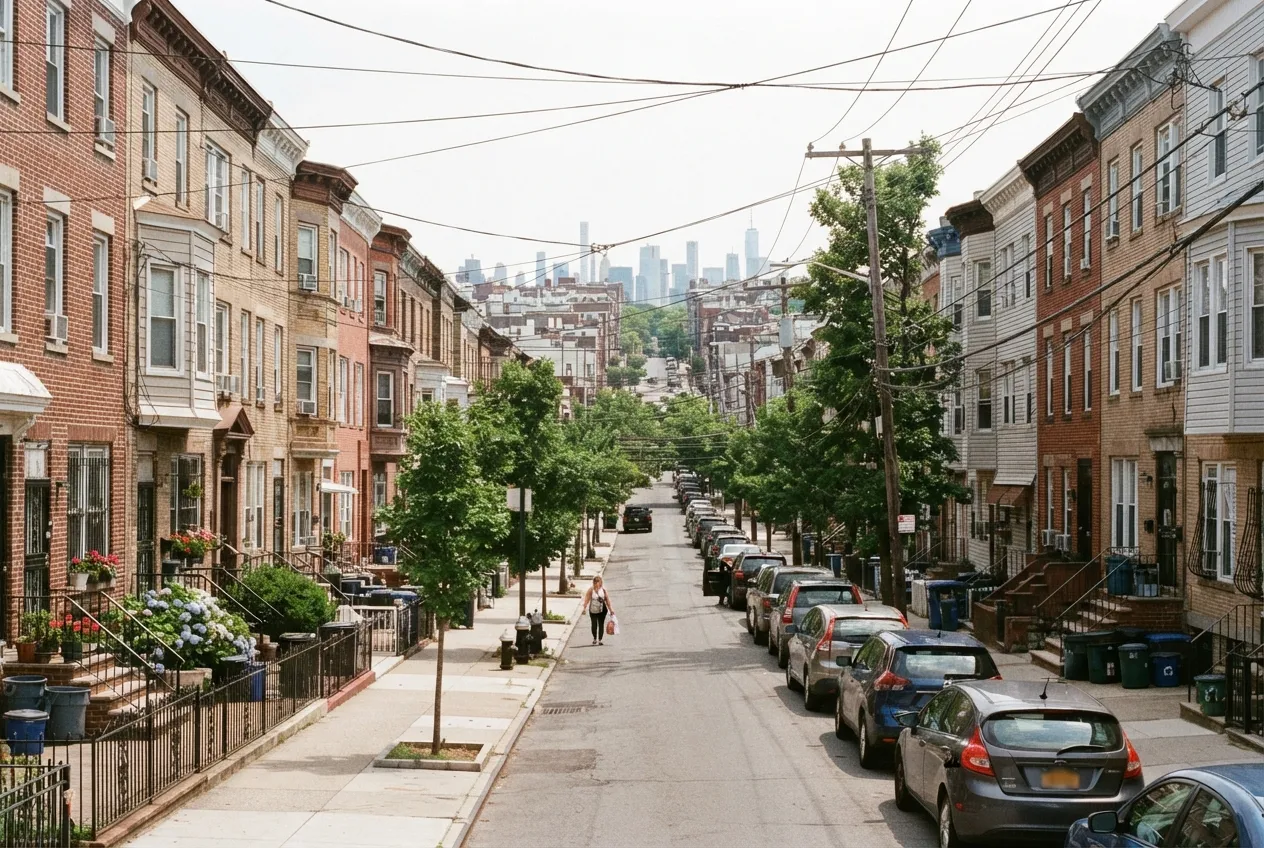
Many Sunset Park homes are older rowhouses, brownstones and pre-war apartment buildings. Their chimneys have often vented coal, then oil, then gas, sometimes all through the same masonry flue. ClearStack Chimney Service inspects chimneys across ZIP codes 11220 and 11232. Our office in Dyker Heights is about 2 miles south, so getting to you is a short trip. Our certified technicians look at the whole venting system, from the appliance connection to the top of the stack, and explain what they find in plain terms.
Why Sunset Park Chimneys Need Regular Inspection
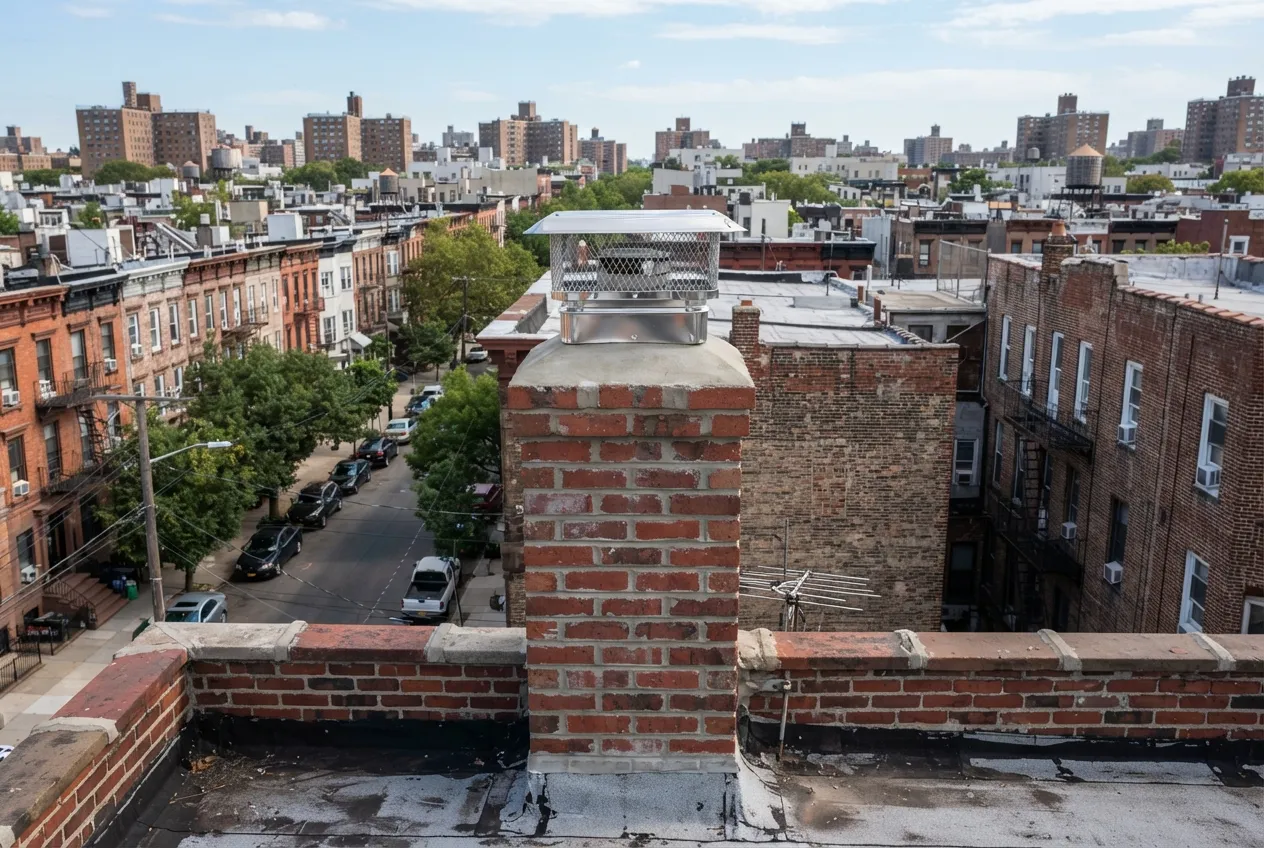
Much of the neighborhood's housing was built long before modern venting standards. Many chimneys run up through shared party walls between attached rowhouses, and in a lot of buildings the original clay tile or unlined brick flue is still in use. Over the decades, mortar joints wear out, tiles crack, and freeze-thaw cycles loosen the bricks at the crown and along the top of the stack.
Most of this damage is hidden from the street and from inside your rooms. A flue can look fine at the fireplace opening and still have gaps higher up that let heat, smoke or carbon monoxide escape into the walls or into a neighbor's space. An inspection is the only reliable way to know the condition of a chimney you can't see into.
The Three Inspection Levels, Explained
The NFPA 211 standard calls for chimneys, fireplaces and vents to be inspected once a year. Chimney professionals use three levels of inspection. Which one you need depends on what has changed in your home.
- Level 1: For a system that hasn't changed since its last inspection. We check the accessible parts of the chimney, the appliance connection and the flue for blockages, buildup and visible damage.
- Level 2: Needed when the system changes, such as a new boiler, furnace or insert, or a switch of fuel. It's also needed when the home is sold. This level includes a camera inspection of the full flue interior plus accessible areas of the attic, basement and roof.
- Level 3: Used when a hidden hazard has to be reached by opening part of the chimney or building, such as a wall or chase. We recommend this only when a Level 2 inspection points to a problem that can't be confirmed any other way.
Oil-to-Gas Conversions in Older Buildings
Many Sunset Park brownstones and small apartment buildings originally heated with oil. When a New York City building converts its boiler from oil to gas, the chimney has to be evaluated as part of the work. A new liner is often needed, because gas exhaust produces acidic condensate that can corrode a masonry flue from the inside.
If you're planning a conversion, or you've just replaced a boiler or water heater, a Level 2 inspection tells you whether your existing flue can safely handle the new appliance. It also tells you whether a liner should be part of the project. Finding this out before the new equipment goes in usually means fewer surprises later.
Time for your annual chimney check?
Timing Your Inspection Around Heat Season
New York City's heat season runs from October 1 through May 31. During that time, building owners must keep apartments heated to the city's minimum temperatures. For anyone who owns a multi-family building, that leaves little room for a boiler shutdown caused by a blocked or failing flue in the middle of winter.
We suggest booking your yearly inspection in late spring or summer. That way any repairs, cleaning or relining can be scheduled before October. Homeowners who use a wood-burning fireplace benefit from the same timing, since buildup and animal nests from the off-season get found before the first fire.
What Happens During a ClearStack Inspection
Our technician starts by asking how you use the chimney and what appliances connect to it. Then we examine the firebox or appliance connection, the smoke chamber and damper, and the flue interior. Where roof access allows, we also check the exterior masonry, crown, flashing and cap. For Level 2 inspections, we run a camera through the full length of the flue and record what it shows.
Afterward, we walk you through the findings, show you photos or video where they help, and give you a written summary. If something needs attention, we explain what it is, why it matters and what your options are. If everything looks good, we tell you that too.
More services in Sunset Park
- Chimney Sweep in Sunset Park
- Chimney Repair in Sunset Park
- Air Duct Cleaning in Sunset Park
- Chimney Liner Installation in Sunset Park