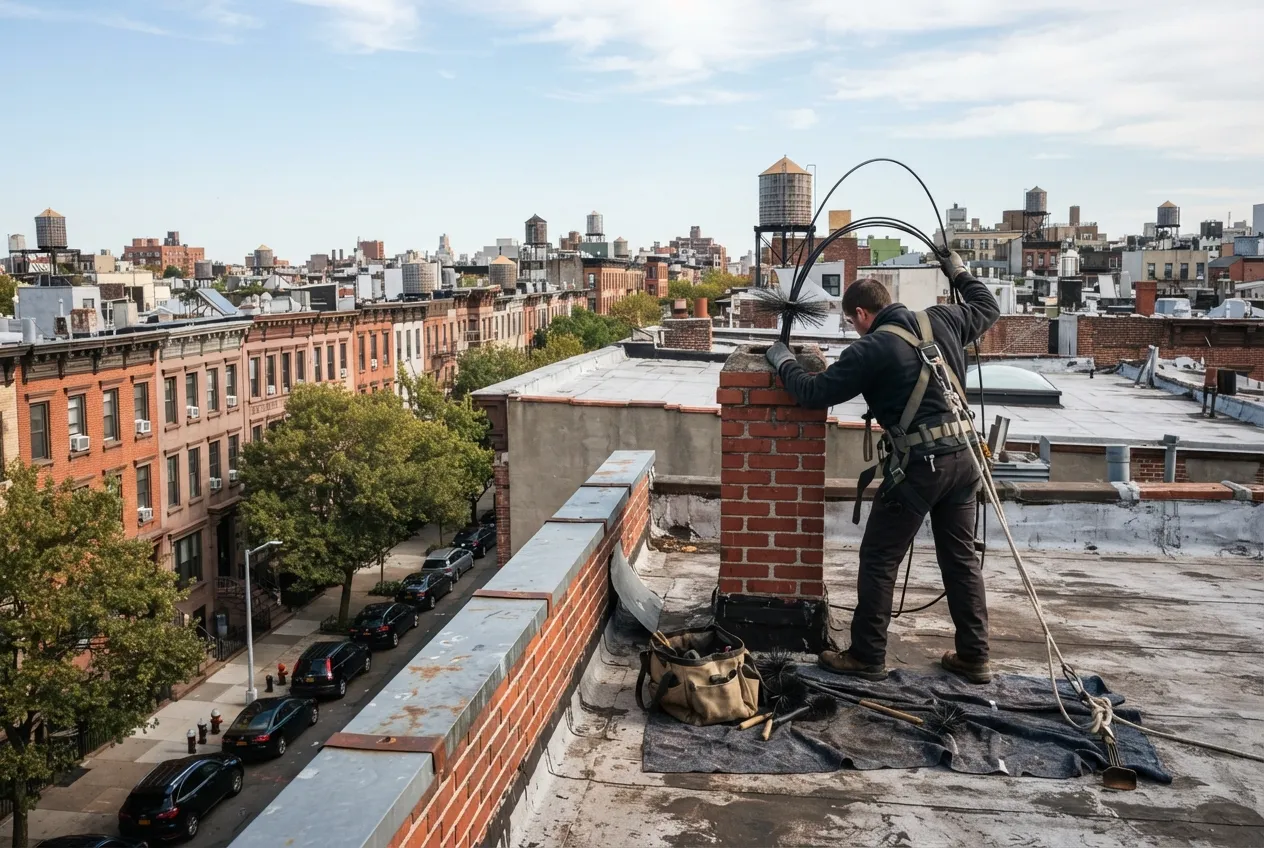
The short answer
A chimney sweep removes creosote, soot, and debris from your flue so smoke and exhaust leave your home safely. Parkville homes with fireplaces or boilers should have the chimney inspected once a year, as the NFPA 211 standard recommends, and swept when buildup is found. Late summer and early fall are the easiest times to schedule.
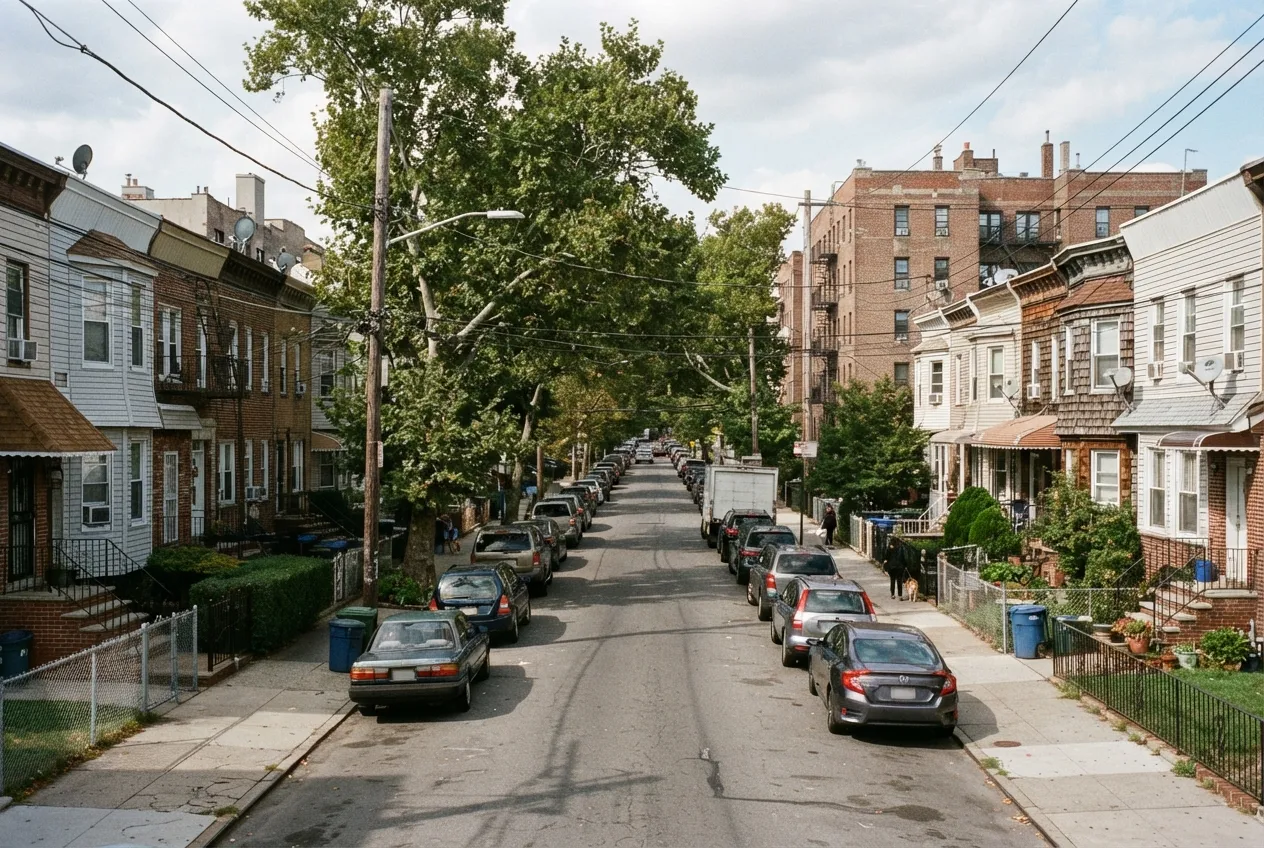
Parkville is a mix of detached and semi-attached houses, rowhouses, and small pre-war apartment buildings. Many have a working fireplace, a boiler or furnace venting into a masonry chimney, or both. ClearStack Chimney Service sends certified technicians to Parkville from our office in Dyker Heights, about 2 miles away, to sweep chimneys, remove creosote and soot, and check that each flue is clear and safe to use. This page explains what a sweep involves for the kinds of homes in this neighborhood and how to plan around the Brooklyn heating season.
What a Chimney Sweep Covers in a Parkville Home
A sweep is more than running a brush up the flue. Our technicians start by protecting the area around the fireplace or appliance connection with drop cloths and use a vacuum system to contain soot. Then they clean the flue from the bottom, the top, or both, depending on access and the shape of the chimney.
Older Brooklyn chimneys often have offsets, shared walls, and flues that have been modified over the decades, so we look at each one before choosing how to clean it.
- Removing creosote and soot from fireplace flues, smoke chambers, and smoke shelves
- Cleaning the firebox and checking the damper so it opens, closes, and seals
- Clearing boiler and furnace flues and the connector pipe where accessible
- Removing nesting material, leaves, and fallen masonry debris
- Visually checking the crown, cap, and flue liner for cracks, gaps, or missing pieces
- Explaining what we found and pointing out anything that needs attention
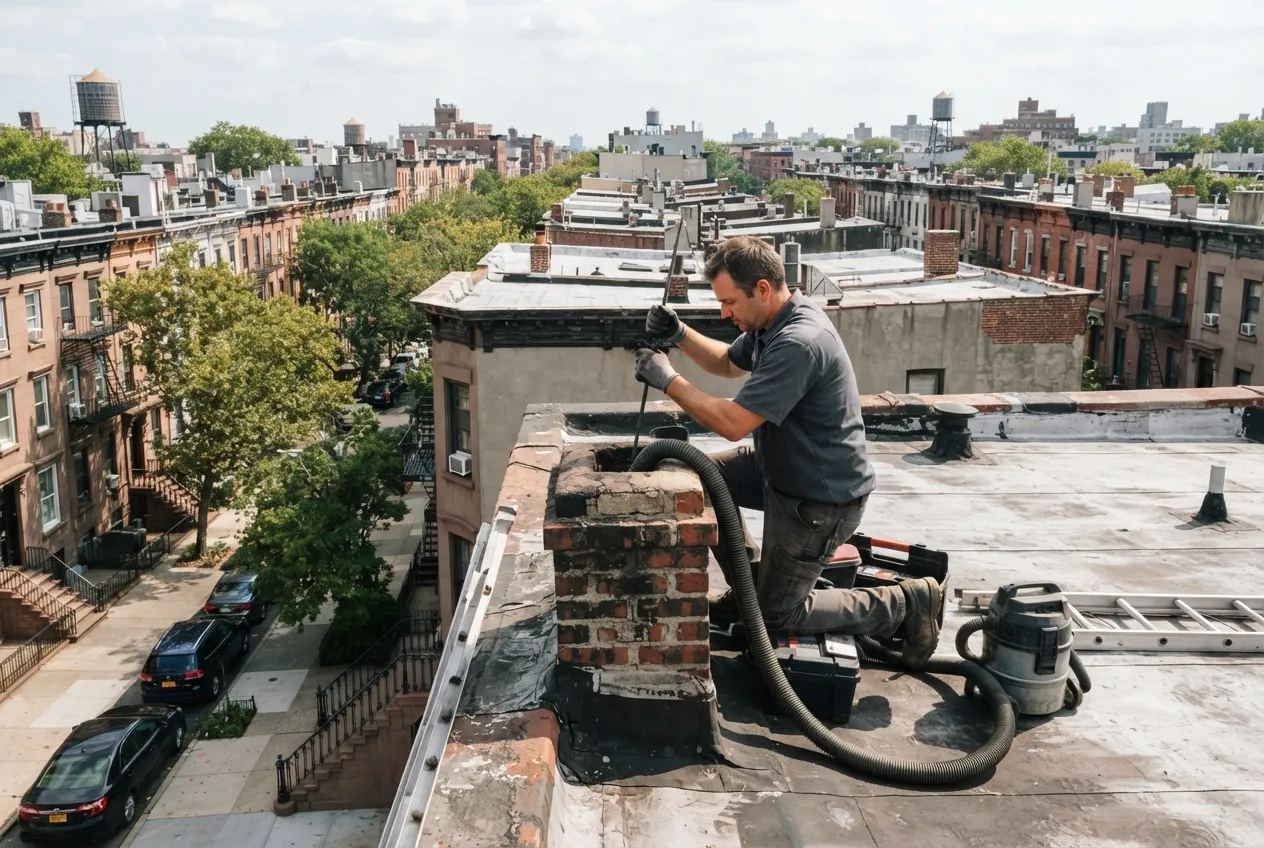
Fireplaces, Boilers, and Shared Flues
Wood-burning fireplaces build up creosote, a tar-like residue that can catch fire inside the flue. How fast it builds depends on how often you burn, how dry the wood is, and how well the chimney drafts. A fireplace used most winter weekends usually needs more attention than one lit a few times a year.
Many Parkville houses also vent a gas or oil boiler through the chimney. Oil heat leaves soot and scale that can narrow the flue. Gas burns cleaner but produces moisture that can damage an unlined or poorly lined masonry flue. In small multi-family buildings, several appliances may share one chimney, and we check that each connection is clear and draws properly.
Annual Inspection and When a Deeper Look Is Needed
The NFPA 211 standard calls for chimneys, fireplaces, and vents to be inspected once a year. A sweep is often scheduled with that inspection, and the inspection tells you whether sweeping is needed now.
Chimney professionals use three inspection levels. A Level 1 inspection fits when nothing about your system has changed. A Level 2 inspection is called for when the system changes, such as a new appliance or a switch of fuel, or when the home is being sold, and it usually includes a camera look inside the flue. A Level 3 inspection is reserved for cases where a hidden hazard has to be reached by opening part of the chimney or the building. Most routine sweeps in Parkville need only the first level.
Time for your annual chimney check?
Converting From Oil to Gas
Some older Brooklyn homes and apartment buildings are still moving from oil heat to gas. When a New York City building converts its boiler from oil to gas, the chimney has to be evaluated as part of that work. A new liner is often needed, because gas exhaust produces acidic condensate that can corrode a masonry flue built for oil.
If a conversion is planned, a sweep and inspection before the new boiler goes in shows the flue's real condition and whether a liner should be part of the project, so you aren't surprised partway through.
Timing Your Sweep Around Heat Season
New York City's heat season runs from October 1 through May 31, when building owners must keep apartments heated to the city's minimum temperatures. If you own a two-family house or a small apartment building in Parkville, a chimney problem in the middle of winter can mean taking the boiler offline when your tenants need heat.
Scheduling your sweep and inspection in late summer or early September gives time to handle any repairs before the boiler runs daily. Fireplace owners benefit from the same timing, because the chimney is ready before the first cold night. We also serve nearby Ditmas Park, Kensington, Midwood, Mapleton, and Borough Park, so neighbors on the same block can often book close together.
More services in Parkville
- Chimney Inspection in Parkville
- Chimney Repair in Parkville
- Air Duct Cleaning in Parkville
- Chimney Liner Installation in Parkville