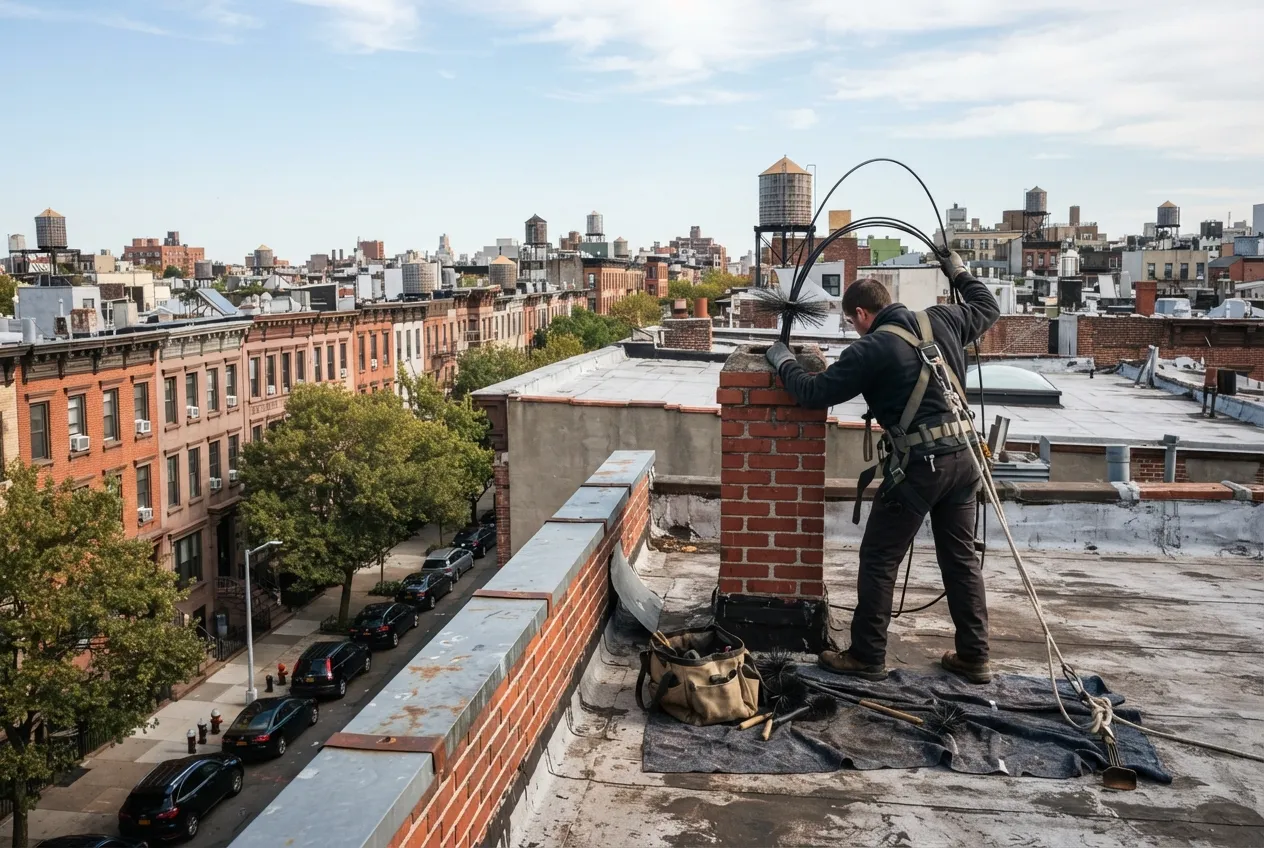
The short answer
ClearStack Chimney Service repairs chimneys on houses and apartment buildings throughout Parkville, Brooklyn, including crowns, mortar joints, flashing, caps and flue liners. Every repair starts with an inspection so our certified technicians fix the real cause. That includes liner work for oil-to-gas boiler conversions.
Chimneys in Parkville take a beating. Brick and mortar on older Brooklyn homes go through freeze-and-thaw cycles, wind-driven rain, and heating seasons that keep a boiler or furnace running for months. When a chimney starts to fail, the signs are often small at first: a few loose bricks near the top, a damp patch on an upstairs ceiling, white staining on the masonry, or flakes of tile in the cleanout. ClearStack Chimney Service repairs chimneys on homes throughout Parkville, about 2 miles northeast of our office in Dyker Heights. Our certified technicians find the cause of the problem, explain what they see in plain terms, and fix what actually needs fixing.
Chimney problems we see on Parkville homes
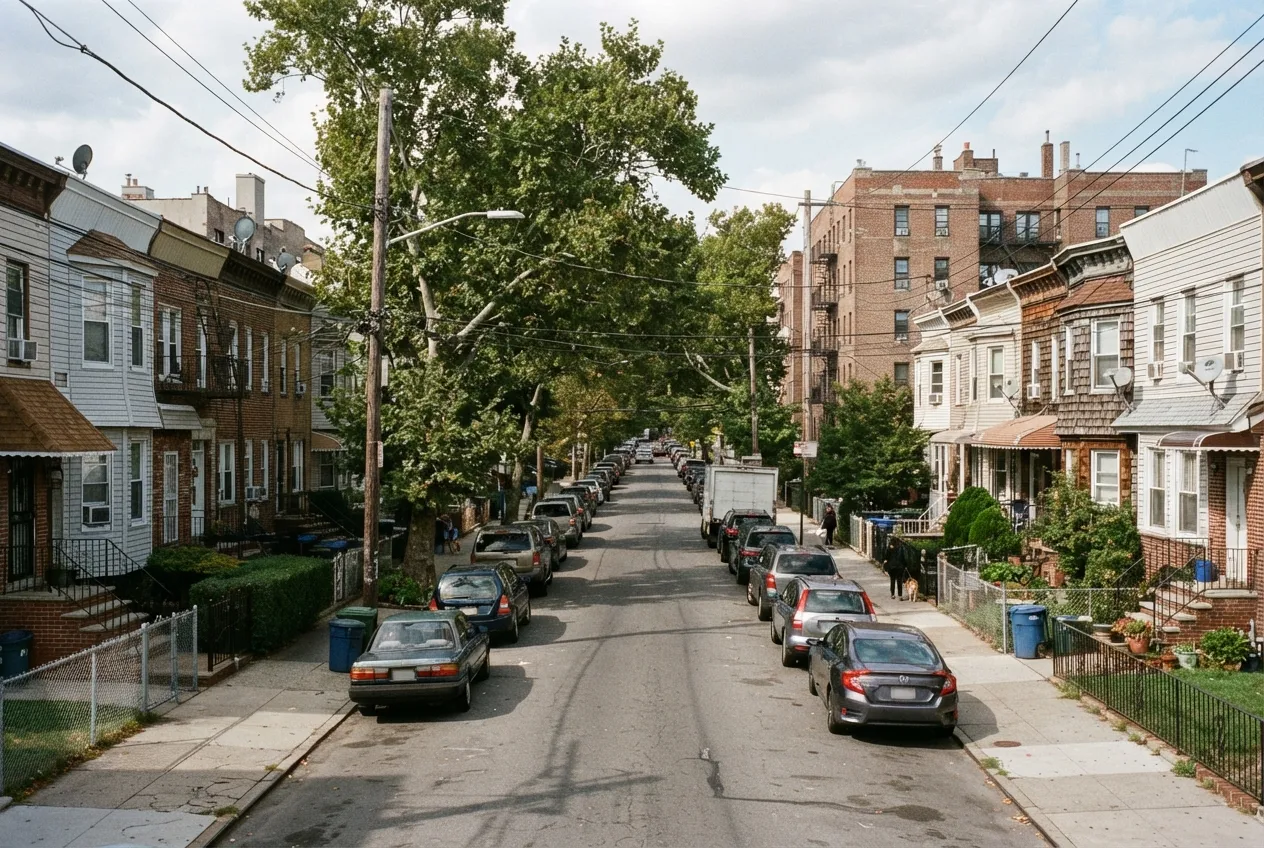
Parkville has a mix of detached and semi-detached houses, two-family homes, attached rowhouses and pre-war apartment buildings. Each type tends to wear in its own way. A chimney on a detached house is exposed on every side. On attached homes, water entering a chimney can travel into a neighbor's wall as well as your own. Taller masonry stacks on apartment buildings often vent a large boiler, which puts heavy demand on the flue.
These are the repairs we handle most often:
- Cracked or crumbling crowns, the concrete top that sheds water away from the flue
- Eroded mortar joints that need repointing before bricks loosen
- Spalling brick, where the face pops off after absorbing water
- Failed flashing where the chimney meets the roof, a common source of ceiling and wall leaks
- Missing or damaged chimney caps that let in rain, debris, birds and squirrels
- Cracked clay flue tiles or deteriorated liners
- Damaged dampers and smoke chambers in wood-burning fireplaces
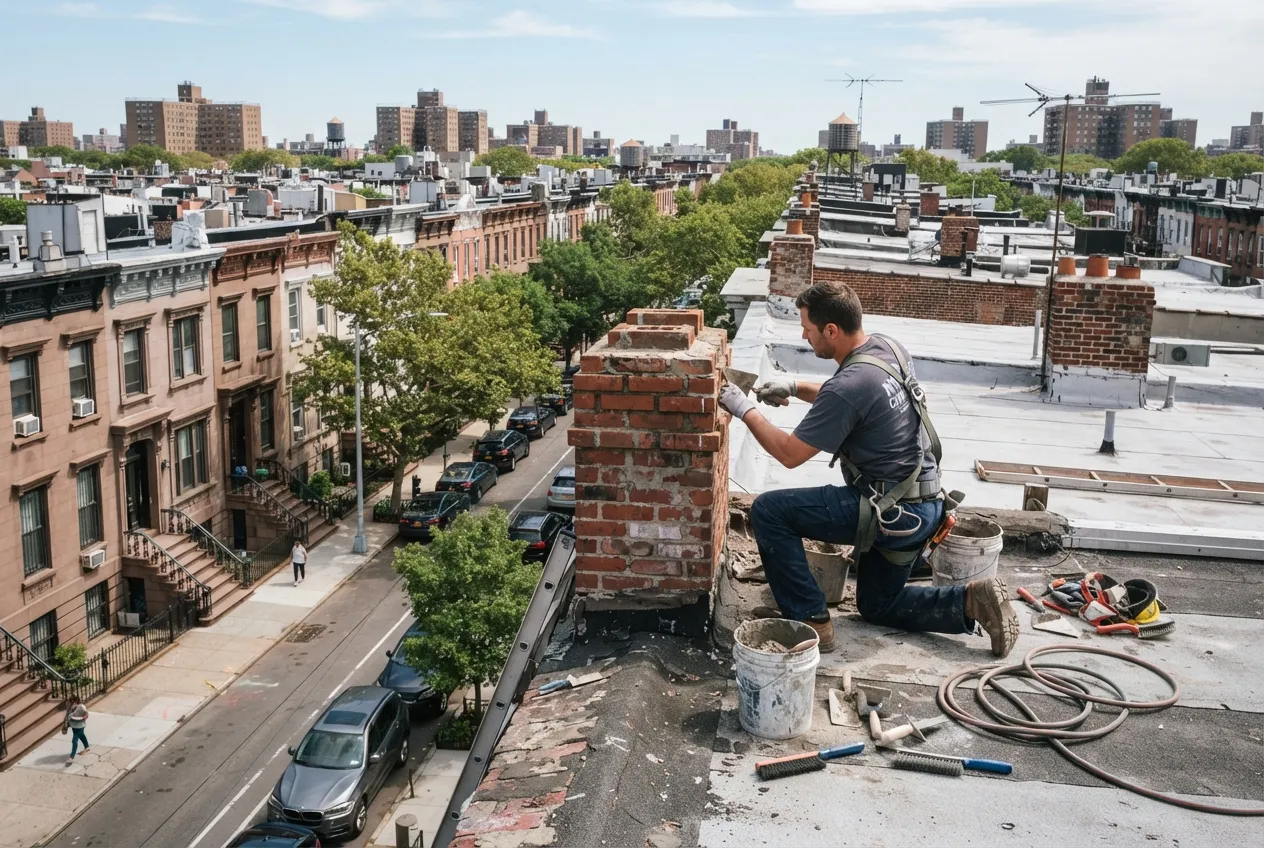
Inspection comes before repair
A good repair starts with knowing what is wrong. The NFPA 211 standard calls for chimneys, fireplaces and vents to be inspected once a year, and most of our repair work begins with one of those inspections. Chimney professionals use three levels. A Level 1 inspection fits when nothing about the system has changed. A Level 2 inspection applies when the system changes, such as a new appliance or a switch of fuel, or when the home is being sold. A Level 3 inspection is for cases where a hidden hazard has to be reached by opening part of the chimney or building.
After the inspection, we walk you through what we found and show you photos where we can. We also separate urgent safety problems from items you can plan for later. Small issues like a cracked crown or a few open mortar joints are far easier to handle before water gets into the structure.
Oil-to-gas conversions and chimney liners
Many Brooklyn buildings have switched, or plan to switch, their boilers from oil to gas. When a New York City building converts its boiler from oil to gas, the chimney has to be evaluated as part of the work. A new liner is often needed, because gas exhaust produces acidic condensate that can corrode a masonry flue.
If you are planning a conversion for a Parkville house or apartment building, bring us in early. We can evaluate the existing flue, tell you whether a liner is needed, and coordinate with your heating contractor so the chimney is ready when the new equipment is. We also reline chimneys whose cracked tiles or gaps let heat and exhaust reach the surrounding structure.
Time for your annual chimney check?
Planning repairs around heat season
New York City's heat season runs from October 1 through May 31. During that time, building owners must keep apartments heated to the city's minimum temperatures. If you own a two-family home or apartment building in Parkville, a chimney problem that takes the boiler offline in January is more than an inconvenience. Scheduling inspections and repairs in late spring or summer gives you time to fix issues without pressure, and masonry work generally goes more smoothly in mild weather.
Some problems should not wait for a convenient season. Call us right away for water coming in around the chimney, falling or loose brick, or signs that exhaust is not venting properly. If you suspect carbon monoxide, get everyone out of the home and call emergency services first.
Serving Parkville and nearby neighborhoods
Parkville is a short trip from our Dyker Heights base, so visits in the neighborhood are easy to schedule. We also repair chimneys in nearby Ditmas Park, Kensington, Midwood, Mapleton and Borough Park. For a single-family house, a two-family home or a multi-unit building, you will get a clear explanation of the chimney's condition and the repair options that make sense for it.
More services in Parkville
- Chimney Sweep in Parkville
- Chimney Inspection in Parkville
- Air Duct Cleaning in Parkville
- Chimney Liner Installation in Parkville