The short answer
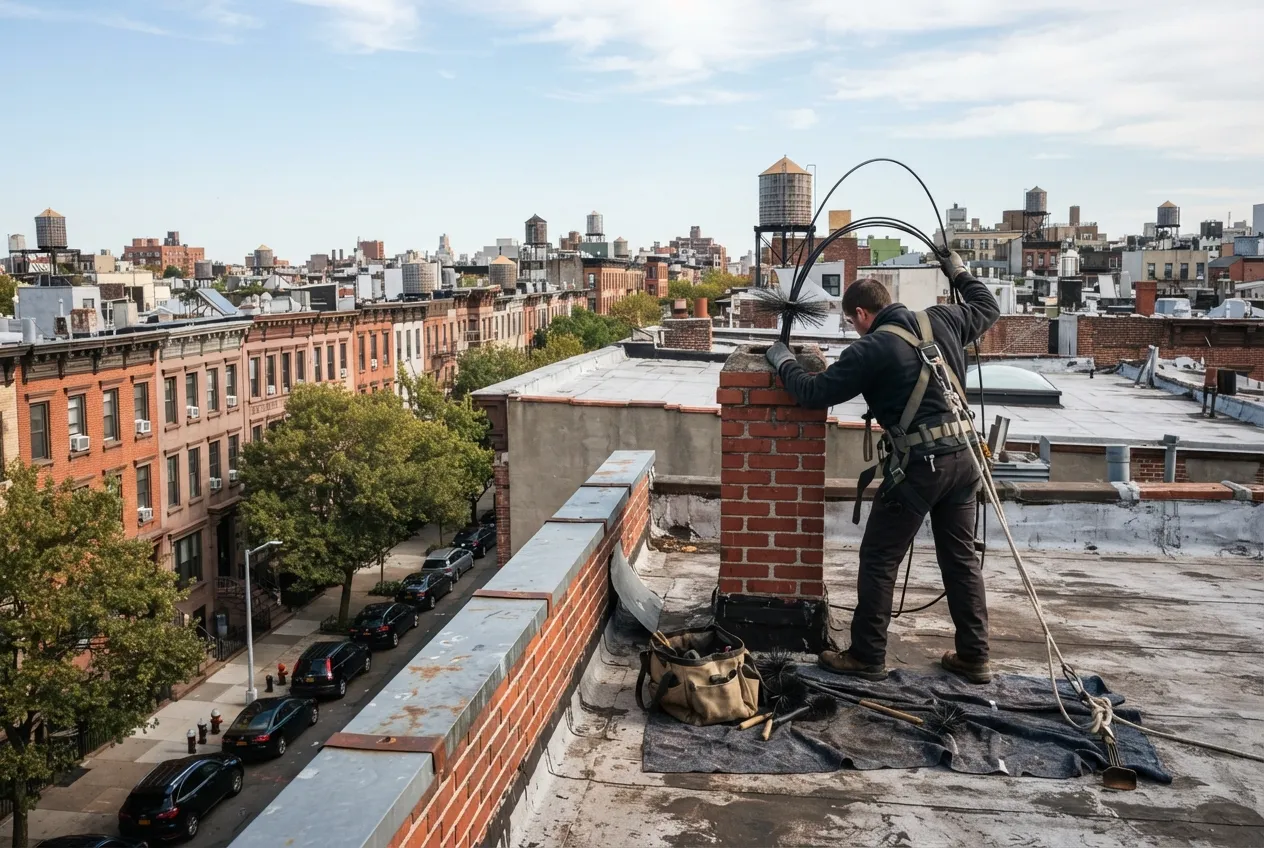
ClearStack repairs chimney masonry, crowns, flashing, caps, dampers and flue liners for Kensington homes and buildings in ZIP code 11218. We inspect first, explain what we found and why it matters, and then repair the source of the problem.
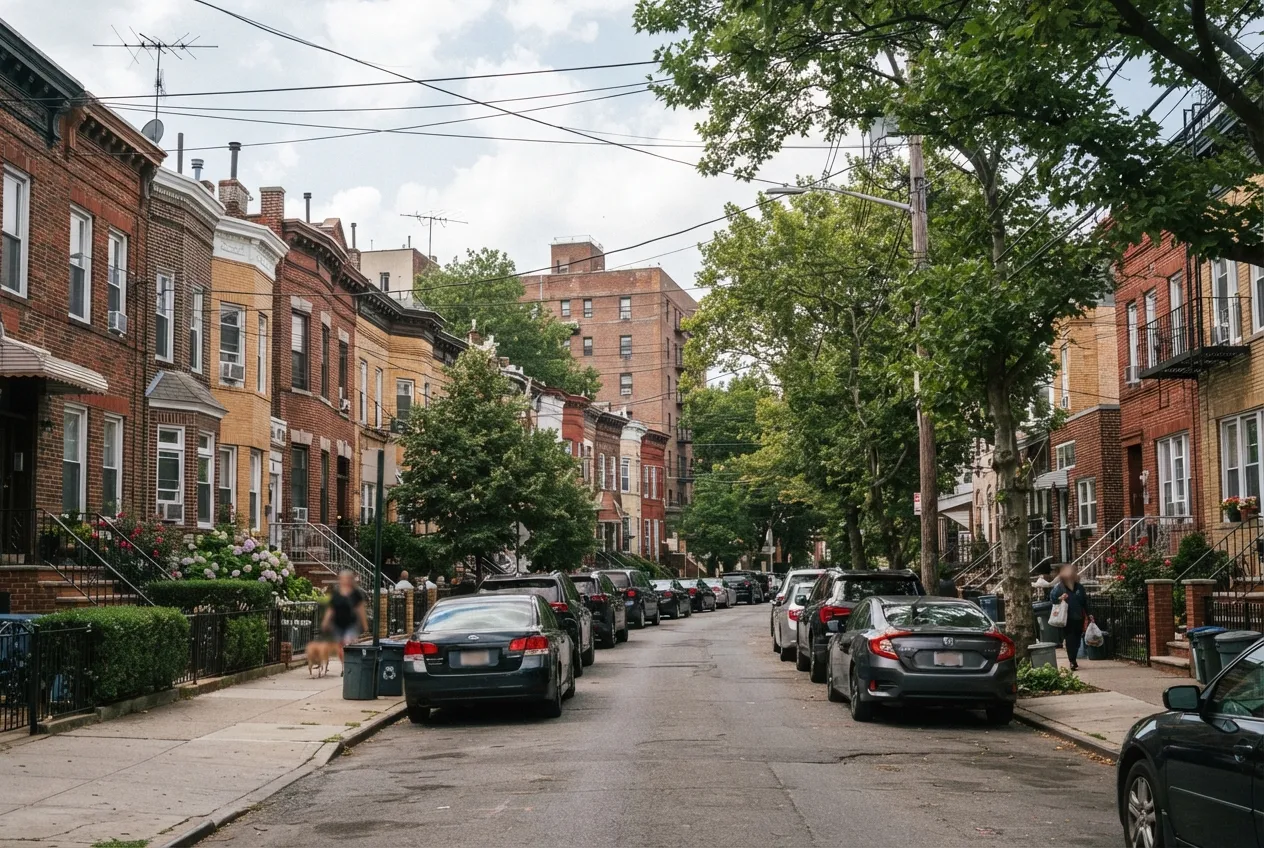
Kensington has a mix of housing that few Brooklyn neighborhoods match: detached frame houses with tall chimneys, attached brick rowhouses, two-family homes, and pre-war apartment buildings with boiler flues that have served the building for generations. Each type wears out in its own way. ClearStack Chimney Service repairs chimneys throughout Kensington and the 11218 ZIP code from our office in Dyker Heights, about 2 miles away. Our certified technicians start by finding out why the chimney is failing, then fix that cause, so you are not paying for the same repair again in a few seasons.
Common Chimney Problems in Kensington Homes
Most of the repairs we see in Kensington come from age and weather rather than a single dramatic failure. Brick and mortar take decades of freeze-thaw cycles. Water gets into small cracks, freezes, and widens them a little more each winter. A chimney that looked fine from the sidewalk can have loose bricks near the top, a cracked crown, or flashing that has pulled away from the roof.
Detached and semi-detached houses often have taller, more exposed chimneys that take the brunt of wind and rain. Rowhouses may share chimney walls or sit close to a neighbor's stack, so a leak can show up in an unexpected room. In pre-war apartment buildings, the main concern is usually the boiler flue and how it handles the building's current heating equipment.
- Spalling or crumbling brick and eroded mortar joints
- Cracked or missing chimney crowns
- Leaks where the chimney meets the roof
- Missing or rusted chimney caps that let in rain, debris and animals
- Damaged dampers and smoke chambers
- Cracked, deteriorated or missing flue liners
How We Approach a Chimney Repair
Every repair begins with an inspection. The NFPA 211 standard calls for chimneys, fireplaces and vents to be inspected once a year, and it sets out three levels. A Level 1 inspection covers the readily accessible parts of a chimney when nothing has changed. A Level 2 inspection is called for when the system changes, such as a new appliance or a fuel switch, or when the home is sold. A Level 3 inspection is used when a suspected hidden hazard can only be reached by opening part of the chimney or building.
Once we know what is wrong, we explain the findings in plain terms, show you what we saw, and describe the repair options. Some problems can be fixed with targeted repointing or a new crown. Others, like a badly deteriorated flue, need a liner. We tell you which repairs affect safety and which ones mainly protect the masonry, so you can plan.
Masonry, Crown and Flashing Repair
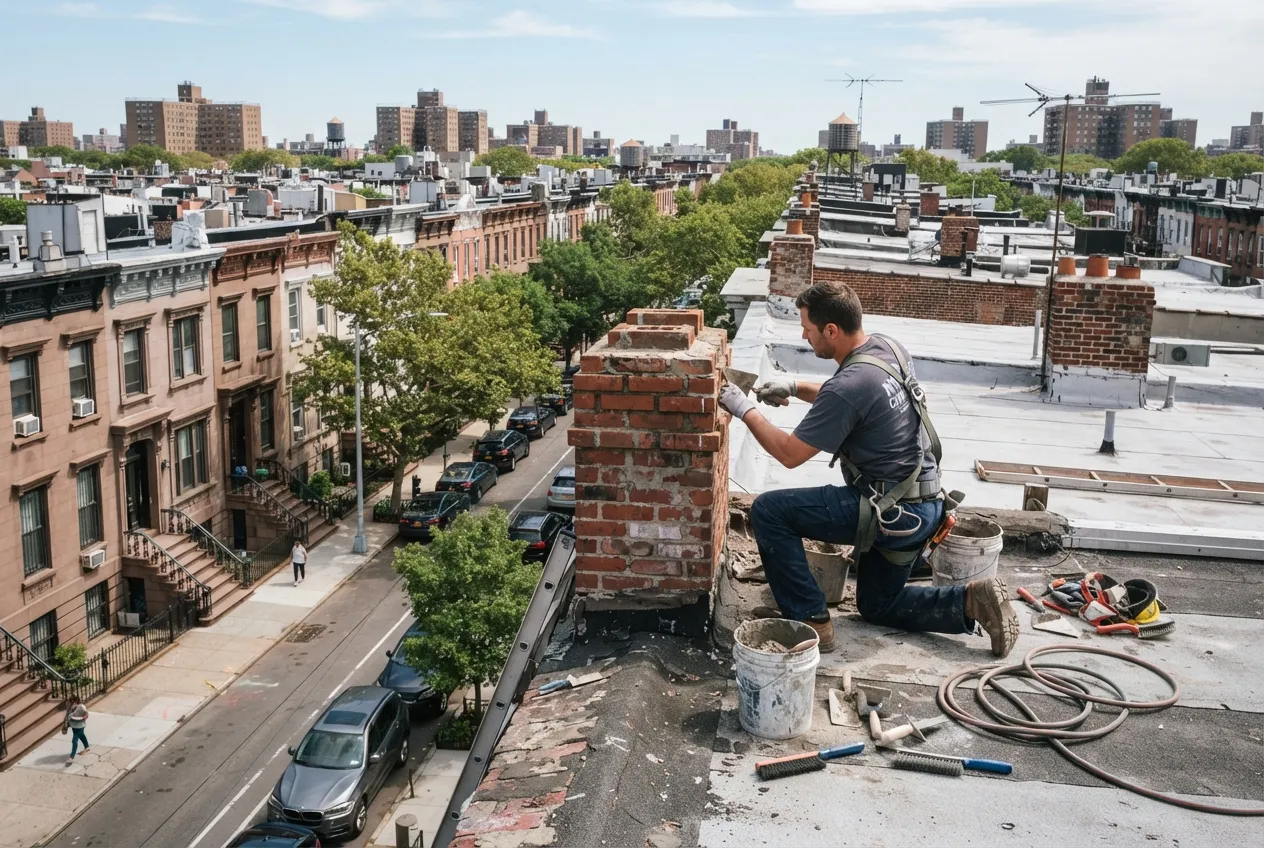
Water is the main enemy of a brick chimney. When we repair masonry, we remove failing mortar and repoint with a mortar suited to older brick, replace damaged brick where needed, and rebuild sections that have become unstable. A cracked crown, the concrete or mortar cap on top of the chimney, lets water straight into the structure, so we repair or rebuild it to shed water away from the brick.
Leaks inside the house near the chimney often trace back to flashing, the metal seal between the chimney and the roof. We reseal or replace failed flashing and install a properly fitted chimney cap to keep rain and animals out of the flue.
Time for your annual chimney check?
Flue Liners and Oil-to-Gas Conversions
Many Kensington homes and buildings have changed heating systems over the years. When a New York City building converts its boiler from oil to gas, the chimney has to be evaluated as part of that work. A new liner is often needed because gas exhaust produces acidic condensate that can corrode a masonry flue from the inside. That damage is not always visible from the roof or the basement.
We evaluate the existing flue, check whether it is sized and built for the new appliance, and install a liner when one is needed. If you are planning a conversion or a new boiler or water heater, call before the work is finished so the chimney is not an afterthought.
Timing Your Repair Around Heat Season
New York City's heat season runs from October 1 through May 31, when building owners must keep apartments heated to the city's minimum temperatures. For owners of multi-family homes and apartment buildings, a chimney problem in the middle of winter can put that heat at risk. Scheduling inspections and repairs in late spring or summer gives time for masonry work, liner installation and any follow-up before the boiler has to run full time.
We also serve nearby Ditmas Park, Parkville, Borough Park, Mapleton and Midwood, so if neighbors on your block need work, it is easy to coordinate.
More services in Kensington
- Chimney Sweep in Kensington
- Chimney Inspection in Kensington
- Air Duct Cleaning in Kensington
- Chimney Liner Installation in Kensington