The short answer
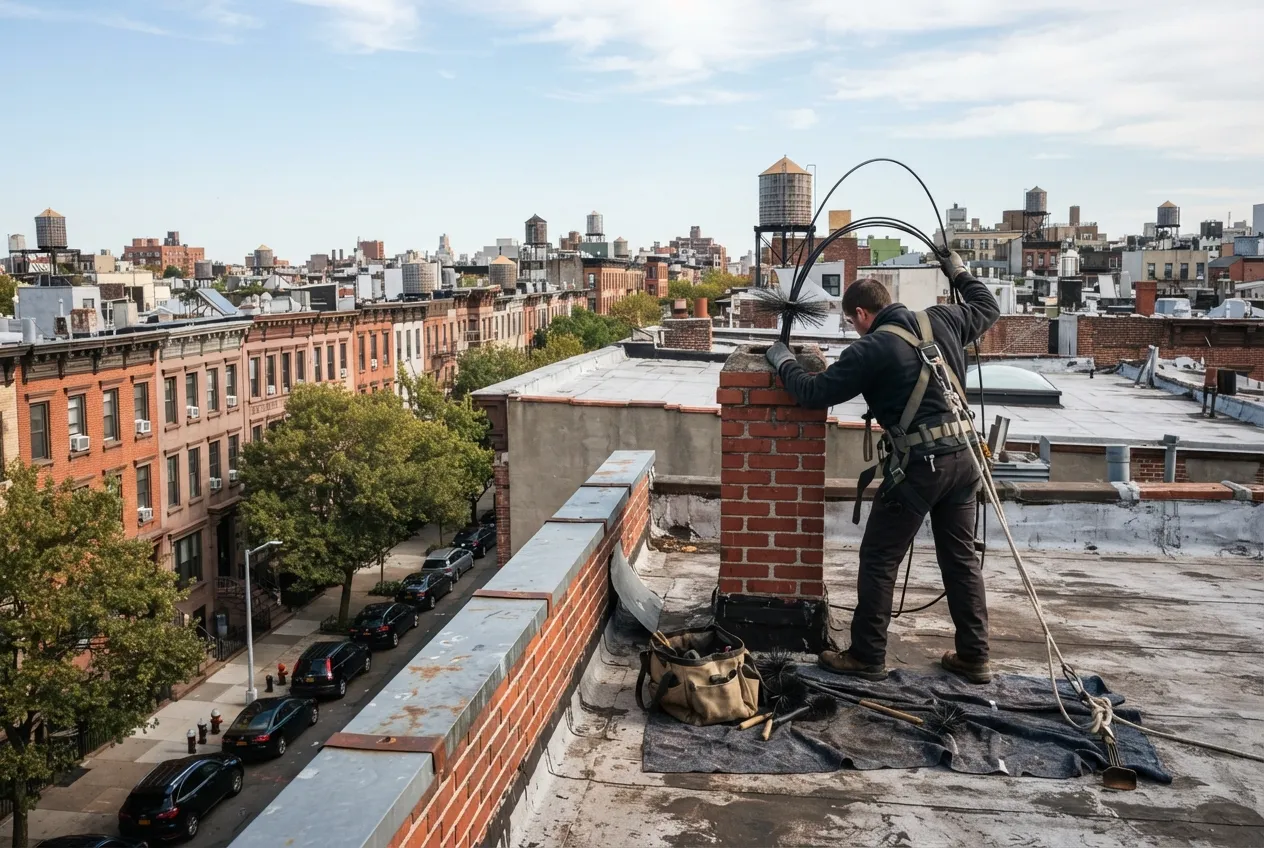
A Kensington chimney sweep removes creosote, soot and debris from fireplace, wood stove and boiler flues, then checks the chimney for damage and blockages. The NFPA 211 standard calls for a yearly inspection, so late summer or early fall, before New York City's October 1 heat season starts, is the practical time to book.
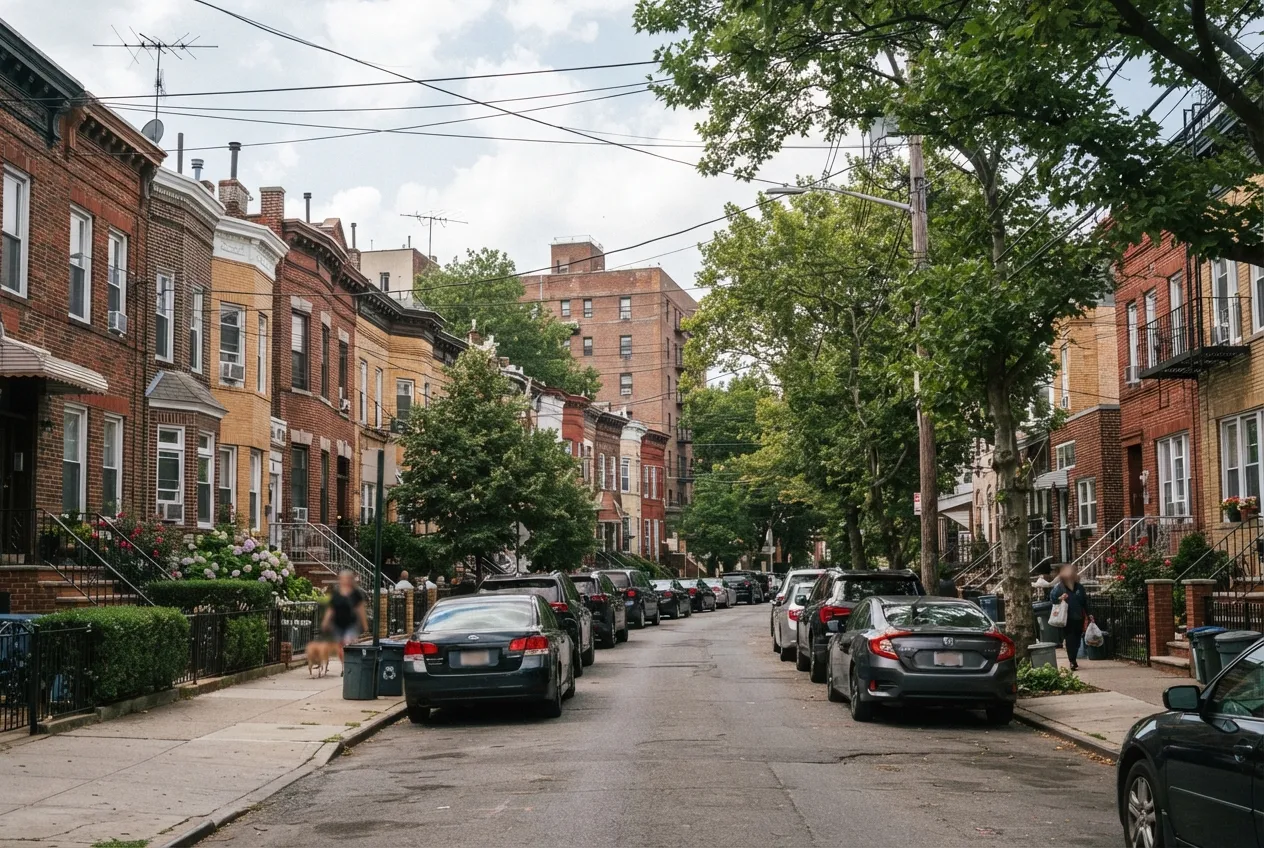
Kensington has a real mix of housing: detached and semi-detached homes, attached rowhouses, and pre-war apartment buildings with boiler chimneys running up through the roofline. Each has its own chimney problems. A fireplace in a single-family house gathers creosote and debris. A shared stack on a row of attached homes can be blocked by one neighbor's nest or fallen brick. A building flue serving an oil or gas boiler collects soot and, after a fuel change, acidic residue. ClearStack Chimney Service sends certified technicians from our Dyker Heights office, about 2 miles southwest, to sweep and inspect chimneys throughout Kensington and the 11218 ZIP code. We also work in nearby Ditmas Park, Parkville, Borough Park, Mapleton and Midwood.
What a chimney sweep covers in a Kensington home
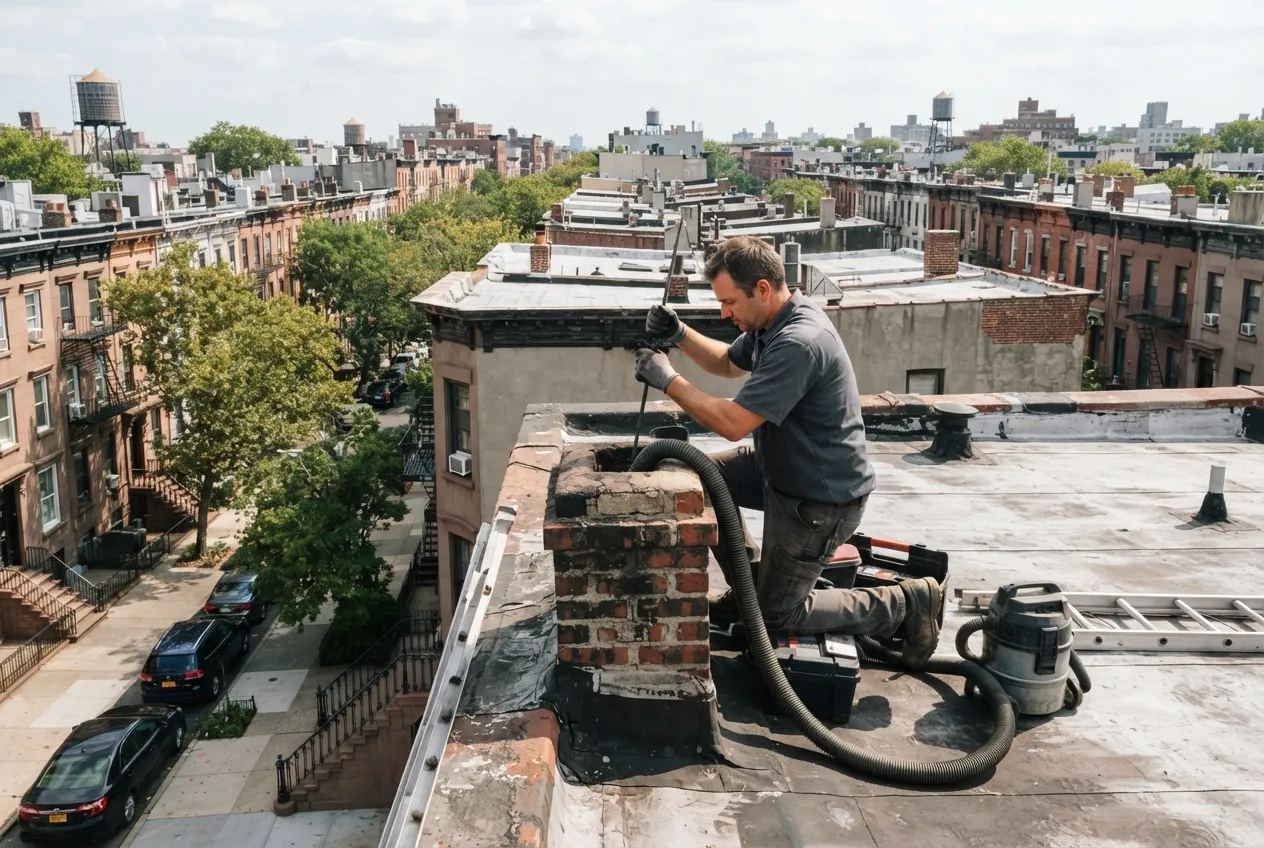
A sweep does more than run a brush down the flue. The goal is a clear, intact passage that carries smoke and exhaust out of the house. In Kensington that can mean a wood-burning fireplace in a detached home, a stove insert someone added years ago, or the flue that vents a building's boiler and water heater.
On a typical visit our technicians handle the parts of the system that affect safety and draft:
- Brushing and vacuuming the flue to remove creosote and soot
- Cleaning the firebox, smoke shelf and smoke chamber on fireplaces
- Clearing nests, leaves and fallen masonry from the flue and the base of the chimney
- Checking that the damper opens, closes and seals
- Looking at the chimney cap, crown and flashing where they can be reached safely
- Noting cracks, missing mortar or liner damage that needs follow-up
Chimneys in Kensington's older housing
Much of Kensington's housing is decades old, and so are the chimneys. Detached and semi-detached homes often still have original masonry fireplaces. They may have sat unused for a long stretch and then come back into service. Before the first fire in a fireplace that has been idle, have it swept and looked over, because animal nests and loose debris are common.
Attached rowhouses sometimes share a chimney stack or have flues running side by side, so a problem on one roof can affect the house next door. Pre-war apartment buildings usually have a tall masonry chimney serving the boiler. When a New York City building converts its boiler from oil to gas, the chimney has to be evaluated as part of the work. A new liner is often needed, because gas exhaust produces acidic condensate that can corrode a masonry flue. If your building is planning a conversion, or has already finished one, we can sweep and inspect the flue so you know where it stands.
When to schedule a sweep
The NFPA 211 standard calls for chimneys, fireplaces and vents to be inspected once a year. Chimney professionals use three inspection levels. Level 1 applies when nothing has changed. Level 2 applies when the system changes, such as a new appliance or a switch of fuel, or when the home is sold. Level 3 is used when a hidden hazard can only be reached by opening part of the chimney or building.
New York City's heat season runs from October 1 through May 31, and building owners must keep apartments heated to the city's minimum temperatures during that time. For apartment buildings, that makes late summer the sensible window to sweep and inspect the boiler flue, before the heat has to stay on. For homeowners who burn wood, booking before the first cold snap avoids the fall rush and means you start the season with a clean flue.
Time for your annual chimney check?
Signs your chimney needs attention now
Some problems shouldn't wait for the yearly visit. Call for a sweep if you notice any of the following:
- Smoke coming back into the room instead of rising up the flue
- A strong, smoky or tar-like smell from the fireplace, especially in humid weather
- Black, flaky or glazed buildup visible above the damper
- Bits of brick, mortar or tile landing in the firebox
- Birds, squirrels or other animals heard inside the chimney
- Water stains or dampness on the wall or ceiling near the chimney
What to expect on the day
Our technicians arrive with drop cloths and a vacuum set up to contain soot, so the room around the fireplace or boiler stays clean. Most sweeps in a single-family home are finished in one visit. Building flues can take longer depending on height and access.
When the work is done, we explain what we found in plain terms: what was cleaned, what condition the flue and masonry are in, and anything that needs repair or a closer look. If we see something beyond a routine sweep, such as a damaged liner or a crown that needs work, we tell you and lay out your options. We won't pressure you into a decision on the spot.
More services in Kensington
- Chimney Inspection in Kensington
- Chimney Repair in Kensington
- Air Duct Cleaning in Kensington
- Chimney Liner Installation in Kensington