The short answer
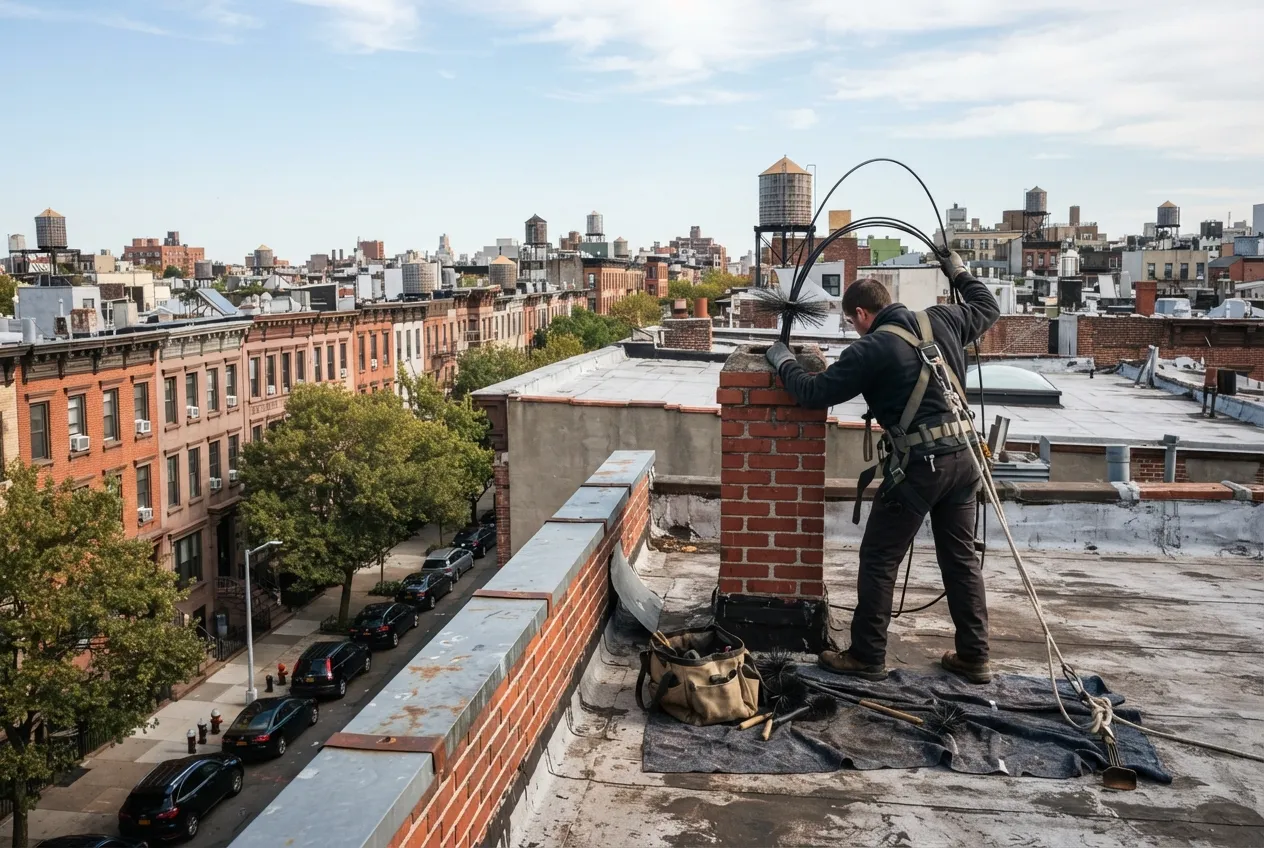
A chimney sweep removes soot, creosote and debris from your flue so smoke and exhaust can leave the house safely. In Bath Beach, where many homes vent a boiler and sometimes a fireplace through masonry chimneys, the NFPA 211 standard calls for an inspection once a year, and a sweep is usually done alongside it when buildup is found. ClearStack is based about a mile away in Dyker Heights.
Many homes in Bath Beach still send heat up a chimney every winter, whether from a working fireplace, an oil or gas boiler, or both sharing one masonry stack. ClearStack Chimney Service sweeps chimneys throughout Bath Beach (11214) from our office in Dyker Heights, about a mile away. Our certified technicians remove soot and creosote, clear blockages, and check the flue so you know what shape your chimney is in before you rely on it. This page covers how sweeping works for the kinds of homes found in Bath Beach and what to expect when we come out.
Sweeping the Chimneys Found in Bath Beach Homes
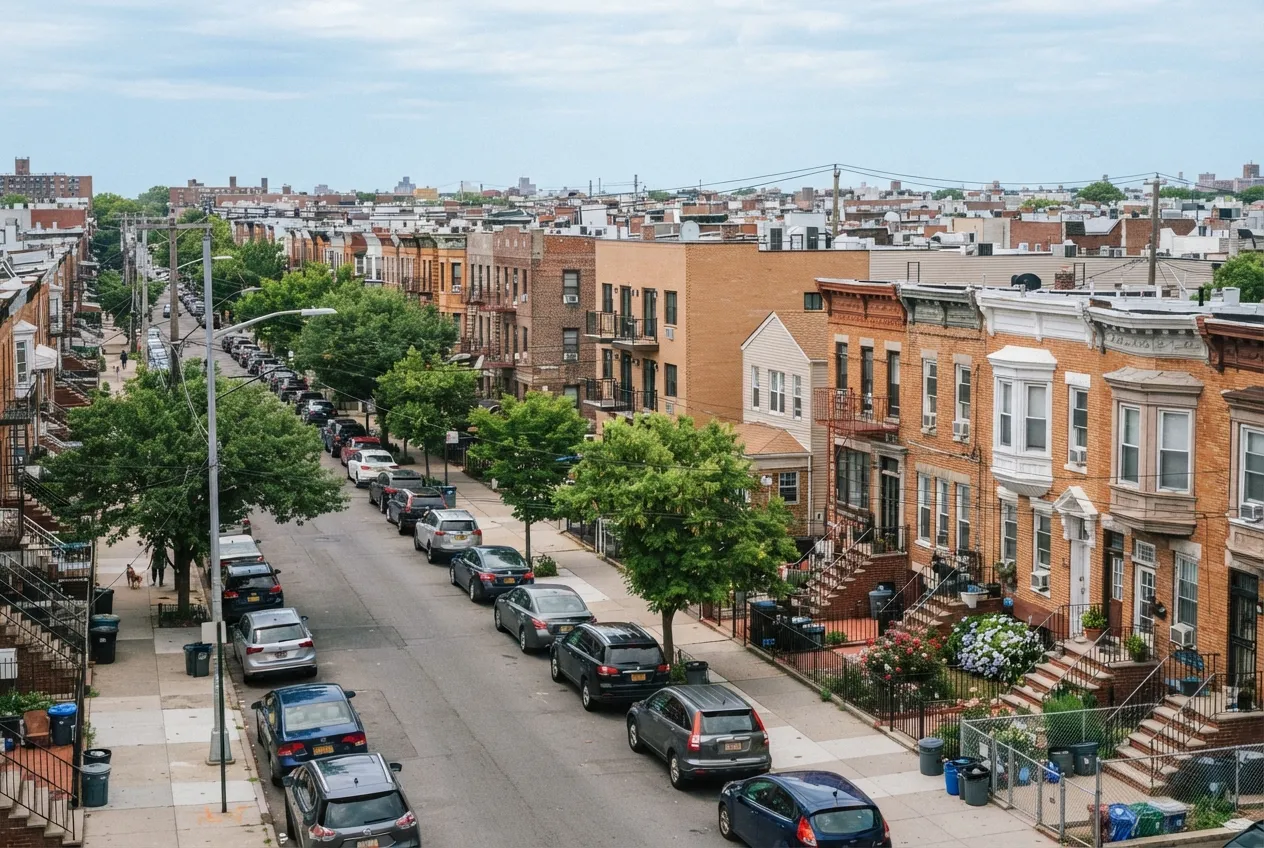
Bath Beach has a mix of attached rowhouses, semi-detached and detached one- and two-family homes, and small pre-war apartment buildings. Most of these rely on brick chimneys, and many of those chimneys do double duty: one flue for the heating system, and sometimes a second for a fireplace that may or may not still be in use.
Each setup builds up something different. Wood fireplaces leave creosote, a tar-like residue that can catch fire. Oil boilers leave heavy soot that can narrow the flue and hurt draft. Gas appliances leave less visible residue, but their exhaust is moist and can break down old masonry over time. A good sweep starts by identifying which flue serves what, then cleans it accordingly.
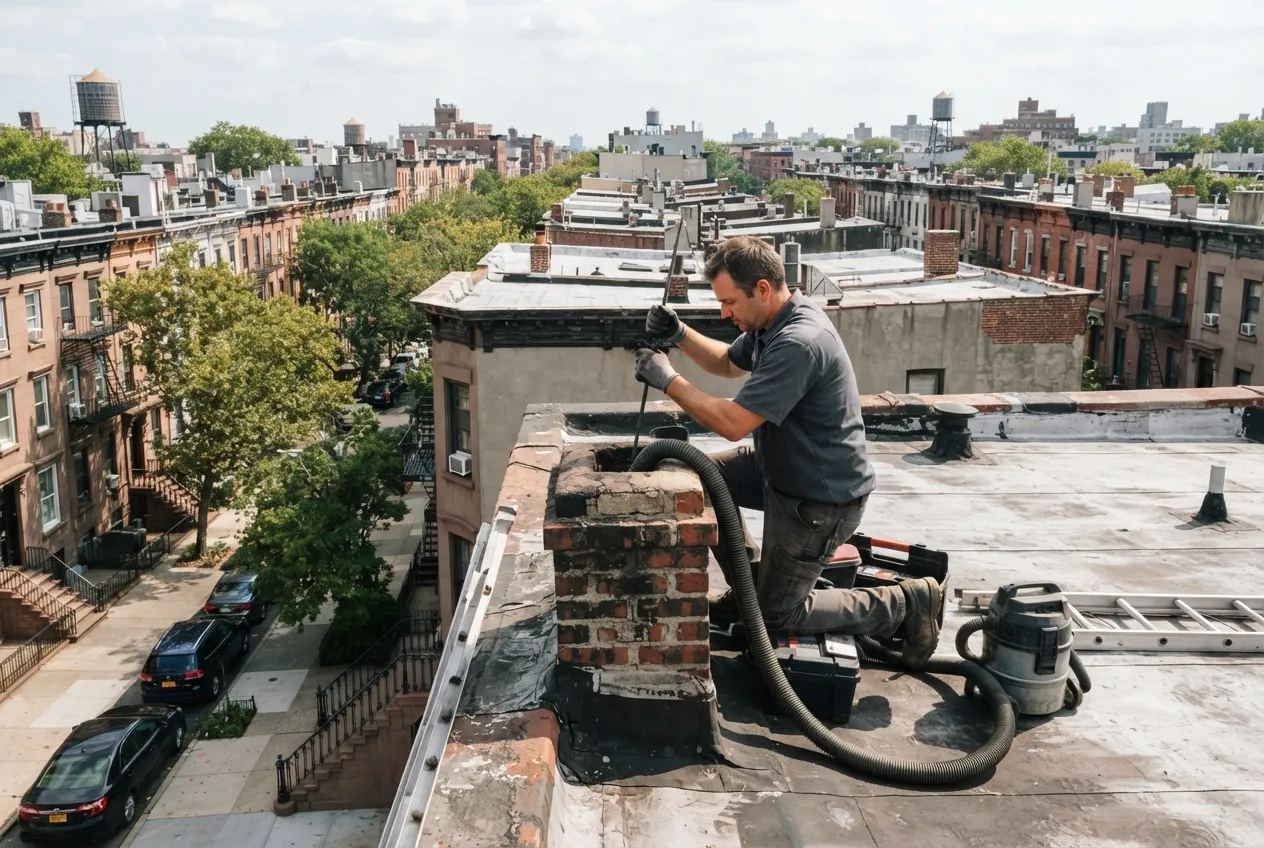
- Brushing and vacuuming soot and creosote from the flue walls
- Clearing the smoke chamber, smoke shelf and firebox on fireplaces
- Removing nests, leaves and fallen masonry from the base of the flue
- Checking the damper, cap and crown for damage or gaps
- Noting liner cracks, missing mortar or draft problems for follow-up
Boiler and Furnace Flues Before Heat Season
New York City's heat season runs from October 1 through May 31. If you own a multifamily building in Bath Beach, you are required to keep apartments heated to the city's minimum temperatures during that period, which means a blocked or poorly drafting boiler flue is not just an inconvenience. Even in a one-family home, a heating system that cannot vent properly can push exhaust back into the basement.
Late summer and early fall are the practical time to have the boiler flue swept and looked over, before the system runs daily. Oil-fired systems in particular benefit from regular cleaning because soot accumulates steadily over a winter.
If your building has converted, or plans to convert, from oil to gas, the chimney needs to be evaluated as part of that work. A new liner is often needed, because gas exhaust produces acidic condensate that can corrode an unlined or oil-era masonry flue. We can sweep the existing flue and tell you what we see so you can plan the conversion with accurate information.
Fireplaces in Rowhouses and Detached Homes
Fireplaces in older Brooklyn homes are often used only a few times a year, or have sat unused for a long time. Both situations call for a look before lighting a fire. Light, occasional use can still leave creosote, and a flue that has been idle may have animal nests, debris, or a stuck damper.
In attached rowhouses, chimneys sit in or near shared walls, so a flue problem can affect more than one household. We check that the flue is open its full length and that the cap is keeping out rain and animals.
Time for your annual chimney check?
How Often to Sweep, and When to Inspect
The NFPA 211 standard calls for chimneys, fireplaces and vents to be inspected once a year. Sweeping is done when the inspection shows enough buildup to need it, which for regularly used fireplaces and oil boilers is often every year.
Inspections come in three levels. A Level 1 inspection fits when nothing has changed. A Level 2 inspection applies when the system changes, such as a new boiler or a switch from oil to gas, or when the home is sold. A Level 3 inspection is reserved for cases where a hidden hazard has to be reached by opening part of the chimney or building. Most Bath Beach homeowners only need a Level 1 alongside a routine sweep.
What to Expect When We Visit
Because our office is in Dyker Heights, Bath Beach is close by, and we also serve Bensonhurst, Gravesend, Bay Ridge, Mapleton and Dyker Heights itself. We lay down drop cloths, seal the fireplace or boiler connection, and use brushes and vacuums to keep soot contained. If we need roof access, we will ask beforehand. Afterward we walk you through what we found, including anything that should be repaired, and leave the decision to you.
More services in Bath Beach
- Chimney Inspection in Bath Beach
- Chimney Repair in Bath Beach
- Air Duct Cleaning in Bath Beach
- Chimney Liner Installation in Bath Beach