The short answer
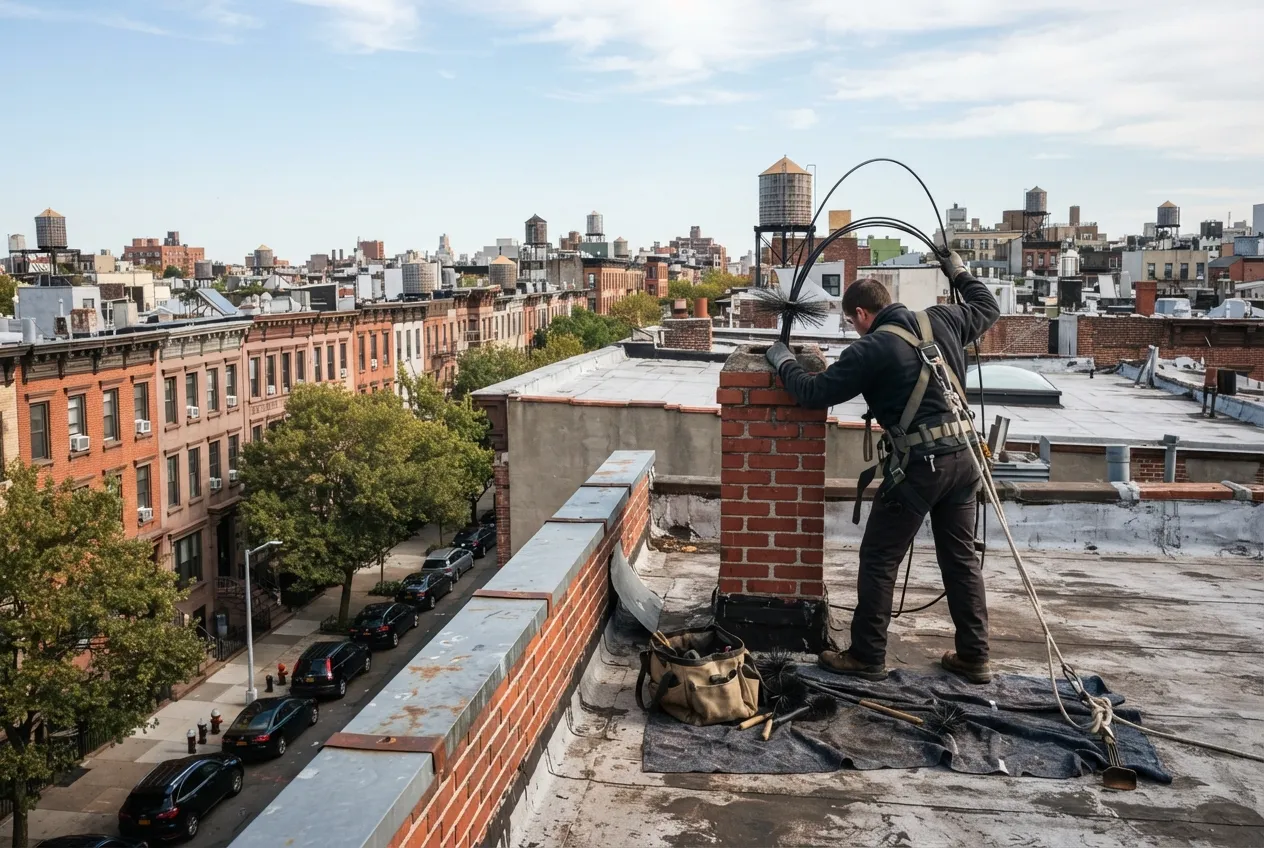
Chimney repair in Gravesend usually means fixing worn masonry, cracked crowns, leaking flashing, or damaged flue liners, and it should start with an inspection. ClearStack's certified technicians come from nearby Dyker Heights to diagnose the problem and explain the fix before starting work.
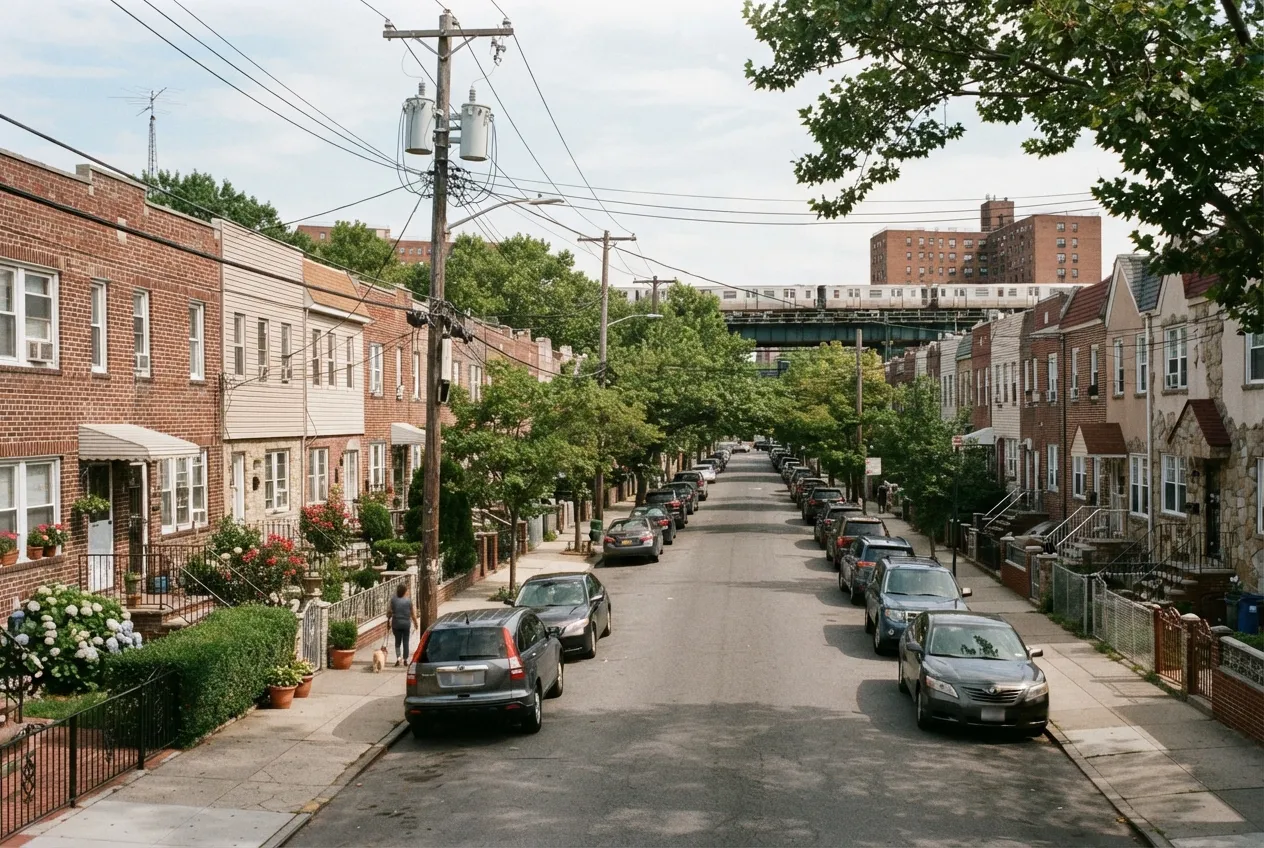
Gravesend has a mix of detached and semi-attached houses, two-family homes, rowhouses, and pre-war apartment buildings, and many of their chimneys have been through decades of freeze-thaw cycles, salt air drifting in from the water, and changes in heating systems. ClearStack Chimney Service repairs chimneys throughout Gravesend (ZIP 11223) from our office in Dyker Heights, about 2 miles to the northwest. Our certified technicians start by finding out what is actually wrong. Then they explain the repair in plain terms before any work begins, so you know what you're paying to fix and why.
Common Chimney Problems in Gravesend Homes
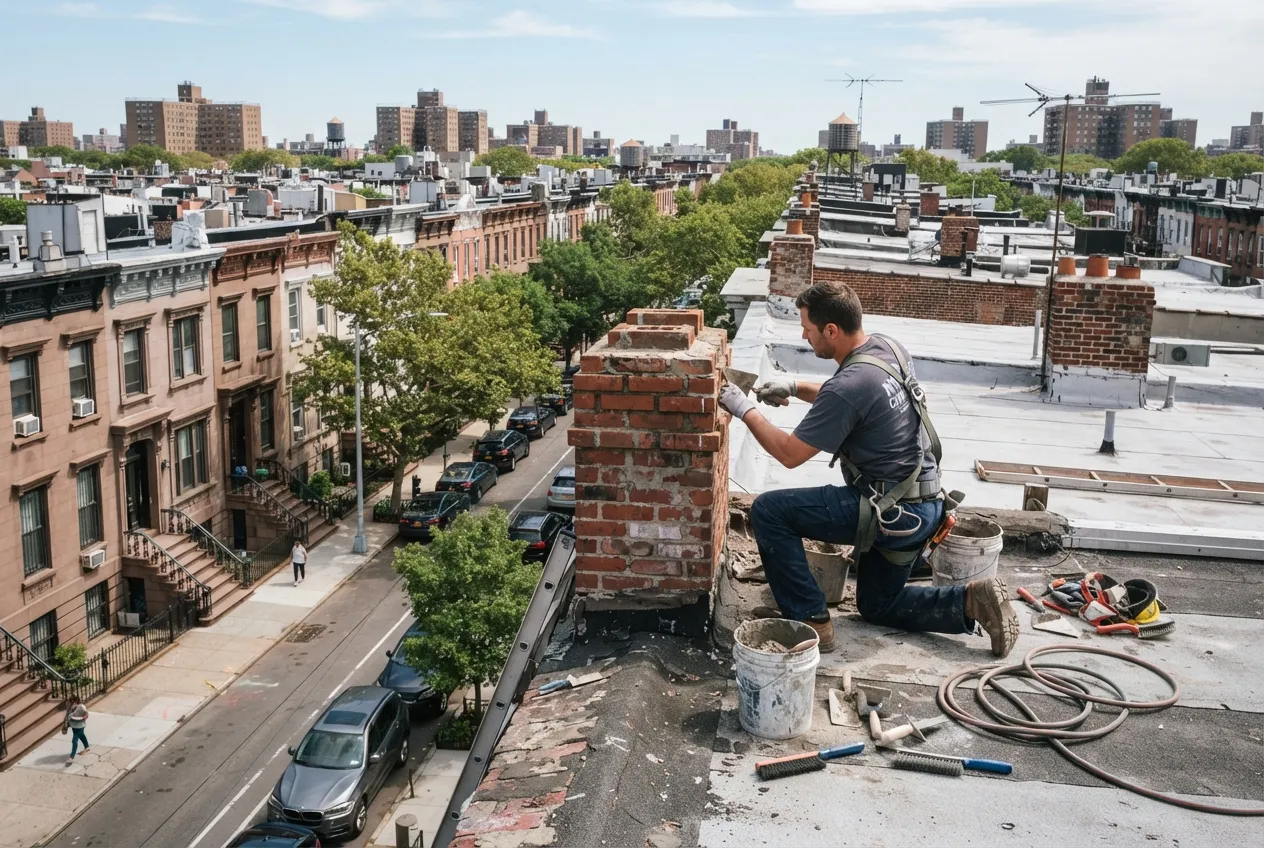
Most chimney damage we see in brick and block chimneys starts with water. Moisture gets into porous brick and mortar, freezes in winter, and slowly pushes the masonry apart. On older homes, the crown at the top of the chimney often cracks first, which lets water run straight down into the structure. Flashing where the chimney meets the roof can also pull loose, and that often shows up as a stain on a ceiling or an upstairs wall rather than on the chimney itself.
Inside the chimney, the flue liner protects your walls and the rest of the house from heat and exhaust. Clay tile liners can crack or lose mortar between sections. Metal liners can corrode if they weren't sized correctly for the appliance.
- Repointing loose or crumbling mortar joints
- Rebuilding or resealing cracked chimney crowns
- Repairing or replacing roof flashing around the chimney
- Replacing damaged bricks and spalled masonry
- Relining flues with properly sized liners
- Installing or replacing chimney caps to keep out rain and animals
- Repairing or replacing dampers that no longer seal
Oil-to-Gas Conversions and Flue Liners
Many homes and small apartment buildings in Gravesend were originally heated with oil, and owners keep switching to gas. When a New York City building converts its boiler from oil to gas, the chimney has to be evaluated as part of the job. A new liner is often needed. Gas exhaust produces acidic condensate, and that moisture can corrode an unlined or poorly lined masonry flue from the inside.
If you're planning a conversion, or one was done recently and nobody looked at the chimney, we can check whether the existing flue suits the new appliance. If it doesn't, we can install a liner sized for the boiler or water heater it serves.
Inspection Comes Before Repair
The NFPA 211 standard calls for chimneys, fireplaces, and vents to be inspected once a year. Chimney professionals use three levels of inspection. A Level 1 inspection fits when nothing about the system has changed. A Level 2 inspection is used when something has changed, such as a new appliance or a switch in fuel, or when the home is being sold. A Level 3 inspection is reserved for cases where a hidden hazard can only be reached by opening part of the chimney or building.
We use the inspection level that fits your situation. For a stain near the chimney, a Level 1 look is often enough to find the cause. After a boiler swap or before closing on a house in Gravesend, a Level 2 inspection gives a fuller picture of the flue's condition. We show you what we find, with photos when possible, and recommend only the repairs the chimney needs.
Time for your annual chimney check?
Planning Repairs Around Heating Season
New York City's heat season runs from October 1 through May 31. During those months, building owners must keep apartments heated to the city's minimum temperatures. If you own a two-family house or a small apartment building and your boiler vents through the chimney, it pays to deal with liner or masonry problems before October. That way, a repair doesn't leave tenants without heat.
Late spring and summer are usually the easiest times to schedule masonry work and relining. Problems don't always wait for good weather, though, and we also handle repairs during the colder months when a chimney issue affects a heating appliance.
Serving Gravesend and Nearby Neighborhoods
Our office in Dyker Heights is about 2 miles from Gravesend, so getting to homes in the 11223 area is a short trip for our crews. Besides Gravesend, we repair chimneys in Bensonhurst, Mapleton, Bath Beach, Midwood, and Dyker Heights. Whether you have a detached house with a fireplace, a rowhouse with a shared chimney, or a pre-war building with a boiler flue, we can take a look and tell you what it needs.
More services in Gravesend
- Chimney Sweep in Gravesend
- Chimney Inspection in Gravesend
- Air Duct Cleaning in Gravesend
- Chimney Liner Installation in Gravesend