The short answer
Air duct cleaning is worth doing when you can see substantial mold growth, signs of rodents or insects, or heavy dust and debris coming from your vents. It is not a proven way to prevent health problems, so we inspect first and tell you plainly whether cleaning is needed. Our technicians work from our Dyker Heights office and serve nearby Brooklyn neighborhoods too.
ClearStack Chimney Service runs its office out of 7421 13th Ave, right here in Dyker Heights, so the homes in 11228 are the ones we work in most often. Many houses here have forced-air heating, central air conditioning or both, and those duct systems collect dust, construction debris and sometimes worse over the years. Not every home needs its ducts cleaned, though. This page explains when cleaning makes sense, what our certified technicians actually do in a Dyker Heights home, and how to tell whether you need the service at all.
When Your Ducts Actually Need Cleaning
The U.S. Environmental Protection Agency advises cleaning air ducts in three situations: when there is substantial visible mold growth inside the ducts or on other parts of the heating and cooling system, when the ducts are infested with vermin such as rodents or insects, or when they are clogged with excessive dust and debris that blows out of the registers. We use the same test. If none of those conditions apply, we will say so.
The EPA also notes that duct cleaning has not been shown to prevent health problems. We do not promise that cleaning will cure allergies or change how anyone in your household feels. What it can do is remove material that should not be in your system, such as drywall dust after a renovation, nesting debris or visible mold.
- Gray dust puffing out of registers when the system starts
- Mold you can see on duct surfaces, coils or the air handler
- Droppings, nesting material or a musty smell from the vents
- Leftover dust from a recent renovation, gut job or new flooring
Duct Systems in Dyker Heights Homes
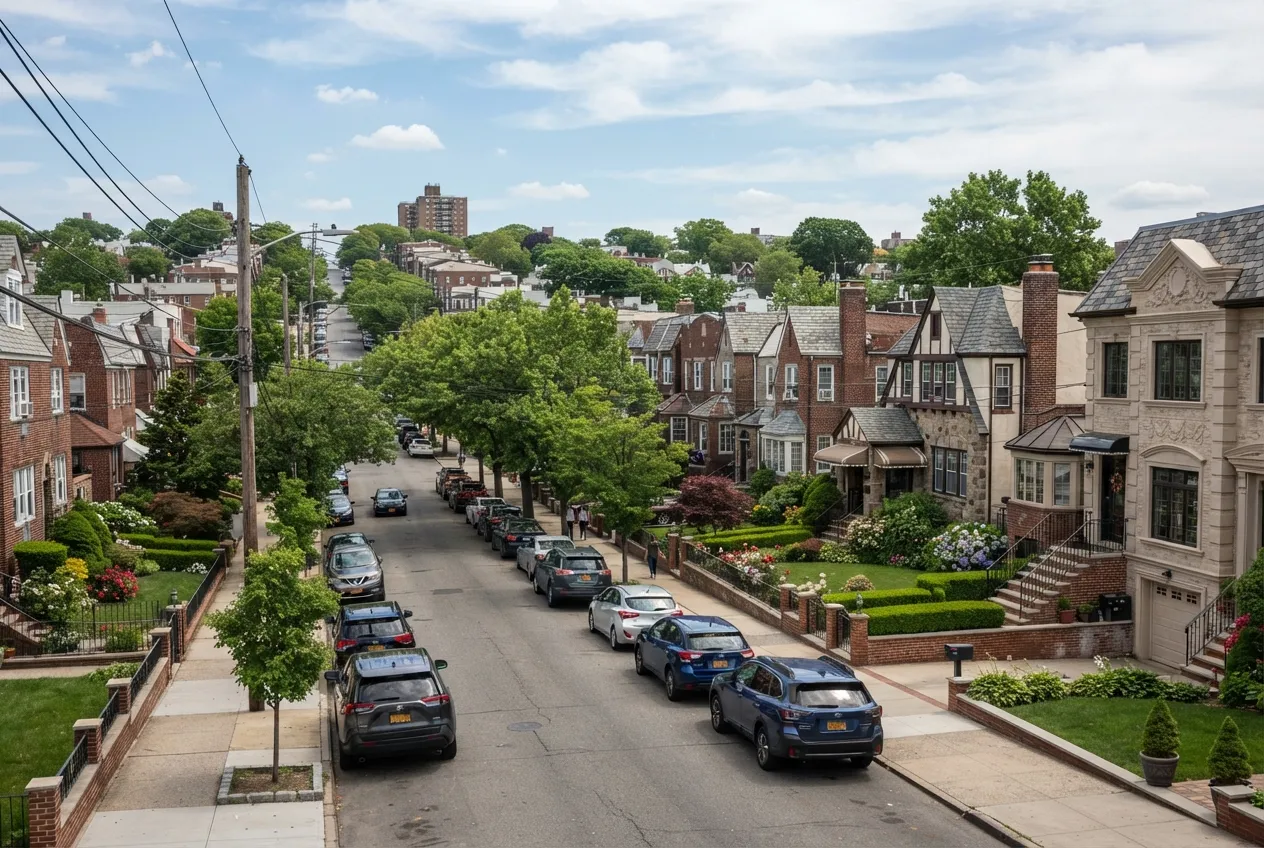
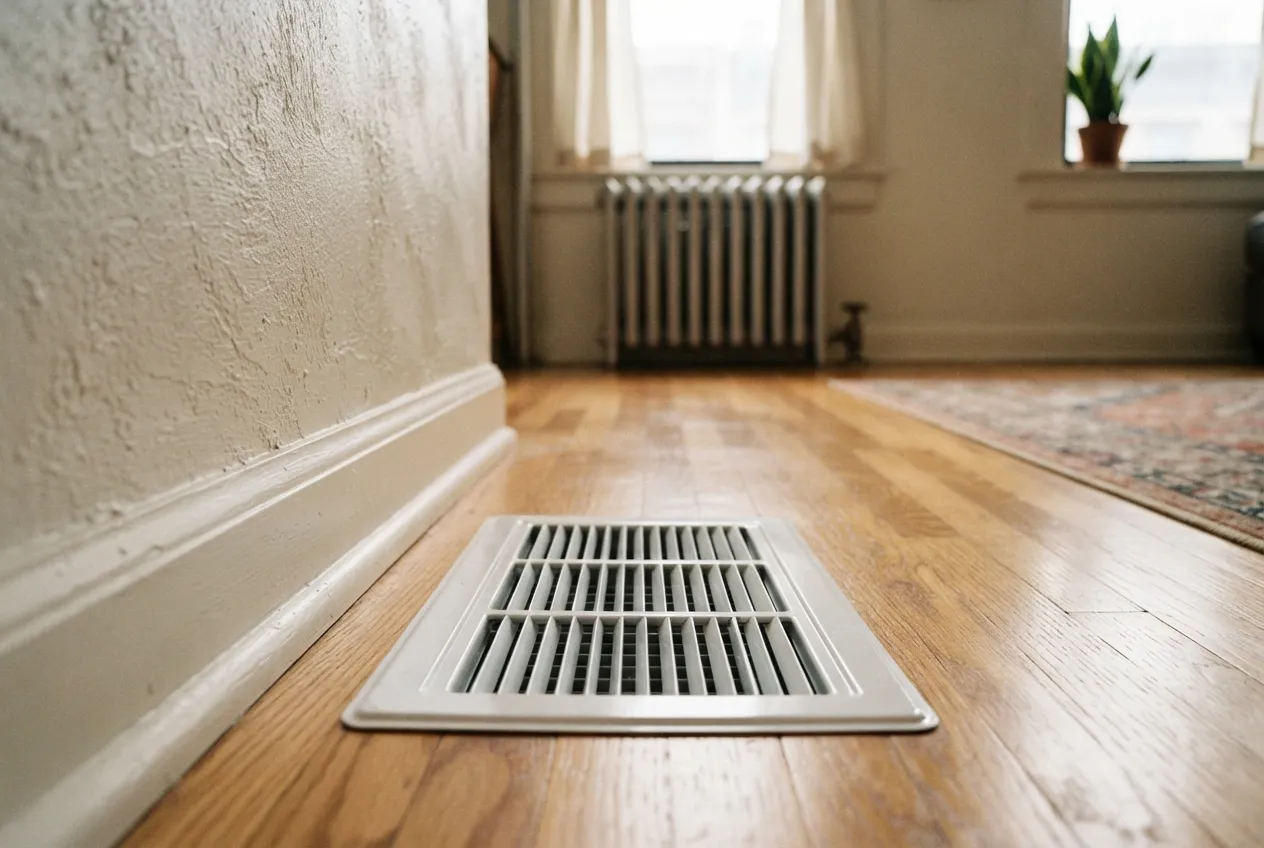
Housing in Dyker Heights is a mix of detached homes, semi-detached and attached brick houses, rowhouses and some pre-war apartment buildings. The duct work we find varies just as much. Larger detached homes often have full forced-air systems serving several floors, with supply and return runs through basements and wall cavities. Many attached homes and rowhouses were originally heated by radiators, and their ducts were added later for central air, sometimes run through attics, closets or soffits in tight, winding paths.
Pre-war apartment buildings usually rely on boilers and radiators, so many units have no ducts to clean. If you live in an apartment with a split system or a small ducted unit, we can look at what you have and tell you whether cleaning applies. Before we quote any work, we want to know how your system was built, because a basement trunk line and an attic retrofit are cleaned differently.
How We Clean Ducts in Your Home
Every job starts with an inspection. We remove a few registers, look inside the supply and return runs with a camera, and check the air handler and blower area. You see what we see, and we explain whether cleaning is warranted.
If it is, we protect floors and furniture near each register, put the system under negative pressure with a vacuum collection unit, and loosen debris with brushes and air tools so it is pulled out rather than blown into your rooms. We clean the registers and grilles and look at the blower compartment. The EPA cautions consumers about chemical treatments such as sanitizers and sealants, so we do not apply them by default. If one is ever worth considering, we explain what it is and why, and it is your decision.
Time for your annual chimney check?
Don't Forget the Dryer Vent
While we are at your home, it is worth checking the clothes dryer vent. According to the U.S. Fire Administration, failure to clean is the leading factor contributing to clothes dryer fires in homes. In attached houses and rowhouses, dryer vents often run long distances to reach an outside wall, which gives lint more places to build up. If your clothes take longer to dry or the laundry area feels hot, have the vent looked at.
Timing and Service Area
New York City's heat season runs from October 1 through May 31. For homes with forced-air heat, early fall is a sensible time to have ducts inspected, before the system runs daily for months. Homes with central air often schedule in spring, before the first hot stretch. Either way, we come from nearby, not from across the city.
Besides Dyker Heights, we serve homeowners in Bay Ridge, Bensonhurst, Borough Park, Bath Beach and Sunset Park.
More services in Dyker Heights
- Chimney Sweep in Dyker Heights
- Chimney Inspection in Dyker Heights
- Chimney Repair in Dyker Heights
- Chimney Liner Installation in Dyker Heights