The short answer
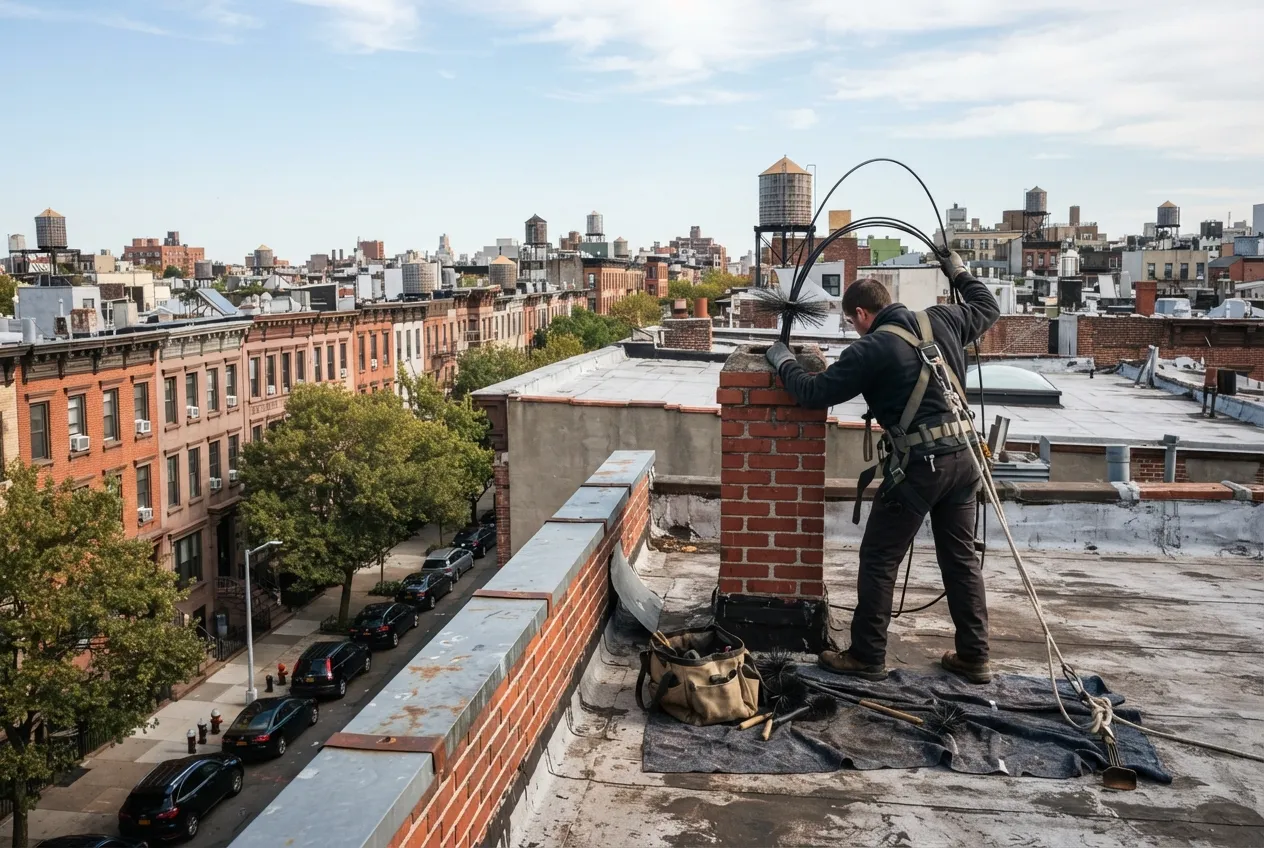
ClearStack repairs chimney crowns, caps, flashing, mortar, dampers and flue liners for Bensonhurst homes, working from our nearby Dyker Heights base. We inspect first, explain what failed and why, and recommend only the repairs the chimney actually needs.
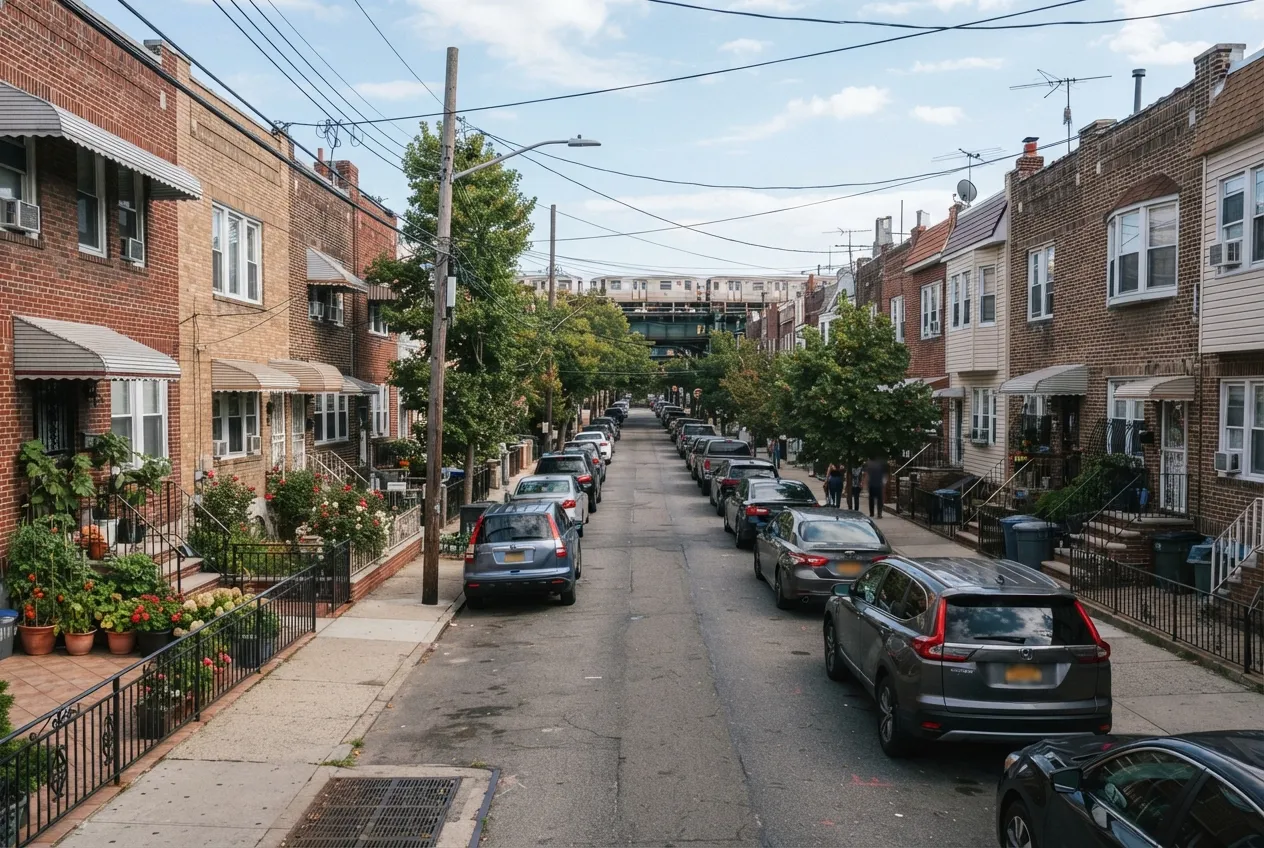
Bensonhurst has a mix of attached rowhouses, two-family homes, detached and semi-detached houses, and pre-war apartment buildings, and many of them still rely on masonry chimneys that have worked hard for decades. ClearStack Chimney Service is based in Dyker Heights, about a mile northwest of Bensonhurst, so we can reach most homes in the neighborhood quickly for an assessment. Our certified technicians repair the parts of a chimney that tend to fail first: the crown, the cap, the flashing, the mortar joints, the damper and the flue liner. We start by finding out why the problem happened, then explain the fix before any work begins.
Common chimney repairs in Bensonhurst homes
Most chimneys in the neighborhood are brick, and many serve a boiler or water heater rather than a fireplace. That means a chimney can be deteriorating for years without anyone looking at it, because it is used quietly every day during the heating months. When we are called, it is usually because of a ceiling stain, loose brick on the roof, debris in the boiler cleanout, or a note from a heating contractor.
These are the repairs we handle most often:
- Rebuilding or resealing a cracked chimney crown so water stops entering the top of the stack
- Installing or replacing chimney caps to keep out rain, birds and debris
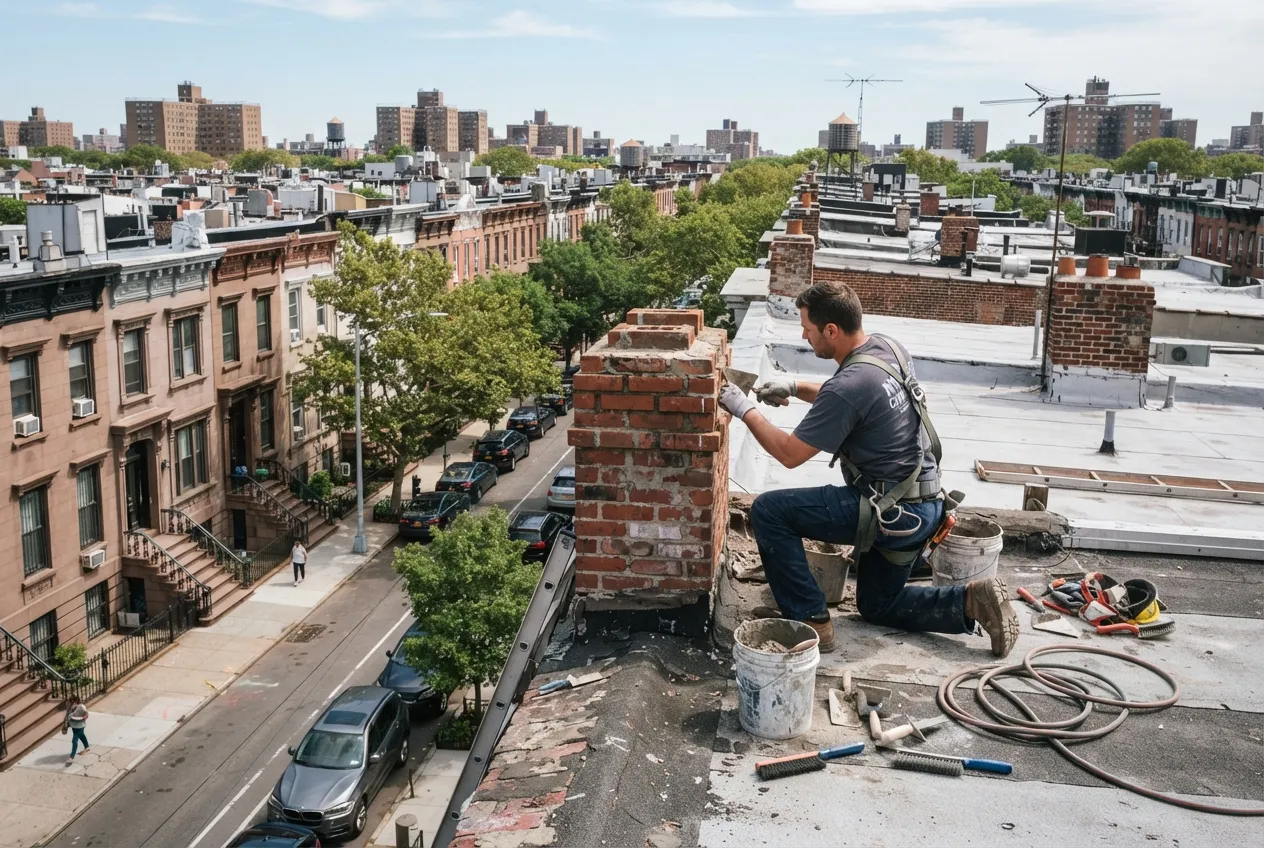
- Repointing worn mortar joints and replacing spalled or loose bricks
- Resealing or replacing flashing where the chimney meets a flat or pitched roof
- Repairing or replacing damaged fireplace dampers
- Relining flues with a stainless steel liner sized to the appliance it serves
Water damage and worn masonry
Water is behind most of the chimney damage we see. Brick and mortar absorb moisture, and repeated freezing and thawing through a Brooklyn winter slowly pushes the surface of the brick apart and opens up mortar joints. A cracked crown or missing cap lets water run straight down the inside of the flue, where it can damage the liner, rust a damper or show up as staining on an interior wall.
On attached homes, the chimney often sits on a shared roof or close to a neighbor's wall, so flashing and the joint between the chimney and the roof deserve close attention. We check where water is actually getting in before recommending work, since sealing the wrong spot just moves the leak somewhere else. Small problems like a single cracked crown or a few open joints are usually far less disruptive to fix than a section of chimney that has been soaking for several winters.
Flue liners and oil-to-gas conversions
Many Bensonhurst buildings have converted, or are planning to convert, from oil heat to gas. In New York City, the chimney has to be evaluated as part of that work, and a new liner is often needed. Gas exhaust produces acidic condensate, and over time that condensate can corrode an unlined or clay-lined masonry flue, loosening mortar and tile from the inside.
If you are planning a conversion, it helps to bring us in early so the chimney evaluation and any relining fit the boiler work rather than holding it up. We size the liner to the new appliance and confirm the flue drafts properly once it is installed. For owners of multi-family buildings, this is also a chance to check every flue connected to the system, not just the one serving the boiler.
Time for your annual chimney check?
Timing repairs around inspections and heat season
The NFPA 211 standard calls for chimneys, fireplaces and vents to be inspected once a year. A Level 1 inspection fits a system that has not changed. A Level 2 inspection applies when something does change, such as a new appliance or a switch of fuel, or when the home is sold. A Level 3 inspection is used when a hidden hazard can only be reached by opening part of the chimney or building.
New York City's heat season runs from October 1 through May 31, and building owners must keep apartments heated to the city's minimum temperatures during that time. If you own a two-family home or a small apartment building, scheduling chimney repairs in late spring or summer avoids taking a boiler flue out of service when tenants need heat. Urgent problems can't always wait, but planning ahead keeps them less likely.
What to expect from a repair visit
We begin with an inspection of the chimney from the roof and, where needed, a camera look inside the flue. You get a plain explanation of what we found, photos where they help, and a written scope of the recommended repairs. We cover nearby floors and work areas, and we clean up when the job is finished.
Besides Bensonhurst, we regularly work in Bath Beach, Mapleton, Dyker Heights, Gravesend and Borough Park.
More services in Bensonhurst
- Chimney Sweep in Bensonhurst
- Chimney Inspection in Bensonhurst
- Air Duct Cleaning in Bensonhurst
- Chimney Liner Installation in Bensonhurst