The short answer
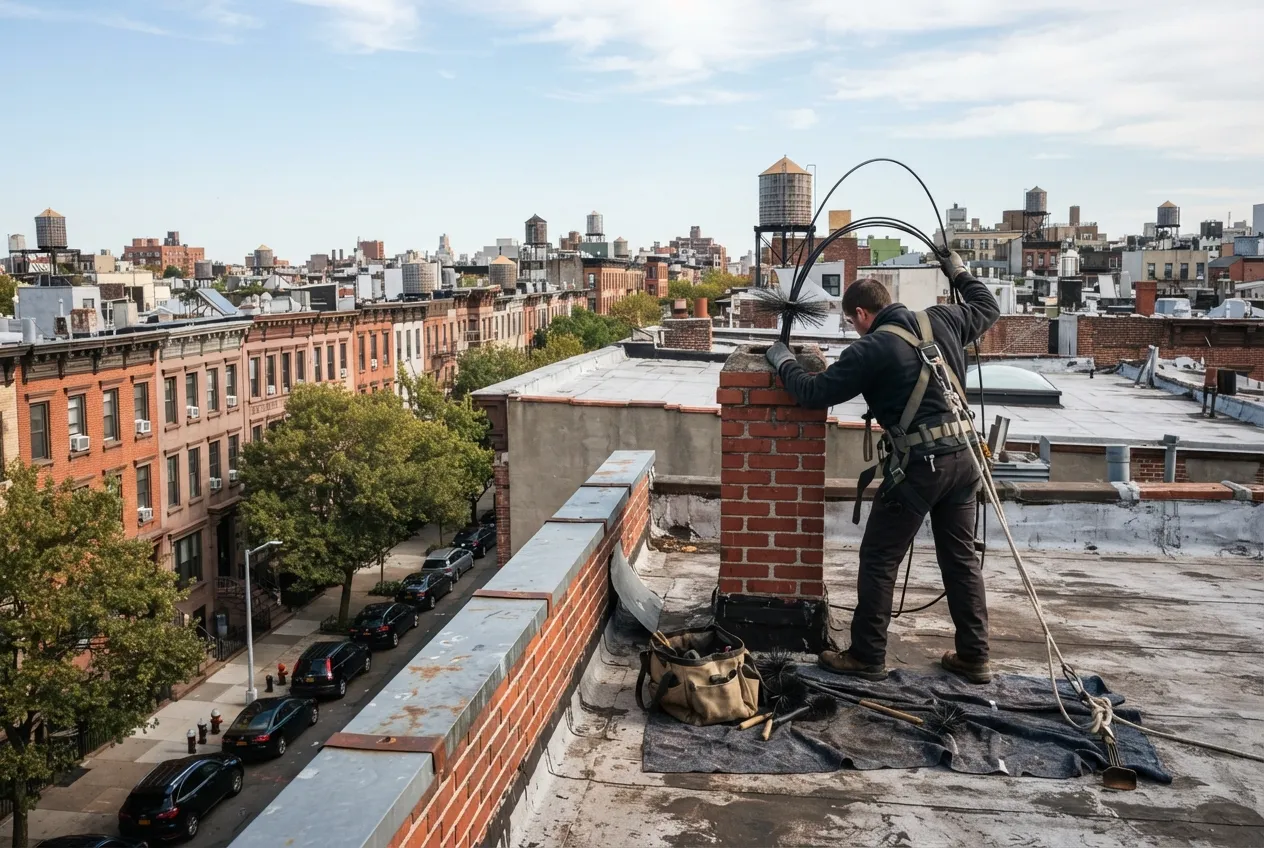
Most chimney repairs in Bath Beach involve deteriorated mortar, cracked crowns, leaking flashing, or flue liners damaged by boiler exhaust. ClearStack inspects the chimney first, explains what we find, and repairs the cause rather than only the visible symptom.
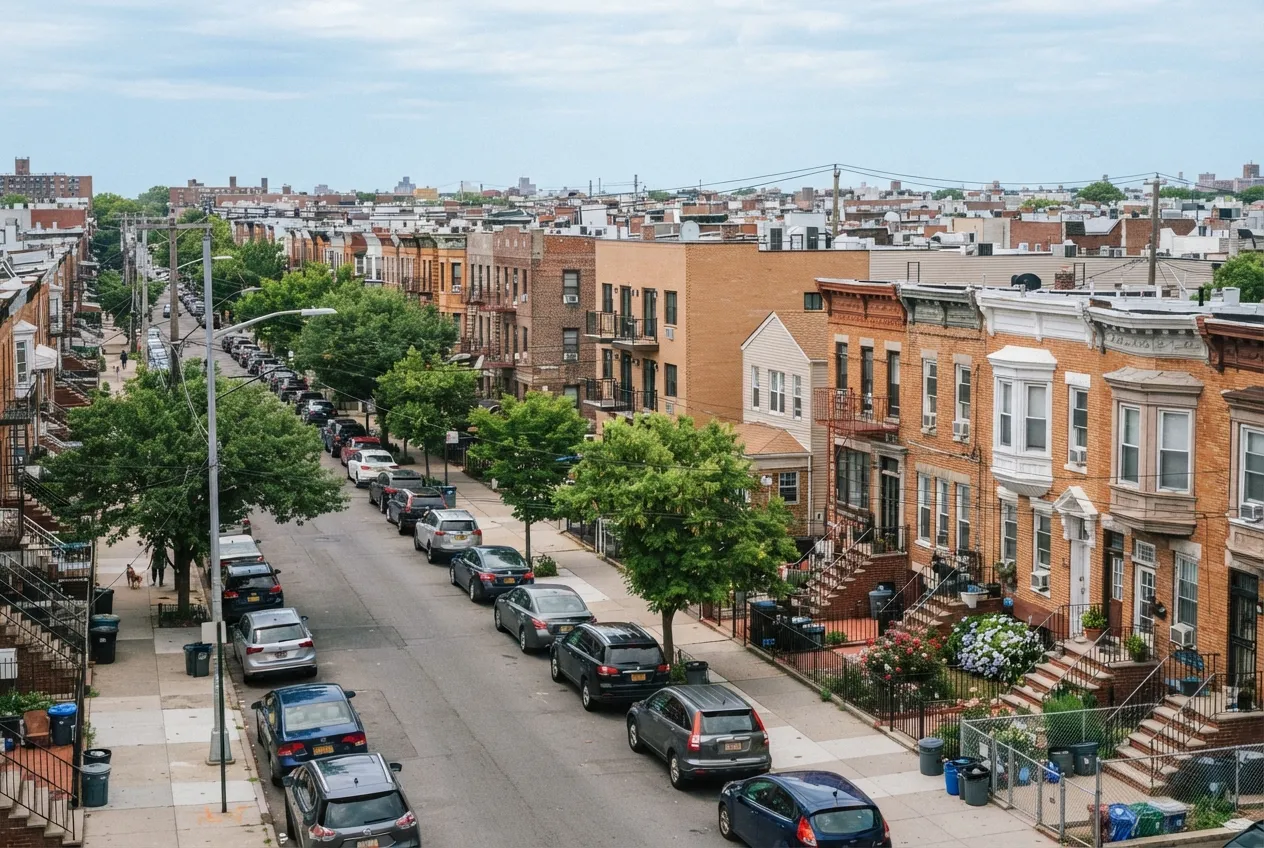
Bath Beach homes put their chimneys through a lot: years of boiler exhaust, freeze-thaw winters, and wind-driven rain that works into any open joint. ClearStack Chimney Service repairs chimneys throughout Bath Beach (11214) from our office in Dyker Heights, about a mile north. Our certified technicians handle masonry, crowns, flashing, caps, and flue liners. We start by finding out why the damage happened, so the fix holds up instead of returning next season. Bath Beach has attached rowhouses, semi-detached two-family homes, detached houses, and pre-war apartment buildings. On most of them the chimney serves a gas or oil boiler rather than a wood fireplace, and that changes what tends to fail and how we repair it.
The chimney problems we see most in Bath Beach
Many chimneys in the neighborhood are tall masonry stacks on attached or semi-detached houses. Several homes often share a roofline, so a leak or loose brick can be hard to trace from the street. Older buildings may have original brick and mortar that has weathered for decades. Newer additions and renovations sometimes left chimney work half-finished. These are the repairs that come up most often:
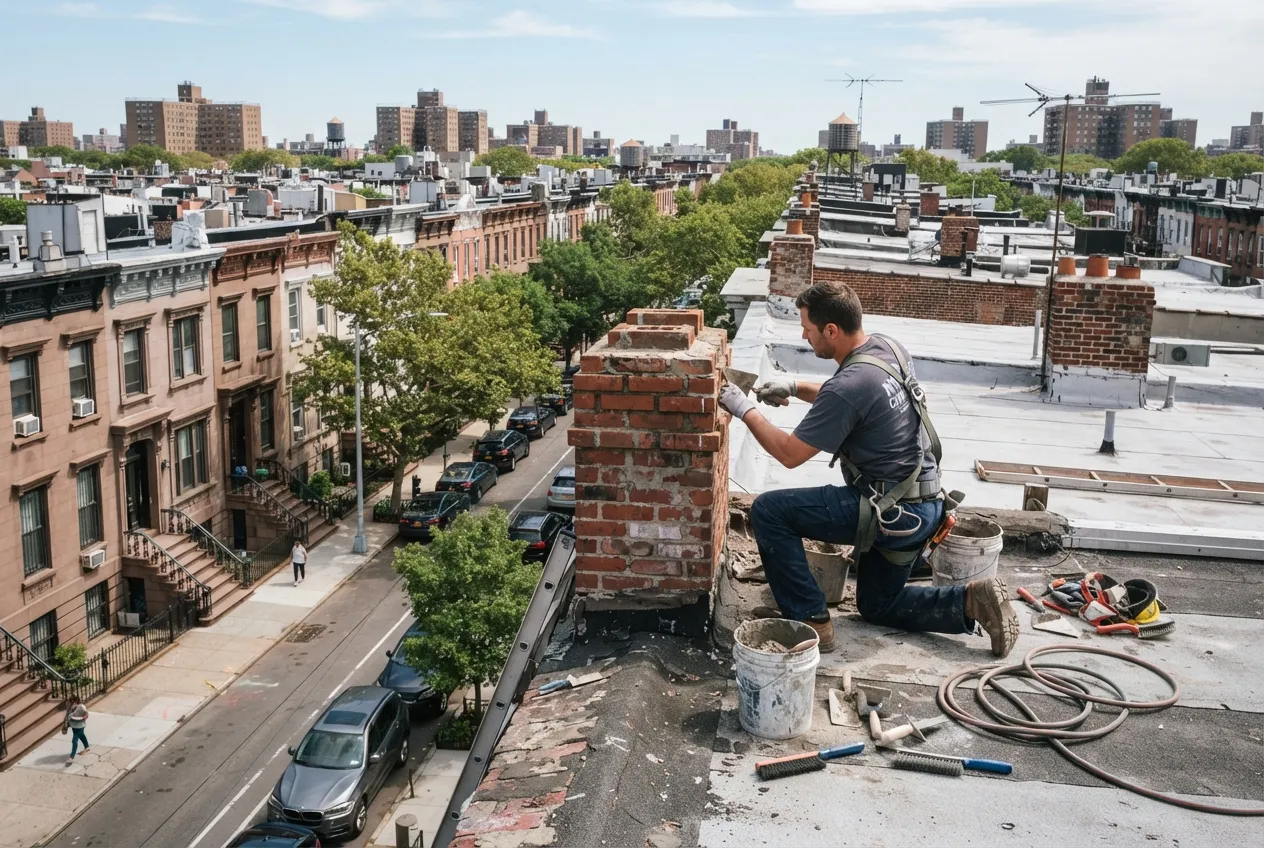
- Repointing: replacing eroded or missing mortar joints so water stops soaking into the brick
- Crown repair or rebuilding: fixing the cracked cement cap on top of the chimney, a common entry point for water
- Flashing repair: resealing the metal where the chimney meets the roof, a frequent cause of ceiling and wall stains
- Chimney caps: installing or replacing caps to keep out rain, birds, and debris
- Spalling brick: replacing brick faces that have flaked off from moisture and freezing
- Flue liner repair or replacement: restoring a safe, sealed path for exhaust gases
Oil-to-gas conversions and flue liners
Some Bath Beach homes and apartment buildings have switched, or plan to switch, from oil heat to gas. When a New York City building converts its boiler from oil to gas, the chimney has to be evaluated as part of the work. A new liner is often needed because gas exhaust produces acidic condensate. That moisture can corrode an unlined or clay-lined masonry flue from the inside.
If you converted years ago and never had the flue checked, look for crumbling material at the base of the chimney or the boiler connection, stains on interior walls near the chimney, and white residue on the brick. Any of these can point to condensation damage. We can inspect the flue and tell you whether a properly sized liner is needed for your appliance.
How we approach a repair
We don't quote a repair from the sidewalk. The NFPA 211 standard calls for chimneys, fireplaces, and vents to be inspected once a year, and it describes three inspection levels. A Level 1 inspection fits when nothing about the system has changed. A Level 2 inspection is called for when the system changes, such as a new boiler or a switch of fuel, or when the home is sold. A Level 3 inspection is used when a suspected hidden hazard can only be reached by opening part of the chimney or building.
After the inspection, we explain what we found in plain terms, show you photos when we can, and separate urgent safety issues from items that can be planned for later. You decide what work to do and when.
Time for your annual chimney check?
Plan repairs around heat season
New York City's heat season runs from October 1 through May 31. During those months, building owners must keep apartments heated to the city's minimum temperatures. If you own a two-family home or a small apartment building in Bath Beach, a chimney problem that forces the boiler offline in January is a serious issue for you and your tenants.
Late spring and summer are the easiest times to schedule masonry work, crown rebuilding, and liner installation. Mortar and crown materials also cure more reliably in mild weather. If you notice warning signs during the winter, call us anyway. Some problems shouldn't wait.
Signs your chimney needs attention
Call for an inspection if you notice any of the following:
- Water stains on ceilings or walls near the chimney
- Loose, cracked, or missing bricks or mortar
- Pieces of masonry or tile at the base of the flue or the boiler cleanout
- A leaning or visibly shifting chimney stack
- Rust on the cap, damper, or flashing
- Exhaust odors or a boiler that has trouble venting
More services in Bath Beach
- Chimney Sweep in Bath Beach
- Chimney Inspection in Bath Beach
- Air Duct Cleaning in Bath Beach
- Chimney Liner Installation in Bath Beach