The short answer
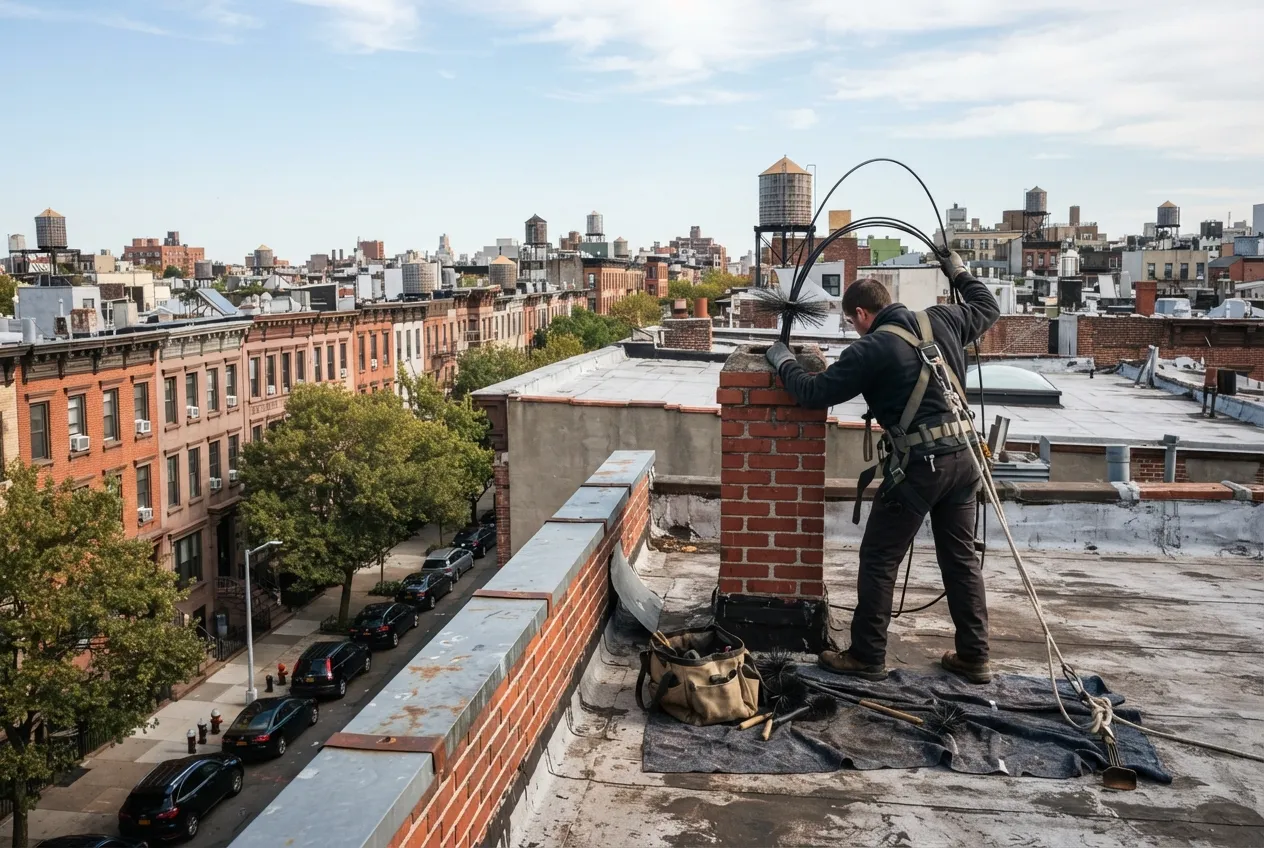
ClearStack Chimney Service provides chimney sweeping, inspection, repair, liner installation, and dryer vent and air duct cleaning in Windsor Terrace, Brooklyn (ZIP 11215). Our certified technicians come from our Dyker Heights office, about 3 miles away, and we also serve nearby Kensington, Ditmas Park, Parkville, Sunset Park and Borough Park.
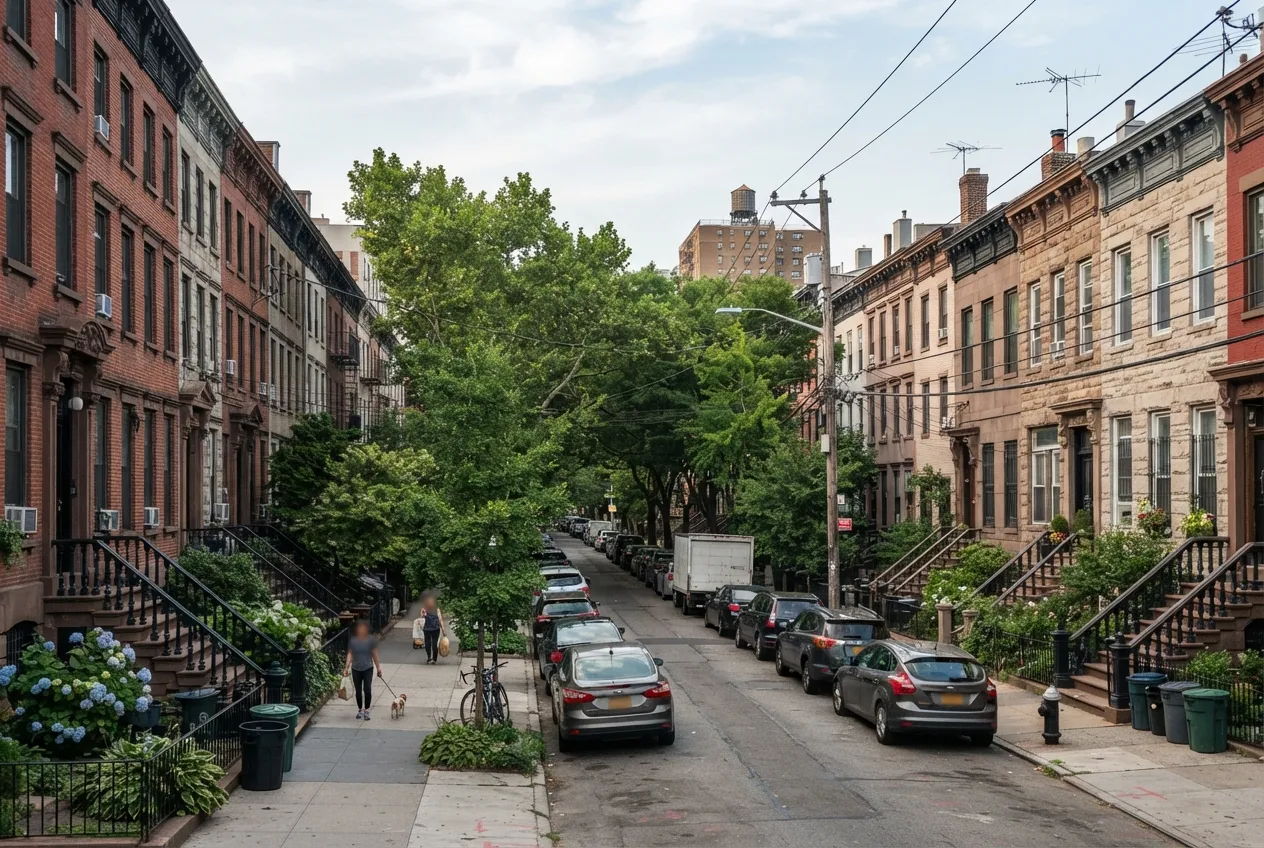
ClearStack Chimney Service works in Windsor Terrace from our base in Dyker Heights, about 3 miles to the southwest. The neighborhood's housing mix of attached rowhouses, brick and frame homes, a few detached houses and pre-war apartment buildings means the chimneys and vents we see here vary a lot. Some flues still serve working fireplaces. Others vent a gas boiler or water heater that replaced an oil burner years ago. Many have sat unused behind a closed damper for a long time. Our certified technicians sweep, inspect and repair chimneys and clean dryer vents and air ducts throughout ZIP code 11215. We explain what we find in plain terms so you can decide what needs doing now and what can wait.
What Brooklyn Weather Does to Windsor Terrace Chimneys
New York winters swing above and below freezing again and again. Water that soaks into brick and mortar freezes, expands and thaws. Over several seasons that cycle loosens joints, cracks crowns and flakes the faces off bricks. Coastal storms and nor'easters drive rain sideways into masonry, and humid summers keep damp flues from drying out.
On attached rowhouses the chimney often shares walls with a neighbor. A leak around the stack can show up as a stain on a top-floor ceiling or a damp patch beside the fireplace before anyone notices damage outside. We look at the crown, cap, flashing and mortar together, because water usually gets in through more than one weak spot.
- Chimney caps and chase covers to keep out rain, birds and squirrels
- Chimney waterproofing with a breathable sealer that lets masonry dry
- Repointing, crown repair and, where the masonry has failed, chimney rebuilding
Annual Inspections and Sweeping
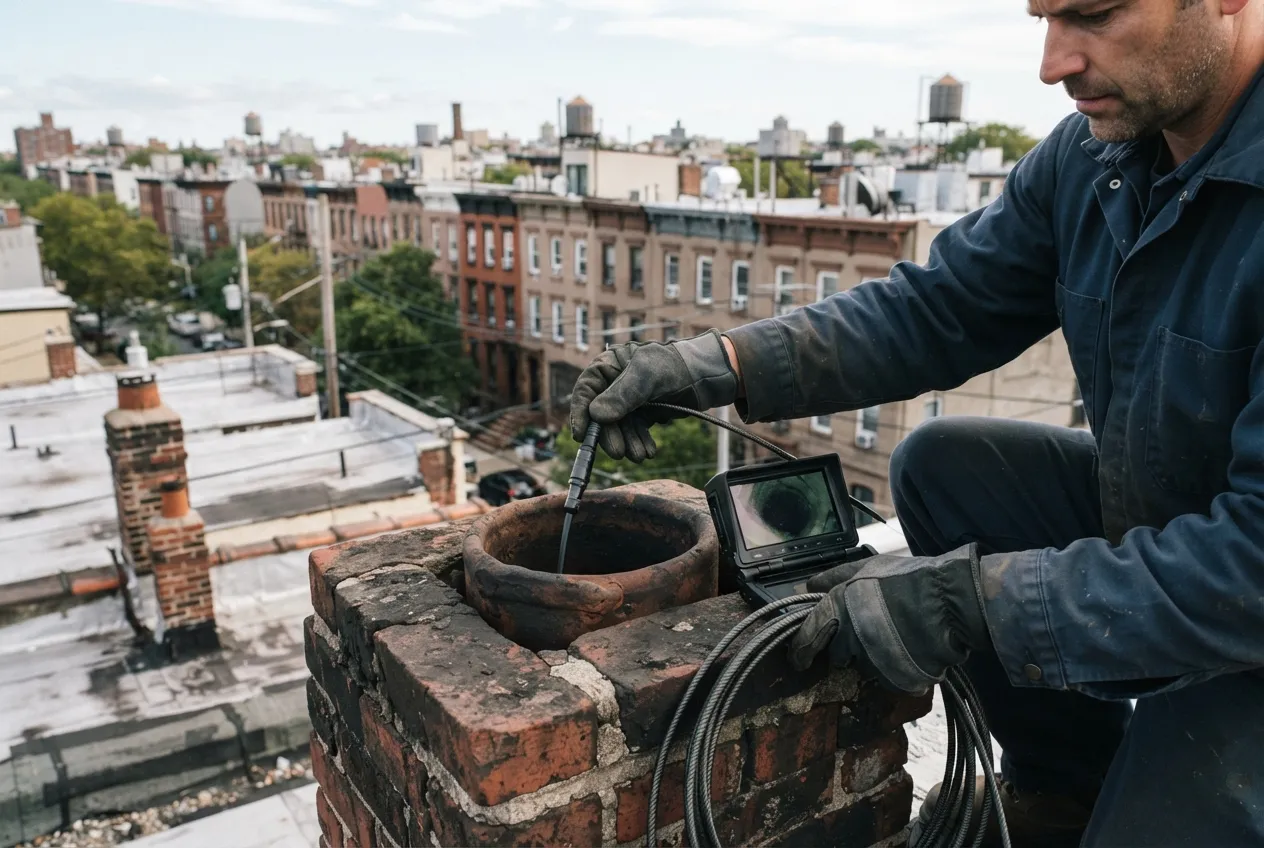
The NFPA 211 standard calls for chimneys, fireplaces and vents to be inspected once a year. A Level 1 inspection fits most homes where nothing has changed. A Level 2 inspection applies when the system changes, such as a new appliance or a switch in fuel, or when the home is being sold. A Level 3 inspection is reserved for cases where a suspected hidden hazard can only be reached by opening part of the chimney or the building.
Sweeping removes creosote from wood-burning fireplaces and clears soot, debris and nesting material from any flue. We also check the damper and firebox and handle fireplace and damper repair when a damper sticks, won't seal or has rusted through.
Oil-to-Gas Conversions and Chimney Liners
Many Windsor Terrace buildings that once burned heating oil have switched to gas. When a New York City building converts its boiler from oil to gas, the chimney has to be evaluated as part of the work. A new liner is often needed, because gas exhaust produces acidic condensate that can corrode a masonry flue from the inside.
We inspect the existing flue, check whether it is sized correctly for the new appliance, and install a chimney liner when one is called for. If you are planning a conversion, it helps to bring us in early so the chimney work fits the boiler schedule.
Time for your annual chimney check?
Dryer Vent and Air Duct Cleaning
According to the U.S. Fire Administration, failure to clean is the leading factor contributing to clothes dryer fires in homes. In rowhouses and apartments, dryer vents often run long distances or through tight bends to reach an outside wall, and lint builds up quickly. Signs to watch for include clothes that take more than one cycle to dry, a laundry room that gets unusually hot, or a burning smell.
For air ducts, we follow the U.S. EPA's guidance. Cleaning makes sense when there is substantial visible mold growth, signs of vermin, or excessive dust and debris coming from the vents. The EPA notes that duct cleaning has not been shown to prevent health problems. It also cautions consumers to research the process before responding to very cheap advertised offers and to be careful with chemical treatments. We'll tell you plainly if your ducts don't need cleaning.
Timing Work Around Heat Season
New York City's heat season runs from October 1 through May 31. During those months, building owners must keep apartments heated to the city's minimum temperatures. For owners of multi-family buildings, a boiler flue problem in January becomes urgent quickly. Late spring and summer are the easiest times to schedule inspections, liner work and masonry repairs, since mortar cures well in mild weather and the heat can stay off while we work.
We also serve homeowners in Kensington, Ditmas Park, Parkville, Sunset Park and Borough Park, so neighbors with similar housing can often be scheduled on the same trip.
ZIP codes we serve
- 11215