The short answer
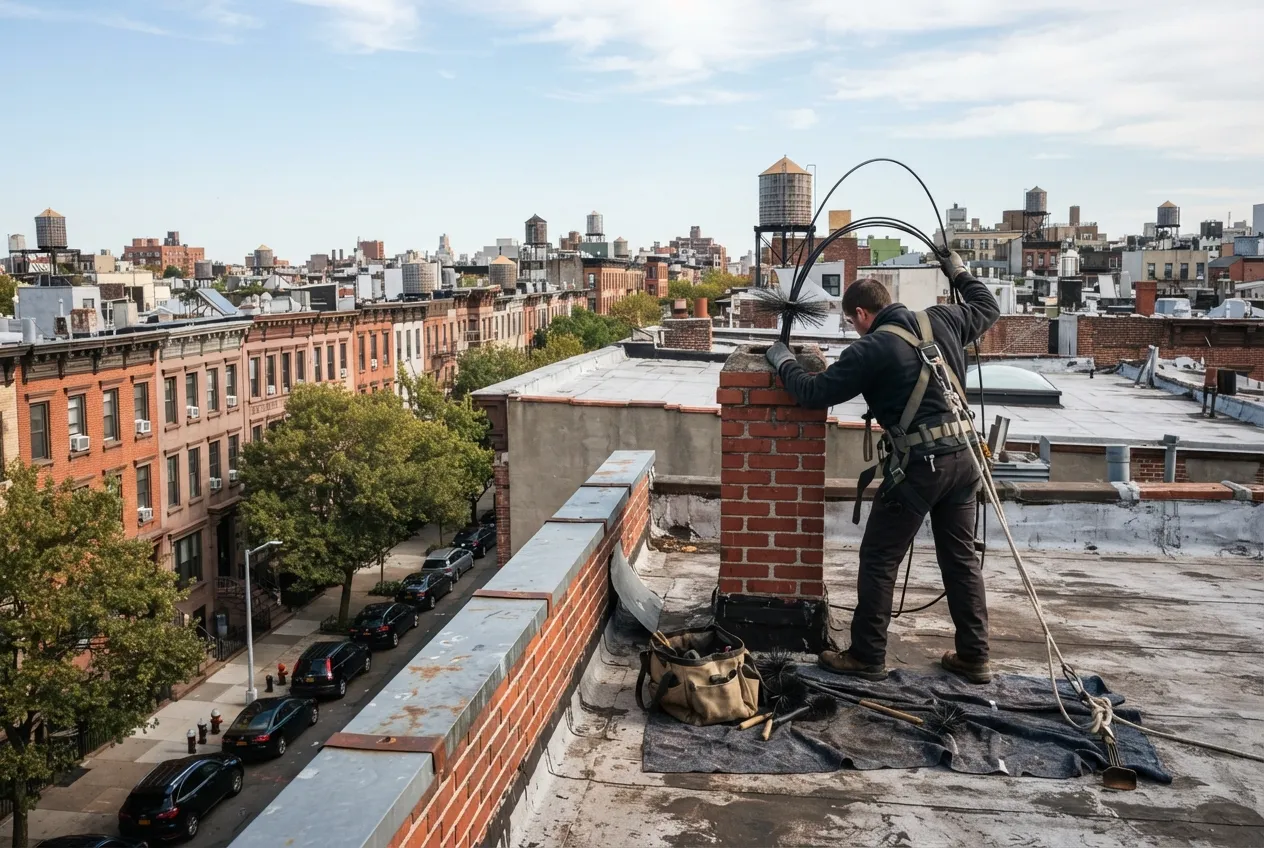
Yes, ClearStack Chimney Service serves South Slope, Brooklyn (11215) from our Dyker Heights office about 3 miles away. We offer chimney sweeps, inspections, repairs, liners, waterproofing, and dryer vent and air duct cleaning for the neighborhood's rowhouses, brownstones, and apartment buildings.
ClearStack Chimney Service works on chimneys, fireplaces, and vents throughout South Slope, Brooklyn, in ZIP code 11215. Our office is in Dyker Heights, about 3 miles away, so South Slope is a regular part of our service area. Our certified technicians handle everything from a routine sweep to a full chimney rebuild. Before any work starts, we explain what we found and what your options are.
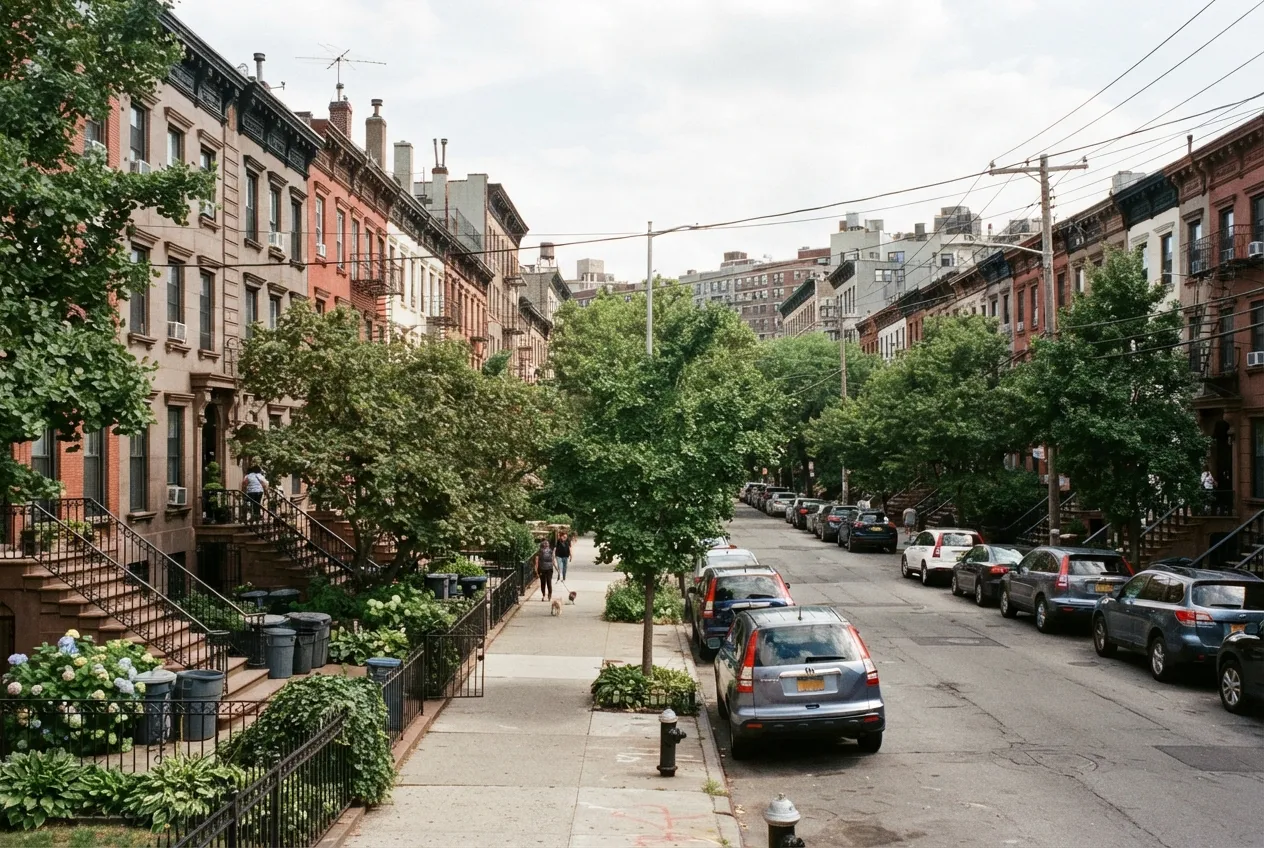
Chimneys in South Slope's Rowhouses and Brownstones
Much of South Slope is made up of attached rowhouses, brownstones, and pre-war apartment buildings. Many of these buildings have older masonry chimneys that were built for wood or coal and later adapted for oil or gas heat. Shared walls and closely packed rooflines put many chimneys right next to the neighbors' chimneys, so careful work and good access planning matter.
Common jobs we handle in the neighborhood:
- Chimney sweeps for working wood-burning fireplaces
- Chimney inspections before buying, selling, or changing heating equipment
- Fireplace and damper repair for stuck, rusted, or missing dampers
- Chimney cap and chase cover installation to keep out rain, birds, and debris
- Chimney liner installation for boiler and water heater flues
How Brooklyn Weather Wears Down Masonry
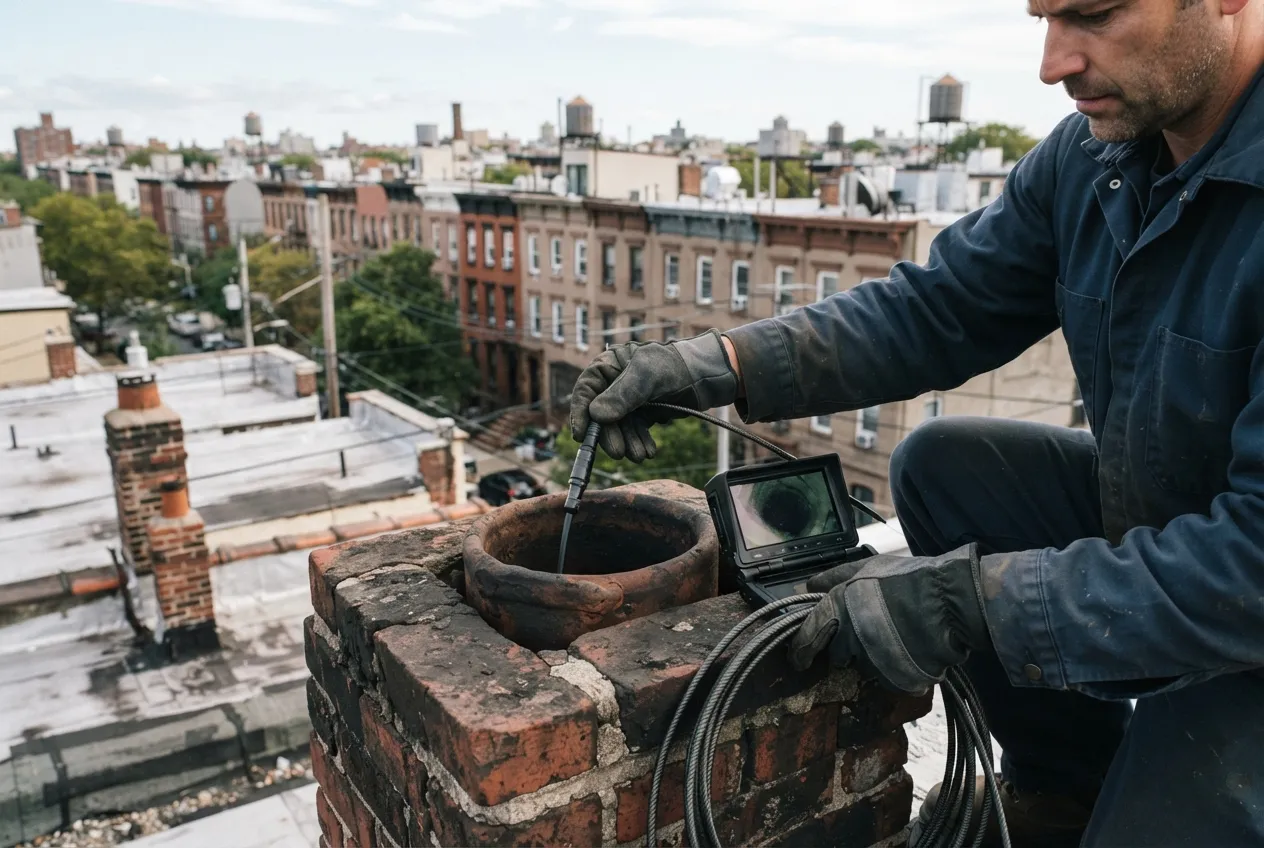
Brooklyn winters swing above and below freezing, often many times in a single season. Water that soaks into brick and mortar freezes, expands, and slowly pushes the joints apart. Coastal storms add wind-driven rain, and summers are humid. A chimney exposed on a flat rowhouse roof takes a steady beating all year.
Watch for crumbling mortar joints, flaking or spalling brick, a cracked crown, and white staining on the masonry. Water marks on ceilings or walls near the chimney are another warning sign. Chimney repair, repointing, and waterproofing can stop this damage early. A chimney that is leaning, badly cracked, or missing large sections of brick may be safer to rebuild from the roofline up. We'll show you photos and walk you through the options.
Oil-to-Gas Conversions and Chimney Liners
Many South Slope buildings have already switched from oil heat to gas, and others are planning to. When a New York City building converts its boiler from oil to gas, the chimney has to be evaluated as part of the work. A new liner is often needed, because gas exhaust produces acidic condensate that can corrode a masonry flue.
We inspect the flue and confirm whether it can safely vent the new equipment. If it can't, we install a properly sized liner. It helps to schedule this work before heat season. New York City's heat season runs from October 1 through May 31, and building owners must keep apartments heated to the city's minimum temperatures during that time. A boiler that can't run because of a chimney problem is a real issue for landlords and tenants alike.
Time for your annual chimney check?
Dryer Vent and Air Duct Cleaning
According to the U.S. Fire Administration, failure to clean is the leading factor contributing to clothes dryer fires in homes. In rowhouses and apartments, dryer vents often run long distances or through tight spaces, which makes lint buildup more likely. If clothes are taking longer to dry or the laundry area feels hot, the vent probably needs cleaning.
For air ducts, we follow the U.S. EPA's guidance. Cleaning makes sense when there is substantial visible mold growth, vermin, or excessive dust and debris. The EPA also says duct cleaning has not been shown to prevent health problems, so we won't claim that it does. The EPA advises researching the process before responding to very cheap advertised duct-cleaning offers, and asking questions before agreeing to any chemical treatment.
Annual Inspections and Which Level You Need
The NFPA 211 standard calls for chimneys, fireplaces, and vents to be inspected once a year. A Level 1 inspection fits most homes when nothing has changed. A Level 2 inspection is used when the system changes, such as a new appliance or a switch of fuel, or when the home is sold. A Level 3 inspection is needed when a hidden hazard can only be reached by opening part of the chimney or building.
Nearby Neighborhoods We Serve
From our Dyker Heights office, we also serve Kensington, Ditmas Park, Parkville, Sunset Park, and Borough Park. If you live in or near South Slope, we can schedule a visit to look at your chimney, fireplace, or vents.
ZIP codes we serve
- 11215