The short answer
Yes, ClearStack serves Park Hill, Staten Island, from our Dyker Heights office about 4 miles away. We handle chimney sweeping, inspections, repairs, liners, waterproofing, caps, dryer vents and air ducts. Booking before New York City's heat season starts on October 1 is the easiest way to get your system checked before you need it.
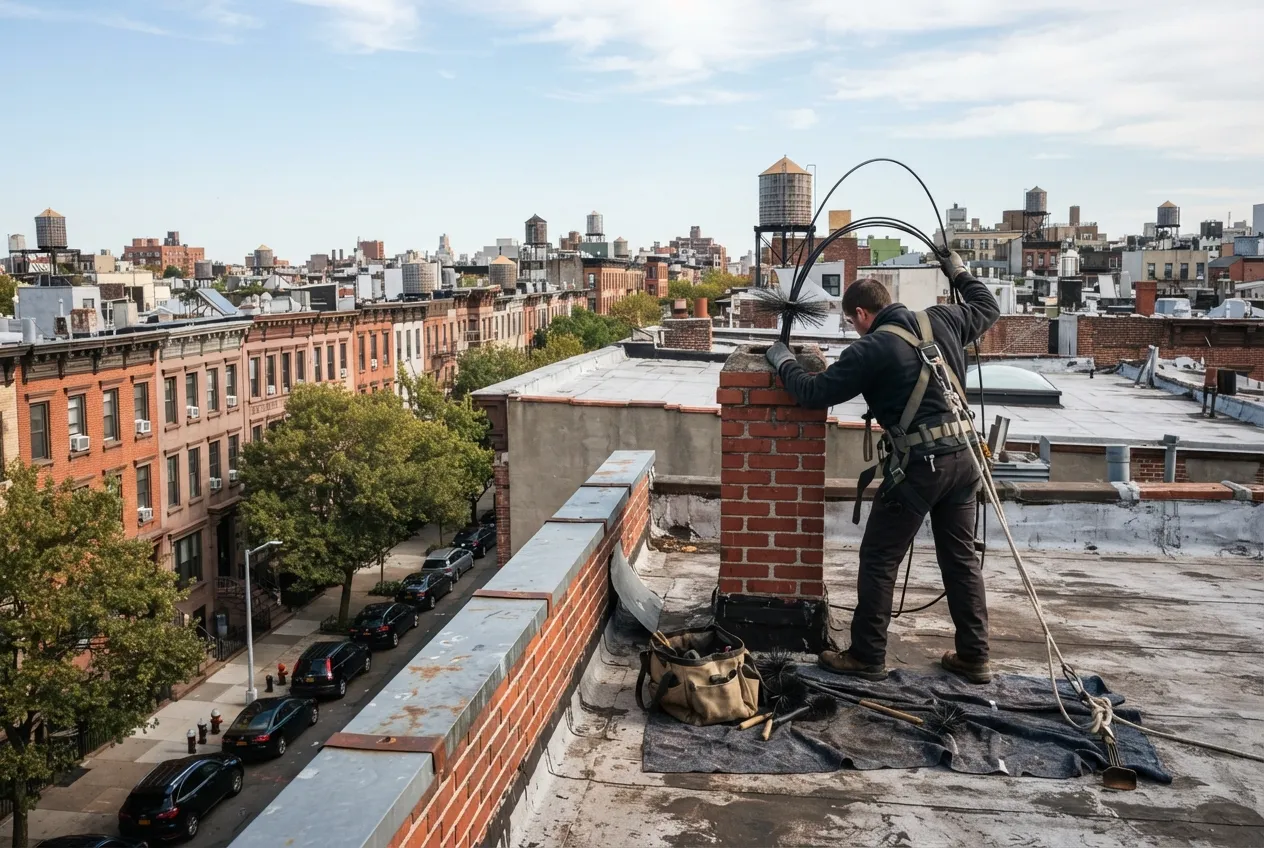
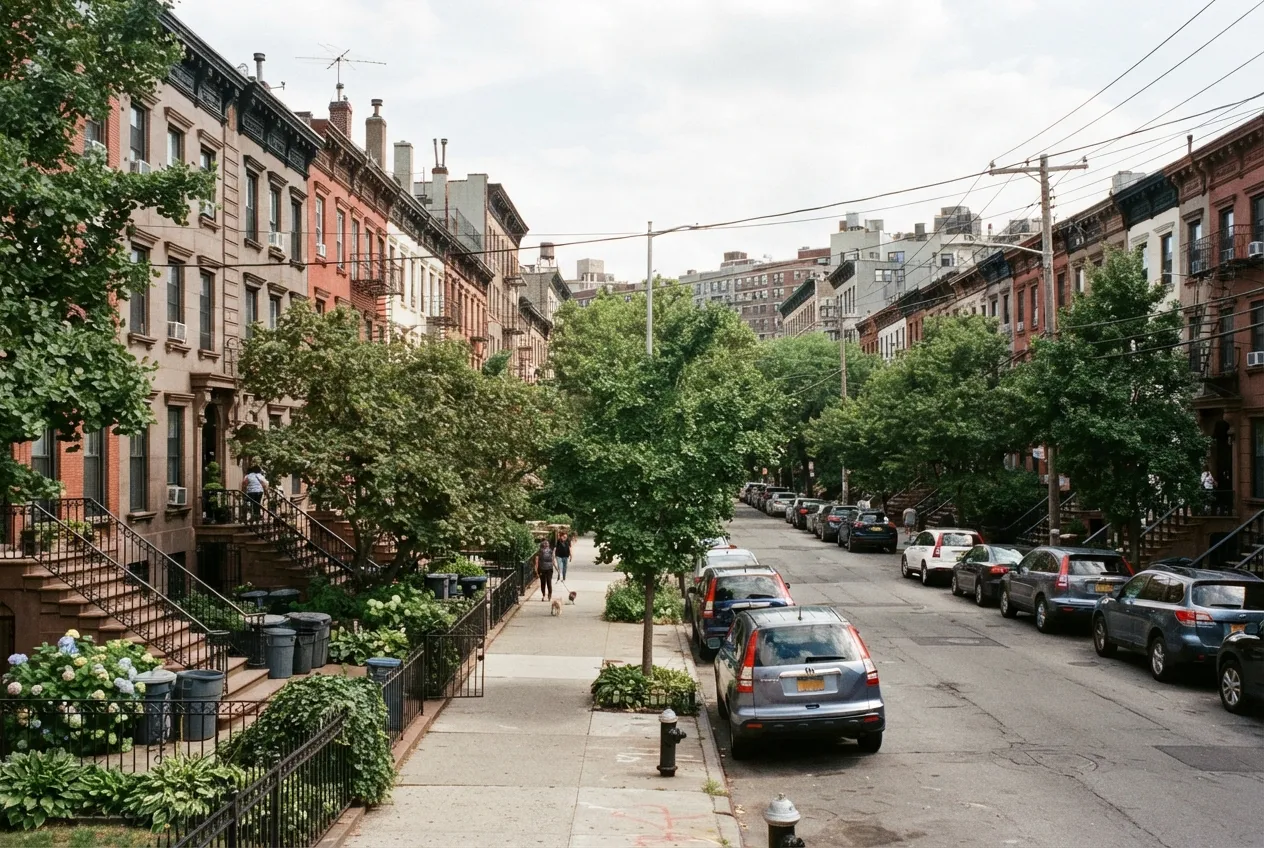
ClearStack Chimney Service works in Park Hill, Staten Island, about 4 miles west of our office in Dyker Heights, Brooklyn. Our certified technicians sweep, inspect and repair chimneys, install liners, and clean dryer vents and air ducts for homeowners and building owners across the neighborhood. Park Hill has a mix of housing, including detached and semi-attached homes, rowhouses and apartment buildings, and each comes with its own venting setup. We look at how your system is actually used, whether that's a wood-burning fireplace, an oil or gas boiler, or a busy laundry room, and explain what we find in plain terms.
How Staten Island Weather Wears on Chimneys
Park Hill gets the full range of New York City weather: cold winters with repeated freeze-thaw cycles, wind-driven rain from coastal storms, and humid summers. Masonry chimneys take the brunt of it. Water soaks into brick and mortar, freezes, expands and slowly pushes joints apart. Over a few seasons that can mean crumbling crowns, loose bricks and leaks that show up as stains on ceilings or walls near the chimney.
Because the chimney sits above the roofline, problems often go unnoticed from the street. A yearly look from someone who goes up and checks the crown, flashing, cap and flue catches small issues while they're still small repairs.
Chimney Sweeping and Inspections
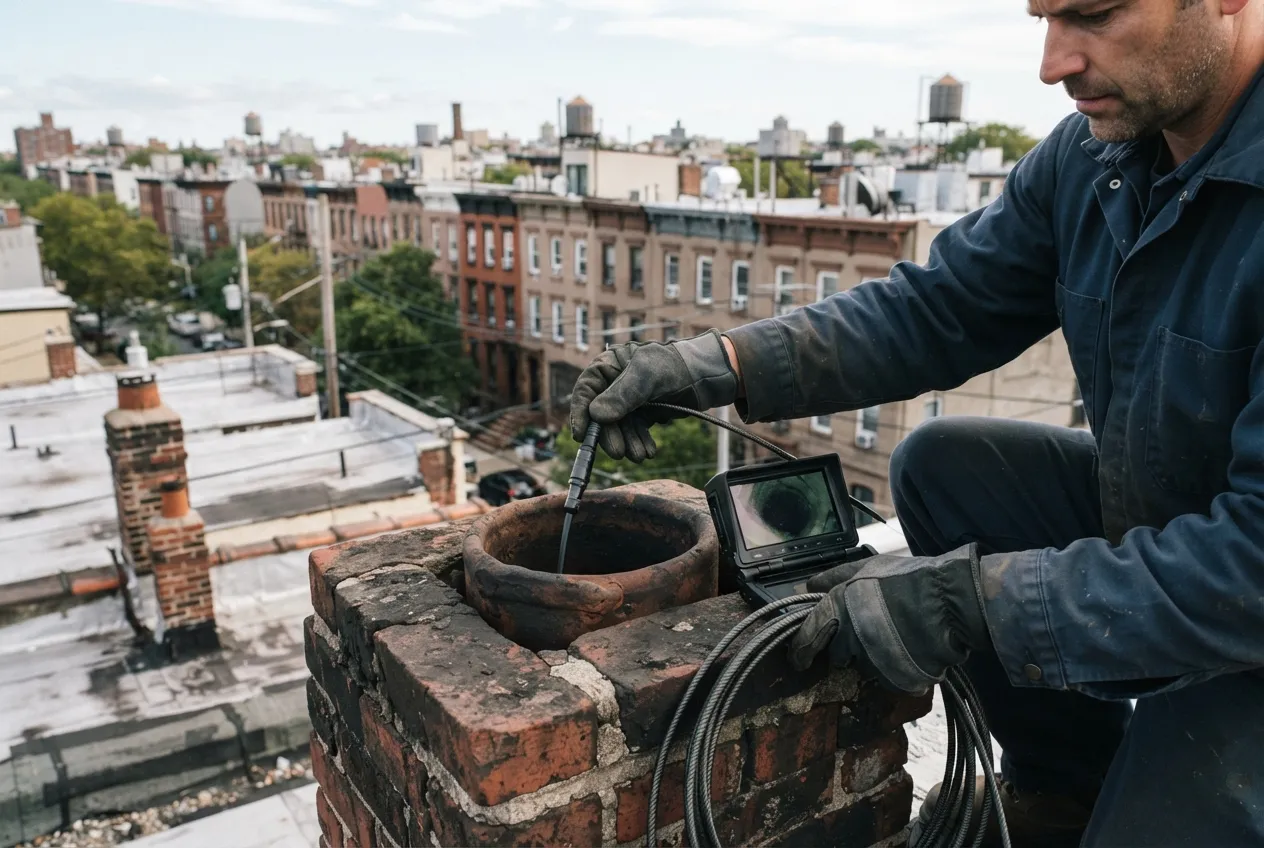
The NFPA 211 standard calls for chimneys, fireplaces and vents to be inspected once a year. We follow the three inspection levels used across the trade, so you know what kind of inspection you're getting and why.
Sweeping removes creosote, soot and debris that build up from wood fires and can also clear nests or blockages that keep exhaust from venting properly. We'll tell you whether your chimney needs a sweep or just an inspection, rather than assuming both.
- Level 1: for chimneys in regular use where nothing about the system has changed
- Level 2: when you add a new appliance, switch fuels, or buy or sell a home
- Level 3: when a suspected hidden hazard can only be reached by opening part of the chimney or building
Oil-to-Gas Conversions and Chimney Liners
Many older homes and apartment buildings in the area still heat with oil, and owners are steadily converting to gas. When a New York City building converts its boiler from oil to gas, the chimney has to be evaluated as part of the work. A new liner is often needed, because gas exhaust produces acidic condensate that can corrode a masonry flue from the inside.
We inspect the existing flue, explain whether it can handle the new appliance, and install a properly sized liner when one is required. If you're planning a conversion, bring us in early so the chimney work doesn't hold up the boiler job.
Time for your annual chimney check?
Dryer Vent and Air Duct Cleaning
According to the U.S. Fire Administration, failure to clean is the leading factor contributing to clothes dryer fires in homes. Lint collects in the vent run, especially in long or bent ducts common in attached homes and apartment laundry rooms. If your clothes take longer to dry or the laundry area feels unusually hot, the vent likely needs attention.
For air ducts, we follow the U.S. EPA's guidance: cleaning makes sense when there's substantial visible mold growth, vermin, or excessive dust and debris. The EPA also notes that duct cleaning hasn't been shown to prevent health problems, so we won't promise that it will. We explain what we see before recommending any work and are careful about chemical treatments.
Repairs, Waterproofing and Rebuilding
When an inspection turns up damage, we handle the repair and lay out your options clearly. Small fixes come first; rebuilding is for when the masonry can't be saved.
- Chimney caps and chase covers to keep out rain, animals and debris
- Waterproofing to slow moisture damage from freeze-thaw cycles
- Fireplace and damper repair for drafts and smoke problems
- Masonry repair and full chimney rebuilding when needed
Scheduling Service in Park Hill
New York City's heat season runs from October 1 through May 31, and fall is our busiest time. Booking an inspection in late summer or early fall gives you room to handle any repairs before the boiler or fireplace is running daily. Beyond Park Hill, we also serve Bay Ridge, Dyker Heights, Bath Beach, Bensonhurst and Sunset Park.